

A small hole can still stand out against an otherwise finished wall. A small drywall patch service Rio Rancho homeowners choose should address the damaged spot and leave the surrounding surface smooth and ready for its next finish. The right repair depends on the damage, the condition of the surrounding drywall, and the wall’s texture and paint.
A DIY fix can work for a minor mark, but uneven compound, visible edges, or a texture difference can make a patch more noticeable than the original damage. Before deciding how to handle it, look at whether the drywall is soft or crumbling, whether the damage has reached through the panel, and how visible the repaired area will be.
This guide explains what a small drywall patch involves, when damage may need closer assessment, and how to weigh DIY work against professional help. You’ll also learn how to prepare for a residential repair in Rio Rancho. Chaparro’s Painting, LLC provides residential drywall repairs in Rio Rancho, Albuquerque, Bernalillo, and Santa Fe. The company is owned and operated by Jaime Chaparro, who has more than 20 years of painting experience.
Key Takeaways
- A small patch usually addresses localized damage. Soft, recurring, or widespread damage needs closer assessment before finishing.
- A small drywall patch service Rio Rancho homeowners choose should account for how the repaired area will look against the wall’s existing texture and paint.
- Compare DIY and professional repair based on the damage, your tools and skill, and how visible the finished wall will be.
- Before a repair visit, clear access to the area and note where the damage is and any changes you have observed.
- Chaparro’s Painting provides residential drywall repairs in Rio Rancho, Albuquerque, Bernalillo, and Santa Fe.
What Does a Small Drywall Patch Service in Rio Rancho Cover?
A small patch repairs damage in a limited area of an existing wall rather than replacing a whole section of drywall. Common examples include nail holes left by picture hangers, shallow dents from furniture, and isolated damage to the wall’s outer paper. A small drywall patch service Rio Rancho homeowners arrange should consider more than the visible mark: the surrounding material and the intended finish affect how the repair is prepared.
Drywall is a panel material used to form interior walls and ceilings. Its construction affects how damage can be repaired. For an overview of the material and how it’s made, see What is Drywall? At home, a useful first distinction is whether the damage is limited to the surface or has broken through the panel.
Which drywall problems are usually localized?
A shallow dent may leave the paper surface intact, while a hole can break through the drywall and expose the space behind it. Both may look small from across the room, but they need different repair approaches. Look at the edges and the nearby wall, too. Cracked edges, crumbling material, or a soft area can affect how much preparation the repair needs.
- Nail or screw holes: Small marks left by wall hangings or removed hardware.
- Dents: Shallow impressions from a bump or furniture contact.
- Limited surface damage: A localized scrape or damaged area of the outer paper.
These examples help set expectations, but they don’t define a fixed size limit. A small opening with weak edges may need more attention than a wider, shallow dent. The condition of the surrounding drywall matters as much as the dimensions of the visible mark.
When does a patch need more than filling?
Filling the center of a damaged spot may not create a stable, even repair. Loose edges or damaged drywall around the opening can mean the repair needs to extend beyond what is immediately visible. The surrounding surface must be sound before it can be smoothed for the next finish step.
Recurring moisture or widespread damage calls for assessment beyond treating the mark as an isolated patch. Staining, soft material, or damage that returns can point to a problem beyond the surface. Consider the cause and extent before finishing work begins. Depending on the damage and the finish, the repair may need several steps rather than a single application.
How Professional Drywall Patching Creates a Paint-Ready Surface
A neat drywall repair does more than cover damaged material. It needs to sit evenly against the surrounding wall so the finish won’t emphasize ridges, dips, or rough edges. A small drywall patch service Rio Rancho homeowners choose should account for the wall’s condition and its intended finish instead of treating every repair the same way.
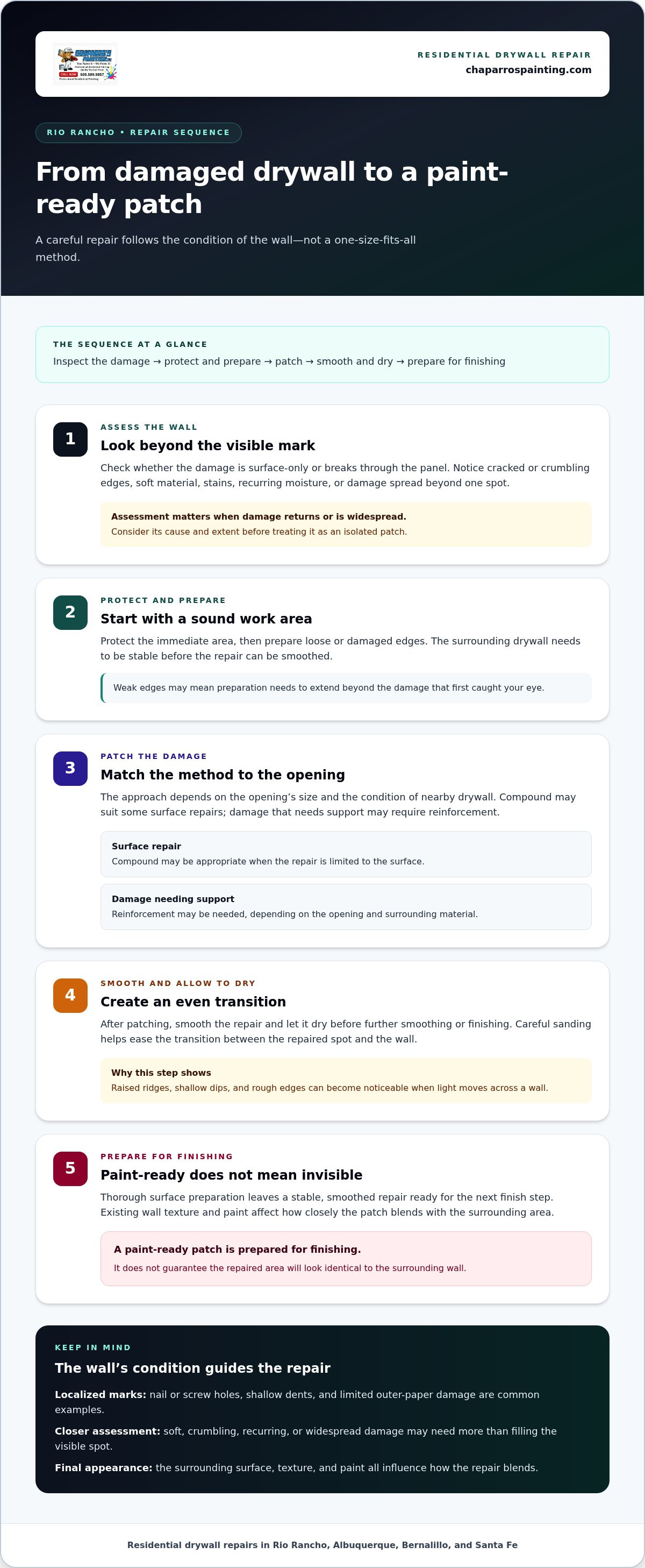
The work generally follows a sequence: inspect the area, prepare the surface, patch the damage, smooth the repair, and prepare it for finishing. The method depends on the damage and whether the material around it is sound. Product details vary; homeowners can consult Drywall Material Specifications for manufacturer information on gypsum board materials.
What happens during a typical patch repair?
First, the immediate work area is protected and loose or damaged edges are prepared. The patching method depends on the size of the opening and the condition of the surrounding drywall. Compound may suit some surface repairs, while damage that needs support may require reinforcement. The repair is then smoothed and allowed to dry before it is prepared for finishing.
Each step affects the result. Applying material over unstable edges can leave a weak or uneven patch. Drying time matters, too: the surface needs to be ready before further smoothing or finishing. The repair approach should follow the wall’s actual condition, not a one-size-fits-all method.
Why does surface preparation affect the final result?
Paint can draw attention to small changes in a wall’s surface. A raised ridge may create a visible edge, while a shallow dip can look different as light moves across it. Rough transitions can stand out against a smoother area. Careful sanding helps create an even transition, and thorough surface preparation leaves the repair ready for the next finish step.
Patching has practical limits. Existing wall texture and paint affect how closely a repair blends with the surrounding area, so a paint-ready surface does not guarantee an invisible repair.
A paint-ready patch is a stable, smoothed repair prepared for the next finishing step. The repaired area may still look different from the surrounding wall.
Preparation also matters when repair work is part of a residential painting project. Chaparro’s Painting, LLC is owned and operated by Jaime Chaparro, whose more than 20 years of painting experience inform the attention given to a repaired surface’s appearance after finishing. Homeowners planning a wall refresh can explore residential drywall repair as part of their project.
DIY or Professional Small Drywall Patch in Rio Rancho?
A small repair can look like an easy weekend task, but the decision involves more than filling a mark. Consider the wall’s location, the condition of the material, and how smooth you expect the finished surface to look. This comparison can help you decide whether to do the work yourself or hire a professional.
| Factor | DIY repair | Professional repair |
|---|---|---|
| Skill | Suits someone comfortable applying compound, sanding, and preparing a surface. | Helpful when matching the wall’s contours and creating an even transition feels challenging. |
| Tools | Requires suitable patching and sanding supplies, plus careful cleanup. | The repairer uses materials and tools suited to the damage. |
| Time | You manage each stage, including drying time and additional preparation. | The service provider handles the repair sequence. The work still depends on the damage and finish required. |
| Finish expectations | A reasonable choice if a small variation in texture or appearance won’t bother you. | Worth considering when the repair is prominent or the wall is being prepared for painting. |
| Repair complexity | More appropriate for minor, accessible damage with sound material around it. | Better suited to uneven damage or areas that need a more considered repair approach. |
When might a homeowner handle a small patch?
A confident DIYer may be able to manage a minor, accessible mark if the surrounding wall is sound and the repair method is clear. Read and follow the product directions, especially for application and drying. Allow time to prepare and sand the surface carefully. DIY may be less suitable if the opening has damaged edges, the wall feels soft, or you’re unsure what lies behind the visible surface.
When can professional repair make sense?
Professional repair can make sense for a wall in a bright, prominent spot, where uneven edges or texture differences may catch the eye. It can also help before a painting project, when careful preparation affects the finished appearance. Chaparro’s Painting provides residential drywall repairs in Rio Rancho, Albuquerque, Bernalillo, and Santa Fe, with painting experience that supports attention to the surface’s next finish.
It’s reasonable to wonder whether one small spot warrants professional help. The visible size of a repair doesn’t determine how noticeable it will be. A patch near an entryway, beside a window, or in a frequently used room can draw attention if its surface doesn’t blend well. Choosing a small drywall patch service Rio Rancho homeowners can rely on is one option when the finish matters and you’d rather not manage the preparation yourself. For a simple mark in a low-visibility area, a careful DIY repair may be enough. Match the approach to the damage and the result you want.
How to Prepare Your Rio Rancho Home for a Drywall Patch Visit
A little preparation can make a drywall repair visit more straightforward. Clear access to the wall, point out each area of concern, and share what you know about its condition. These details help clarify the repair and the finish you have in mind.
What should you do before the repair begins?
Move nearby furniture and fragile items when practical, and make sure the damaged wall is easy to reach. If there are several spots, mark or list each location so none are overlooked. Mention any known history of leaks or recurring damage. You don’t need to diagnose the cause; simply describe what you have noticed.
- Clear the area: Move furniture, wall décor, and breakable items away from the repair spot.
- Identify each mark: Point out all the areas you want assessed, including less obvious damage.
- Share relevant history: Mention leaks, recurring stains, or repairs that have needed attention again.
- Consider the finish: Note whether you plan to paint the room or only address the damaged area.
What details help set finish expectations?
Look at the surrounding wall before the visit. Note whether its surface is smooth or textured, the paint sheen, and any visible color differences from fading or earlier touch-ups. These details affect how the repaired area may look after finishing. A patch and a full-wall repaint are separate scopes of work, so be clear about the area you want finished without assuming an exact match.
Light can make surface differences easier to see. If the damage is near a window, doorway, or strong overhead lighting, mention its location. The repair and finishing plan can account for the wall’s existing appearance, but the surrounding paint and texture influence how closely a patch blends in.
If you’re considering a broader room refresh, professional interior painting in Rio Rancho can help you consider how repair preparation relates to the finished room. Explain whether you want a localized repair or a larger painting project so the scope is clear.
For homeowners arranging a small drywall patch service Rio Rancho, clear access and straightforward notes make it easier to discuss the repair and expected finish. Chaparro’s Painting provides residential drywall repairs in Rio Rancho, Albuquerque, Bernalillo, and Santa Fe. Arrange residential drywall repair for your home.
Arrange Small Drywall Patch Service in Rio Rancho with Chaparro’s Painting
A damaged wall doesn’t have to become a major project. Chaparro’s Painting, LLC provides residential drywall repairs in Rio Rancho, including repairs for localized damage that needs attention before the wall’s next finish. The first step is to describe the damaged area and the result you want.
Jaime Chaparro owns and operates the business and brings more than 20 years of painting experience to residential work. That background is relevant because patch preparation affects the finished wall’s appearance. If you’re planning to paint a room, repairing wall damage can be part of preparing the surface for the broader project.
What homeowners can expect from a residential repair service
Identify where the damage is and describe the finished surface you want. Mention visible changes around the spot, such as loose material, discoloration, or a difference in texture. Clear communication helps define the repair and whether it connects to a larger painting project. The scope depends on the wall’s condition and the area being addressed.
Preparation matters. The goal is to address the damaged area carefully and leave the surface ready for its next finish step. Sharing your priorities early, such as whether you want a localized repair or are planning a room refresh, helps keep the project discussion clear.
Take the next step for a small drywall patch
Before discussing the work, note where the damage is, what you have observed, and whether you are considering painting afterward. You don’t need to determine the repair method yourself. A clear description gives the conversation a useful starting point and helps align the scope with your expectations.
A small drywall patch service Rio Rancho homeowners arrange may be one part of restoring a finished room. If the wall is part of a planned painting project, describe that goal along with the damaged area. Repair and painting are related but distinct parts of the work, so defining the outcome you want helps establish the next steps.
Chaparro’s Painting serves homeowners in Rio Rancho, Albuquerque, Bernalillo, and Santa Fe with residential drywall repairs and painting experience grounded in careful surface preparation. If a visible hole, dent, or damaged area is bothering you, describe what you see and the finish you have in mind. You don’t need to overstate the problem or decide every detail before starting the conversation.
Explore residential painting and repair services and consider how drywall repair could fit your home project. A clear description of the damaged area is a practical first step.
Make the Next Step Toward a Finished Wall
A small wall repair can be a useful starting point for making a room feel cared for again. Think about how you want the space to look when the work is complete, whether that means addressing one visible blemish or planning a broader refresh. That goal can guide your conversation about a small drywall patch service Rio Rancho homeowners can arrange for their home.
You don’t need every detail figured out before taking the next step. A straightforward discussion can help clarify the repair scope and how it may fit your plans for the room. Chaparro’s Painting, LLC provides residential drywall repairs in Rio Rancho, Albuquerque, Bernalillo, and Santa Fe, led by Jaime Chaparro, whose painting experience spans more than 20 years.
When you’re ready, explore Chaparro’s residential painting and repair services. Contact the team to discuss the damaged area and your plans for the wall.
Frequently Asked Questions
How much does a small drywall patch service cost in Rio Rancho?
The cost of a small drywall patch service in Rio Rancho depends on the repair scope, not just the size of the visible mark. A shallow dent may need different work from an opening with damaged edges or surrounding material. The number of repair areas and whether painting is part of the project can also affect the scope. Describe the damage and the finish you want to discuss the work clearly.
Can a small drywall patch be painted the same day?
Not always. Patching material needs to dry before it can be sanded or finished, and the product directions specify drying requirements. Painting too soon can interfere with the finish if the repair is still soft or damp. Consider the room’s ventilation and conditions, too. Don’t assume the repair is ready just because its surface looks dry; follow the material instructions before applying paint.
Is drywall patch repair worth hiring a professional for?
Hiring a professional can be worthwhile if the repair is in a prominent spot, you’re unsure whether the surrounding wall is stable, or you want the surface prepared as part of a painting project. For an isolated blemish in an inconspicuous area, a capable homeowner may prefer to handle it. Consider how noticeable the repair will be and whether you’re comfortable managing the preparation and finish.
What happens if a drywall patch is not smooth before painting?
Uneven areas can remain visible after paint dries. A raised edge may catch light, while a shallow dip can create a shadow or look different from the surrounding wall. Paint won’t level an irregular patch. If you notice roughness before painting, correct the surface first instead of relying on another coat to hide it. Inspect the wall from different angles, especially in daylight or near a lamp.
Can a drywall patch match the texture of the existing wall?
A repair can be finished to resemble the surrounding texture, but an exact match isn’t always possible. Existing texture may vary across the wall, and the repaired area may take paint differently from older material. For a closer blend, look at the texture around the patch in good light and describe what you see, such as a fine, uneven finish or a more pronounced pattern. The repair method should suit the existing surface.
What should I do if a drywall patch keeps showing through paint?
Pause before adding more paint. The patch may show because its edges are raised, the surface dips, or the repaired area absorbs paint differently. Check it in side lighting and feel gently for a ridge or depression. The surface may need additional smoothing or preparation before repainting. If discoloration returns or the wall feels damp, consider whether moisture may be affecting the area rather than treating it as a paint-only problem.
Do I need to repaint the whole room after a small drywall repair?
No. A small repair doesn’t automatically require repainting the whole room. Touching up the repaired spot may be sufficient, but new paint can look different from older paint because of fading, sheen, or color variation. Painting from corner to corner on the affected wall can create a more consistent appearance. Repainting the full room is a separate choice based on the overall look you want, not a requirement of every patch.


