

A fresh coat of stain won’t make a tired fence last if the wood underneath isn’t ready. Albuquerque’s strong sun and dry conditions can fade and weather exterior wood, so preparation matters as much as the finish. This fence staining and sealing Albuquerque guide explains how to assess the wood, prepare the surface, and choose a finish that suits the fence.
Start by checking whether the fence needs a simple refresh or more thorough preparation. This guide covers signs of wear, cleaning and drying, and how stain and sealer differ. It also explains what to expect from professional wood staining, including powerwashing and careful prep. Chaparro's Painting, LLC provides residential wood staining and preparation, with more than 20 years of painting experience.
Key Takeaways
- Fading, rough or dry-looking boards, peeling finish, and uneven weathering are useful signs to assess before deciding what work a fence needs.
- Follow the right sequence: assess the wood, prepare the surface, let it dry fully, then apply a suitable finish.
- Stain and sealer have different roles. Compare their effect on color and visible grain, and follow the manufacturer’s compatibility instructions.
- For fence staining and sealing Albuquerque homeowners can use visual checks and the finish’s care instructions to guide maintenance.
- Chaparro's Painting, LLC offers residential wood staining, powerwashing, and preparation to help get surfaces ready for finishing.
When Does an Albuquerque Wood Fence Need Staining or Sealing?
Faded or uneven color is a reason to assess a fence, not a reason to panic. It may need a fresh finish, but color alone won’t tell you whether the wood is sound or how it should be prepared. Albuquerque’s strong sun and outdoor exposure can contribute to fading and weathering. Inspect the whole fence before deciding what to do.
What signs suggest a wood fence needs attention?
Check both sides of the fence, including board ends, posts, and sections close to the ground. Compare protected areas with those exposed to more direct sun. Faded color, rough or dry-looking boards, and uneven weathering can indicate that a finish has worn or the wood needs attention. Peeling means an existing coating is failing. Assess the surface before applying another finish over it.
Look at the wood itself, too. A loose, split, soft, or unstable board needs a different response from a sound board that has only lost color. Damaged areas may need repair before finishing. A visual inspection can help identify concerns, but it may not reveal the full condition of the wood. Any existing coating also affects preparation and finish choices.
Does every fence need both stain and sealer?
No. Stain adds color and may also provide protection, while a clear protective finish is intended to protect without substantially changing the wood’s appearance. Some products combine these functions, so separate coats aren’t always needed. The wood, existing finish, desired appearance, and product instructions all matter.
For a plain-language overview of stain types and their decorative and protective roles, see Wood Stain: Composition, Types, and Protective Qualities. Use the product label as your guide to suitable surfaces, preparation, application, and compatibility with other finishes. Applying an incompatible product or coating over a failing surface can compromise the result.
The goal of fence staining and sealing Albuquerque homeowners choose should be a finish that suits the fence’s condition and the look they want, not an automatic two-product system. A careful assessment helps distinguish cosmetic fading from wood damage and identifies the preparation needed before finishing.
How Professional Fence Staining and Sealing Begins With Preparation
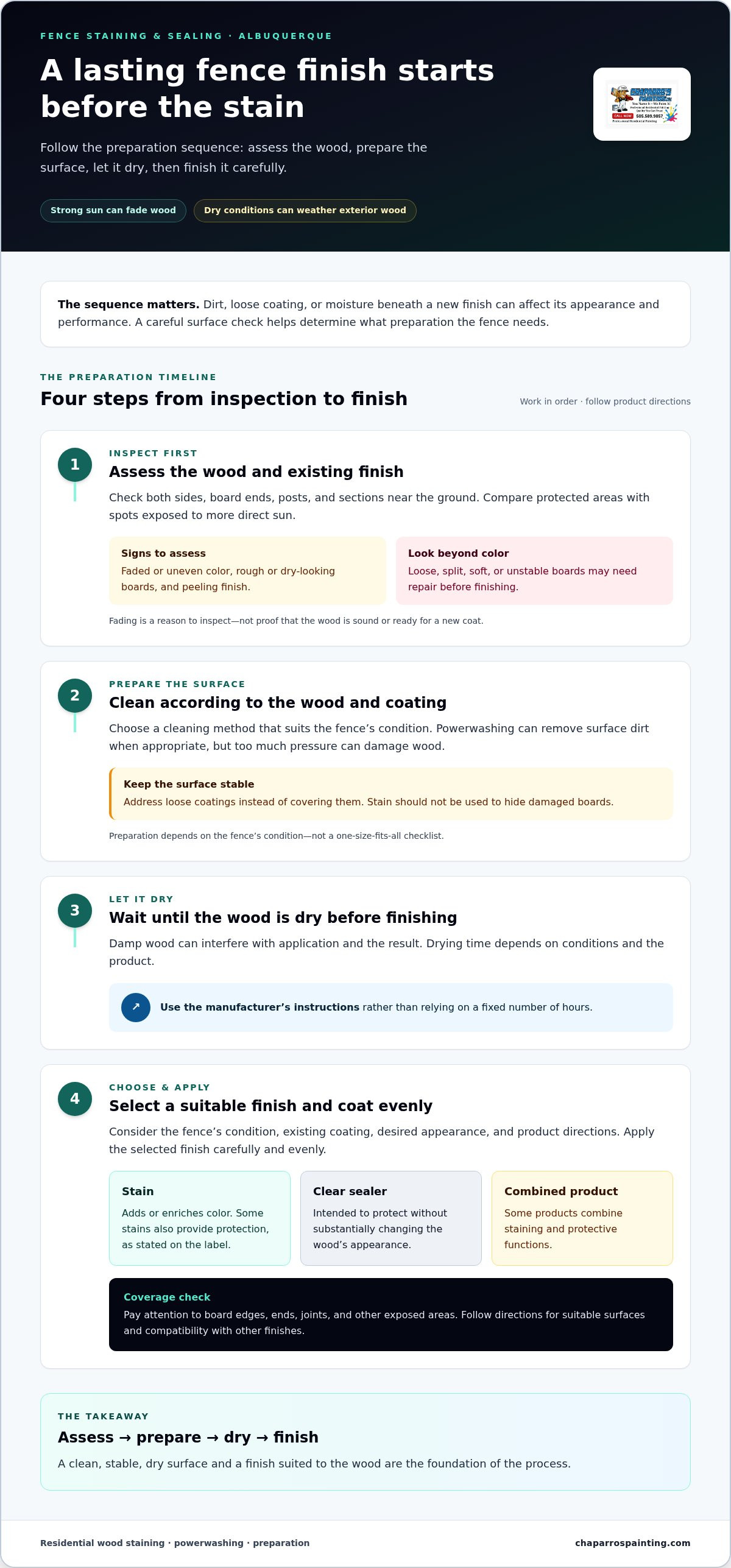
A sound finish starts before the stain is opened. The process is straightforward: assess the fence, prepare the surface, let the wood dry, then apply a finish suited to the wood and its condition. Skipping a step can leave dirt, loose coating, or moisture beneath the new finish, affecting its appearance and performance.
How should a fence be cleaned and prepared?
Begin by checking the boards and any existing finish. The cleaning method should suit both the wood and the coating. Powerwashing can remove surface dirt when appropriate, but too much pressure can damage wood. Address loose coatings instead of covering them, and don’t use stain to hide damaged boards. The aim is a clean, stable surface that’s ready for the selected finish.
Preparation depends on the surface, not a one-size-fits-all checklist. For related guidance on preparing exterior surfaces for a lasting finish, see exterior paint preparation guidance. The USDA Forest Products Laboratory also offers research on wood durability and preservation, explaining why sound wood and appropriate protection matter.
After cleaning, let the fence dry before applying stain or a compatible protective finish. Damp wood can interfere with application and the result. Drying time depends on conditions and the product, so follow the manufacturer’s instructions instead of relying on a fixed number of hours.
What happens between cleaning and applying the finish?
Once the wood is ready, apply the finish evenly and carefully. Board edges, ends, joints, and other exposed areas are easy to miss. Uneven coverage can result in patchy color or inconsistent protection. Follow the product directions, including guidance on suitable surfaces and whether another compatible finish is appropriate.
For a residential fence, a reliable sequence is:
- Assess the wood and any existing coating.
- Clean and prepare the surface according to its condition.
- Let the fence dry as directed before finishing.
- Apply the selected product evenly, including exposed edges.
This methodical approach is central to fence staining and sealing Albuquerque homeowners can rely on. Chaparro's Painting, LLC provides residential wood staining, powerwashing, and preparation. Explore residential wood staining services for help preparing and refreshing exterior wood.
Fence Stain vs. Sealer: Choose a Finish for Your Wood and Albuquerque Exposure
Stain and sealer aren’t interchangeable terms, although some products combine both functions. Choose based on the fence’s condition, the appearance you want, any existing coating, and the product directions. For fence staining and sealing in Albuquerque, consider the fence’s actual exposure rather than assuming one finish suits every surface.
| Finish | Color change | Visible wood grain | Intended role |
|---|---|---|---|
| Stain | Adds or enriches color | Visibility varies by product and opacity | Changes appearance; some stains also provide protection as stated on the label |
| Clear sealer or protective finish | Usually little or no added color | Often remains visible, though sheen can affect the look | Provides the protection specified by its manufacturer |
| Combined stain-and-protective product | Adds color | Depends on the product | May provide both functions in one finish |
What does stain do, and what does a sealer do?
Stain changes or brings out the wood’s color. A sealer or clear protective finish is intended to protect the surface with less color change, but its role depends on the product. Read the label to understand the stated protection and the surfaces the product is made for. Compatibility and application order also depend on the finish system. Don’t assume every stain needs a separate sealer.
For broader background on protective coatings and wood care, the National Park Service’s preservation techniques for wooden objects discusses general preservation principles. Its guidance focuses on wooden objects, so follow the fence product’s directions for exterior use.
How do wood type and existing finish affect the choice?
Different types of wood take finishes differently. A porous or weathered board may absorb product unevenly, while an intact previous coating can affect how a new finish adheres or looks. Cedar and pressure-treated wood are examples of materials homeowners may encounter, not assumptions about your fence. Check the product instructions for suitable wood types and preparation requirements.
Albuquerque fences have different patterns of sun and seasonal exposure depending on their location and surroundings. A section in direct sun may weather differently from a shaded one. Check the product manufacturer’s information for any climate-specific performance guidance, and choose for the actual wood and exposure rather than relying on a promised service life.
How to Maintain a Stained Fence in Albuquerque’s Outdoor Conditions
A stained fence doesn’t need a fixed recoat schedule, but it does benefit from periodic checks. Use the selected product’s care and reapplication instructions to guide maintenance. In Albuquerque, sections exposed to direct sun may look different from shaded areas, so inspect the full fence rather than judging it by one board.
What should homeowners inspect through the year?
Look for changes that may signal the finish is wearing or the wood needs closer attention. Compare sun-exposed boards with shaded sections, and check around posts and places where moisture may collect. Notice whether vegetation is touching the fence or holding dirt against it.
- Color: Fading or uneven color may indicate a change in the finish.
- Surface: Peeling, rough patches, or a dry appearance can point to wear that needs assessment.
- Posts and ground-level areas: Check for standing moisture, debris, or other conditions that could affect the wood.
Sun and seasonal exposure vary with a fence’s position and surroundings, so don’t assume every side will weather at the same rate. A visual check can help you notice changes early. Follow the finish manufacturer’s guidance for inspection, cleaning, and reapplication.
When is cleaning enough, and when is refinishing needed?
Light surface dirt may call for cleaning, not a new coat. Choose a method appropriate for the wood and existing finish. Aggressive pressure or unsuitable cleaners can damage the surface. Clear away debris and vegetation that keep boards dirty or damp, then reassess the finish.
If the coating is peeling, color has worn unevenly, or rough areas remain after cleaning, the fence may need more than routine upkeep. Don’t cover loose material or damaged boards with a new finish. Assess the surface and prepare it appropriately before refinishing. Product instructions also guide compatible cleaning and reapplication practices.
For fence staining and sealing Albuquerque homeowners should let the wood’s condition, not a universal calendar, determine the next step. A broader refresh means evaluating the surface and preparing it for a suitable finish. Chaparro's Painting, LLC provides residential wood staining and preparation. Owner Jaime Chaparro brings more than 20 years of painting experience. Explore residential wood-staining service when your fence needs more than routine cleaning.
Professional Fence Staining and Sealing in Albuquerque: What to Expect
A residential fence project should start with a clear discussion of your goals, not assumptions about the finish. Describe what you’d like to change, whether the fence has a previous coating, and what you’ve noticed, such as fading, peeling, or damaged boards. This gives the project a practical starting point.
What happens during a residential fence-staining project?
Start by assessing the fence’s condition and the preparation the surface needs. Preparation and finish planning go together. The wood, existing coating, and desired appearance all help shape the approach. If the fence needs cleaning or other preparation, account for that before selecting and applying a finish.
Plan the work around the actual fence, not a one-size-fits-all sequence or an assumed material specification. The goal is a neat, consistent result, with careful preparation and a finish appropriate for the project. The selected product’s directions guide its use.
Chaparro’s Painting focuses on residential painting and wood staining. Owner Jaime Chaparro brings more than 20 years of painting experience to residential projects. The company serves Albuquerque and nearby communities, including Rio Rancho, Bernalillo, and Santa Fe.
How can Albuquerque homeowners take the next step?
For a useful first conversation, share the fence’s location, approximate scope, and visible condition. Note whether boards look faded or rough, whether a coating is peeling, and what appearance you want. These details help describe the work without assuming the fence’s full condition before it’s assessed.
If you’re considering fence staining and sealing in Albuquerque, Chaparro’s Painting provides residential wood staining and preparation. Homeowners in Rio Rancho can also read about professional wood staining in Rio Rancho for related information. To discuss your project, visit Chaparro’s Painting.
Give Your Fence a Thoughtful, Lasting Refresh
A dependable fence finish starts with understanding the wood, not simply choosing a color. Check for fading, peeling, and damaged boards, then choose preparation and a finish that suit the surface and product instructions. Periodic visual checks can help you spot when routine cleaning is no longer enough.
For fence staining and sealing in Albuquerque, Chaparro’s Painting brings residential wood-staining experience and careful preparation to each project. Owner Jaime Chaparro has more than 20 years of painting experience. Wood staining, gate staining, powerwashing, and preparation are among the company’s residential services.
Ready to discuss your fence and the preparation it may need? Discuss your residential wood-staining project with Chaparro’s Painting. A clear plan is a practical first step toward a refreshed fence.
Frequently Asked Questions
How often should a wood fence be stained in Albuquerque?
There’s no single re-staining interval that suits every Albuquerque fence. Sun exposure, the fence’s condition, the existing finish, and the product all affect when it needs attention. Check for fading, peeling, roughness, or uneven wear on both shaded and exposed sections. Follow the selected product’s care and reapplication instructions. For fence staining and sealing in Albuquerque, use the fence’s condition and product guidance rather than a guaranteed calendar.
Does a wood fence need both stain and sealer?
No. A fence doesn’t automatically need separate stain and sealer. Some stains provide protective functions, and some products combine color and protection. A clear protective finish may suit a different appearance or purpose. Read the product instructions to understand its role, suitable surfaces, and compatibility with other finishes. The right approach depends on the wood, its condition, and the existing finish.
Can you stain a fence that has already been sealed?
Sometimes, but an existing sealer may prevent new stain from absorbing or adhering as intended. Identify the previous finish if possible, and check whether it’s intact, peeling, or worn. Preparation and compatibility depend on the products involved, so follow the stain manufacturer’s directions for previously sealed wood. Don’t apply stain over a coating simply because the surface looks dry. The underlying finish can affect the result.
How long should a fence dry after powerwashing before staining?
There isn’t one reliable drying time for every fence. Drying depends on the wood, weather, shade, airflow, and how much water the cleaning introduced. Wait until the wood meets the stain manufacturer’s requirements before applying the finish. A surface that looks dry may still hold moisture, especially in joints, board ends, or shaded areas. Follow the product directions instead of relying on a fixed number of hours.
What is the difference between fence stain and fence sealer?
Stain adds or enriches wood color, and its opacity affects how much grain remains visible. A sealer or clear protective finish is intended to protect the wood with less color change, according to the product’s stated purpose. The terms aren’t interchangeable. Some products combine both functions. Check the label for intended use, suitable surfaces, compatibility, and application instructions.
Is fence staining a good fit for cedar or pressure-treated wood?
It can be, but the right product and preparation depend on the wood and its condition. Cedar and pressure-treated lumber are different examples, not assumptions about your fence, and may have different product requirements. Check the finish manufacturer’s instructions for suitable wood types and preparation guidance. Account for any existing coating, too. Assessing the surface helps guide the finish choice and preparation.
What should I expect from professional fence staining in Albuquerque?
Expect the project to begin with a discussion of your goals and an assessment of the fence’s condition, existing finish, and preparation needs. Plan the finish around the wood and product directions rather than a one-size-fits-all specification. Chaparro’s Painting provides residential wood staining, preparation, and powerwashing in Albuquerque, Rio Rancho, Bernalillo, and Santa Fe. Owner Jaime Chaparro brings over 20 years of painting experience to residential projects.


