
Did you know that over 40% of exterior paint failures happen in the first two years because of poor timing and rushed application? In New Mexico, where the sun beats down for over 280 days a year, a "quick" paint job is usually just a waste of money. You want a home that looks fresh for a decade, not just a season. It's natural to feel anxious when you see stucco cracks or peeling paint, especially if you're worried about a contractor taking shortcuts. Meticulous exterior paint prep work is the only way to shield your property from the high-altitude UV rays and extreme temperature swings of the Southwest.
We agree that your home is your most valuable investment. You deserve a finish that stands up to the desert heat without failing. This guide will show you how thorough preparation turns a standard project into a long-term defense for your home. You'll learn the difference between cosmetic stucco issues and structural concerns, the importance of professional power washing, and how a disciplined process ensures you get the beautiful, durable result you expect.
Key Takeaways
- Learn why preparation is the structural foundation of your home's finish and why paint cannot bond to dirt or oxidized chalk.
- Understand how professional powerwashing identifies hidden issues like loose stucco before any coating is applied.
- Discover how meticulous exterior paint prep work uses specialized elastomeric patches to ensure stucco repairs move naturally with your house.
- Identify the specific scraping and caulking techniques that prevent moisture from getting behind the paint film.
- See why a high-quality preparation process often takes more time than the actual painting but saves you money on long-term maintenance.
Why Exterior Paint Prep Work is 70% of a Professional Result
Prep work is the structural foundation of your home's protective shell. Think of it like the foundation of a house. If the base is weak, the rest will eventually collapse. Many homeowners focus on the final color. The real work happens before the first gallon of paint is opened. Professional exterior paint prep work ensures that your investment actually lasts. In Rio Rancho and across New Mexico, the intense sun is your biggest enemy. It doesn't just fade the color. It breaks down the chemical bonds of old paint on a molecular level.
When you're understanding paint composition, you realize that paint is a film designed to grip a surface. It doesn't stick to dirt, oxidized chalk, or loose stucco fibers. If you apply a fresh coat over these contaminants, the paint is essentially sticking to dust. Within months, you'll see "alligatoring" or large sheets of peeling paint. This happens because the new layer pulls the old, loose layer right off the wall. Skipping these steps also invites moisture intrusion. This leads to costly repairs later.
The Science of Adhesion in the High Desert
Our climate is harsh. New Mexico has over 280 sunny days a year. This high desert heat causes your home's surfaces to expand and contract constantly. This movement puts immense stress on the paint film. To survive, the paint needs a proper "surface profile." This means the surface is clean and slightly rough. This allows the paint to "bite" into the material. Adhesion is the mechanical and chemical bond between paint and substrate. Without it, the paint just sits on top like a loose skin.
Common Signs of Poor Previous Prep Work
You can often tell if a previous contractor cut corners. One major sign is "chalking." This is the white, powdery residue that rubs off on your hand when you touch the wall. It indicates the paint binder has failed. Another sign is peeling in large sheets rather than small flakes. This is a clear indicator of bond failure at the substrate level. Finally, look at your stucco. Visible cracks often suggest underlying moisture or movement issues. These problems should have been addressed before the last paint job. Addressing these during the prep phase is non-negotiable for a lasting finish.
The Cleaning Phase: Powerwashing and Surface Assessment
Professional cleaning is the first real step in effective exterior paint prep work. Most homeowners assume a quick spray with a garden hose is enough. It isn't. Professional powerwashing removes visible dirt, but its most important job is stripping away oxidation. This chalky residue is a primary cause of bond failure in the high desert. While we wash, we conduct a detailed surface assessment. Water acts as a diagnostic tool. It reveals where stucco is hollow or loose. These areas might look fine when dry, but the water pressure helps us find weak spots before we ever open a paint can.
We take environmental protection seriously during this phase. Albuquerque landscaping is precious and often difficult to maintain. We use barriers and specific runoff techniques to protect your plants and soil from the wash process. Once the cleaning is finished, we follow the strict 48-hour rule. Moisture must fully evaporate from the substrate before the first drop of primer touches the wall. Painting over damp surfaces is a recipe for trapped moisture and early peeling. We wait until the surface is bone-dry to ensure the best possible bond.
Powerwashing vs. Pressure Washing: Know the Difference
Understanding the difference between powerwashing and pressure washing is vital for home maintenance. Powerwashing uses heated water and specialized detergents to break down stubborn desert grime and oils. Pressure washing relies solely on high-force water. For a New Mexico home, high PSI can be a "stucco killer" if handled by an amateur. It can blast through the finish or force water deep into the wall system. We focus on a low-pressure, high-volume approach for sensitive areas. This includes eaves, soffits, and trim where spiders and dust collect. For more technical details on surface issues, the NPS guide to paint problems offers excellent insight into why these cleaning steps are necessary.
Identifying Substrate Failures Early
We identify substrate failures early to prevent surprises during the project. We look for "hollow" stucco by tapping on suspicious areas. If it sounds like a drum, the stucco has detached from the underlying lath and requires repair. We also check wood gates and trim for dry rot or sun-bleaching. These materials suffer significantly under our intense UV rays. We document every finding carefully. This ensures the repair scope is fully understood before work continues. If you want to ensure your home is ready for a fresh coat, a professional powerwashing and assessment is the right place to start.
Structural Repairs: Stucco, Drywall, and Wood Restoration
Patching is not painting. This is a fundamental rule for any lasting finish. If the underlying surface is compromised, the most expensive paint in the world will fail. Structural integrity must come first. During exterior paint prep work, we address the physical damage revealed after the cleaning phase. This includes filling gaps, replacing rotted wood, and fixing compromised stucco. We don't just cover these issues; we restore the surface so it can support the new finish for a decade or more. High-quality prep ensures that your home remains a protective shell against the elements.
In New Mexico, stucco is the standard construction material. It is also prone to cracking due to our extreme temperature shifts. We use specialized elastomeric patches for these repairs. Unlike standard spackle or rigid fillers, elastomeric products remain flexible after they cure. They move with your house as it expands in the afternoon heat and contracts at night. This flexibility prevents the repair from popping out or cracking again within a single season. We also handle drywall repairs on porch ceilings or garage entries. These areas often suffer from moisture or settling and require a seamless fix to look right once painted.
The Rio Rancho Stucco Repair Checklist
Not all cracks are created equal. Hairline cracks are often cosmetic, but structural gaps may require a deeper look. We follow a disciplined process to ensure repairs are invisible.
- Match the texture: Whether your home has a lace, dash, or sand finish, the patch must blend in perfectly.
- Avoid caulk for cracks: Using caulk on stucco cracks is a mistake. It has a different texture and creates a smooth line that stands out once the paint is applied.
- Prime the patch: New stucco is highly alkaline. It can "burn" through paint if it isn't sealed with the correct primer first.
Wood and Gate Prep: Sanding and Staining
Local gates and fences take a beating from the sun. Before we start gate painting/staining, we sand away "grayed" wood fibers. These are dead cells killed by intense UV exposure. Paint and stain cannot bond to dead wood. We sand until we reach healthy, honey-colored cells. We also watch for tannin bleed in species like cedar. This requires specific primers to prevent brown stains from bubbling to the surface. We always verify that the wood is dry. Applying product to damp wood leads to immediate bubbling and failure.

The Final Barrier: Scraping, Caulking, and Priming
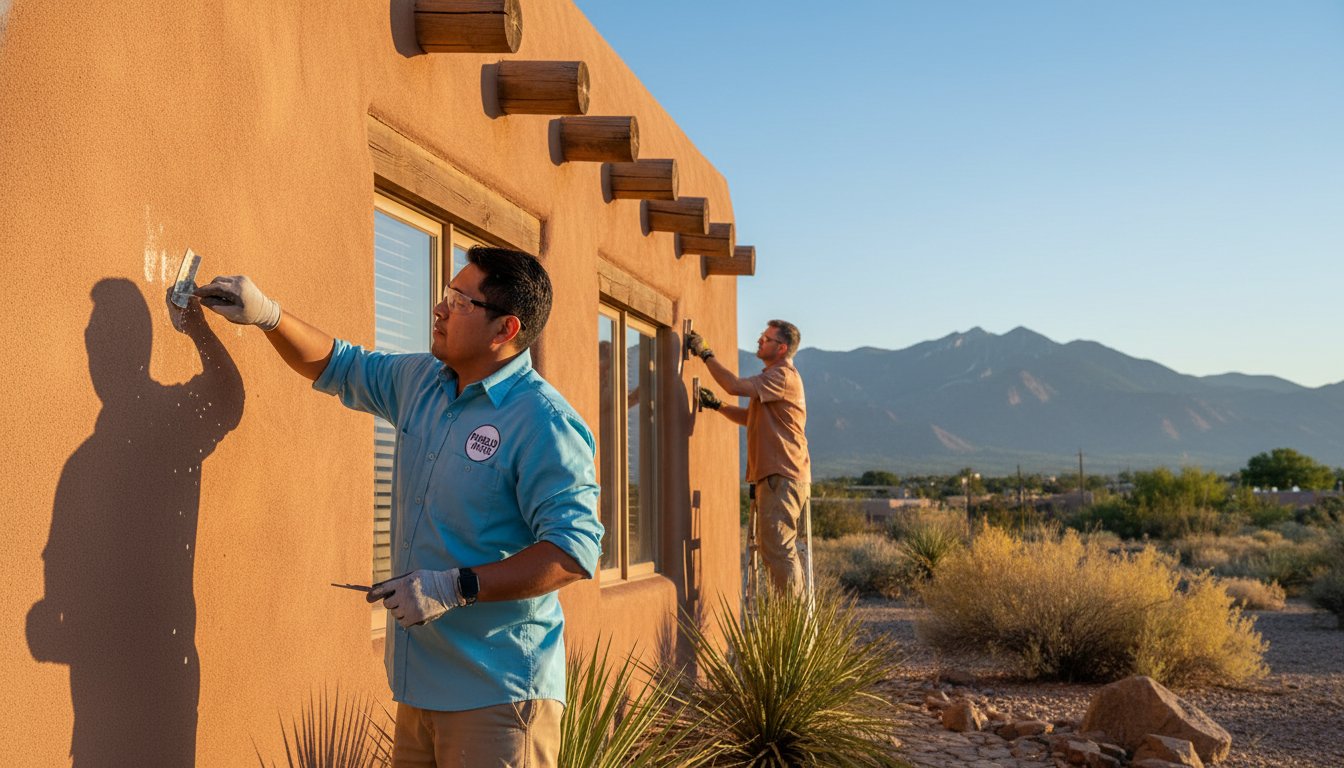
Scraping is the bridge between structural repair and the final seal. It is a labor-intensive part of exterior paint prep work that requires a steady hand and a sharp eye. Many homeowners think scraping means removing every ounce of old paint. That isn't the goal. We focus on finding the "solid edge." This means we remove any loose or flaking material until we reach paint that is still firmly bonded to the substrate. If we leave a single loose flake, the new coat will eventually pull it away. We sand these edges down to create a smooth transition so the repair is invisible once the topcoat is applied.
Moisture trapped behind the paint film is the primary cause of failure. Even in our dry climate, small amounts of rain or snow can seep into unsealed gaps. When that water freezes and expands during a cold New Mexico night, it pushes the paint right off the wall. Caulking every seam and gap creates a watertight barrier. We pay close attention to where different materials meet, such as where wood trim touches stucco. This step is often where "shortcut" contractors fail, but it is the difference between a job that lasts three years and one that lasts ten. If you want a finish built to endure, our team prioritizes this meticulous exterior painting preparation.
Caulking Strategy for Energy Efficiency
Our caulking process does more than just protect your paint. It improves your home's energy efficiency. We focus on windows, door frames, and any penetration point in the exterior shell. We use high-quality elastomeric caulk specifically designed for the Southwest. This material can handle 40-degree temperature swings without cracking or shrinking. This "invisible seal" keeps moisture out and protects your home's interior from the fine desert dust and drafts that often plague older properties.
Choosing the Right Primer for the Job
Priming is the "glue" that bridges the gap between the old surface and your new paint. We don't believe in a one-size-fits-all approach. Porous stucco needs a sealing primer to prevent it from soaking up the topcoat unevenly. Glossy wood trim requires a bonding primer with extra "bite." A primer's job is to neutralize pH and provide a uniform "bite" for the topcoat. This is especially vital for New Mexico stucco, which is often high-alkali. Without a masonry-specific primer to neutralize that alkalinity, the paint can "burn" and discolor within months. Spot-priming is rarely enough for sun-baked, south-facing walls. We often recommend a full prime coat to ensure the color stays vibrant and the bond remains unbreakable.
Professional vs. DIY Prep: Achieving the Chaparro’s Standard
Jaime Chaparro approaches every home walkthrough with a veteran’s eye. He isn't just looking for color choices. He is looking for the "why" behind existing failures. This level of scrutiny is what separates a standard job from the Chaparro standard. Real exterior paint prep work is often invisible once the job is done, but its absence is obvious within a few seasons. Many homeowners are surprised to find that the preparation phase often takes twice as long as the actual application of paint. This is by design. A disciplined professional knows that a rushed base leads to a failed finish.
We use professional-grade tools to ensure every square inch is ready for a new coat. While a DIY project might rely on a basic ladder and a hand brush, we utilize high-capacity powerwashers and specialized equipment to achieve uniform coverage with primers. This technology allows us to reach deep into the pores of sun-baked stucco. We provide the peace of mind that comes with knowing the job was done right the first time. When you choose a professional, you are investing in a result that only a meticulously prepared surface can support.
Why Experience Matters in Rio Rancho
Rio Rancho presents unique challenges that generic national contractors often overlook. We understand the local wind patterns and the narrow "dust windows" that can ruin a fresh coat if timing is off. A local expert knows how to work around the high-desert spring winds that kick up fine sand. We also spot specific regional issues like "hot spots" on south-facing walls that require extra attention. View our professional exterior painting services to see how we tailor our process to the New Mexico climate.
Your Next Steps for a Protected Home
Your next step is to secure a detailed estimate. A professional quote should never just say "prep and paint." It should break down every stage. Ask your painter specifically about their cleaning process and which primers they intend to use on your stucco. If they can't explain how they handle moisture evaporation or alkali neutralization, they might be planning to cut corners. We believe in total transparency from the first walkthrough to the final inspection. Contact Chaparro's Painting for a free estimate today and let us help you protect your home for years to come.
Protect Your Investment with a Professional Finish
Your home’s exterior is its first line of defense against high-altitude UV rays and shifting temperatures. Successful painting is always built on a foundation of thorough cleaning, specialized stucco repairs, and precise priming. These steps are the difference between a finish that peels in two years and one that stands strong for a decade. Investing in professional exterior paint prep work ensures that every crack is sealed and every surface is ready to bond with the topcoat. Skipping these details only leads to higher maintenance costs down the road.
Chaparro's Painting, LLC is owned and operated by Jaime Chaparro. We bring over 20 years of local New Mexico experience to every residential project. Our team specializes in stucco repair and residential exteriors, focusing on the disciplined standards that keep homes looking fresh in our unique climate. You deserve the peace of mind that comes from a job done right the first time by a seasoned craftsman.
Ready to shield your home from the elements? Get Your Free Professional Painting Estimate and see how a dedicated local expert can transform your property. We look forward to providing the durable, beautiful finish your home deserves.
Frequently Asked Questions
How long does exterior paint prep work usually take?
Prep work typically takes two to three full days for a standard residential home. This duration can increase if your property requires extensive stucco repairs or wood restoration. We spend a significant portion of the project timeline on these foundational steps. Our goal is to ensure the final finish lasts for years, not just a single season.
Can you paint over old, peeling paint if you sand it down?
You can paint over areas that previously peeled only after you remove all loose material and sand the edges smooth. This process is called feathering. It creates a level surface so the transition between the old paint and the substrate is not visible. Applying new paint over loose edges will cause the new layer to fail almost immediately.
Do you really need to powerwash your house before painting?
Powerwashing is a non-negotiable step for a professional finish. It removes more than just dirt; it strips away the oxidized chalk that prevents paint from bonding. In our dusty New Mexico environment, skipping this step means your new paint is essentially sticking to a layer of powder rather than the actual wall surface.
What happens if it rains during the prep work phase?
If it rains during the prep phase, we stop work immediately to allow the surfaces to dry completely. We follow a strict 48-hour drying rule before applying any primer or paint. Trapping moisture behind a new coat of paint leads to bubbling and premature failure. We wait for the substrate to be bone-dry before continuing.
Is stucco repair included in a standard exterior painting quote?
We include standard stucco repairs in our exterior painting quotes after a thorough on-site assessment. This ensures that hairline cracks and minor chips are addressed before the coating begins. If we discover larger structural issues during the cleaning phase, we always discuss the necessary repair scope with you before moving forward with any painting.
How do I know if my stucco cracks are serious or just cosmetic?
Cosmetic cracks are usually hairline thin and do not show signs of widening over time. You can identify more serious structural issues if the crack is wider than one-eighth of an inch. Another sign is a hollow sound when you tap the surface. Hollow sounds indicate the material has detached from the underlying lath and needs professional repair.
Why is my paint chalking, and how do you fix it before repainting?
Paint chalks when the sun’s UV rays break down the paint’s binder, leaving a powdery residue on the surface. We fix this during the exterior paint prep work phase by powerwashing the surface and applying a high-quality masonry primer. This primer seals the remaining chalk and provides a stable surface for the new topcoat to grip.
Does professional prep work increase the total cost of the project?
Professional exterior paint prep work does increase the initial project cost because it is labor-intensive. However, it significantly lowers your long-term maintenance expenses. A well-prepped home can last twice as long as one where shortcuts were taken. This prevents you from paying for a full repaint every few years and protects your home's value.


