

Scuffed or chipped trim can make a well-kept room feel unfinished. A lasting finish takes more than a fresh coat of paint: a trim and baseboard painting service Santa Fe homeowners can rely on starts with careful preparation, a clear project scope, and attention to crisp edges and nearby surfaces. With a plan for the work areas, it’s possible to refresh trim while keeping household routines in mind.
This article explains what goes into a clean trim finish and how to plan a residential painting project. Learn how surface preparation supports the result, how sheen and color affect the look of trim, and what to consider when comparing DIY and professional painting. Clear expectations before work begins make it easier to plan access and identify which rooms and surfaces are included.
Chaparro’s Painting, LLC provides residential interior painting in Santa Fe, as well as Rio Rancho, Albuquerque, and Bernalillo. Owner Jaime Chaparro brings more than 20 years of painting industry experience to residential projects. Read on for practical guidance on getting trim and baseboards to look consistent with the rest of your home.
Key Takeaways
- Identify which trim and baseboards need attention, from door and window frames to floor edges, so the project scope reflects your rooms.
- A careful sequence of condition assessment, surface preparation, protection, and paint application supports a more even finish.
- Compare DIY and professional painting by weighing precision, preparation time, and how the work may affect household routines.
- Before a trim and baseboard painting service Santa Fe project, clear access around baseboards and move fragile items away from work areas.
- Chaparro’s Painting serves homeowners in Santa Fe, Rio Rancho, Albuquerque, and Bernalillo, with more than 20 years of painting experience informing its residential interior work.
What Does Trim and Baseboard Painting in Santa Fe Include?
Trim frames doors, windows, and other architectural features. Baseboards cover the joint where walls meet the floor. A trim and baseboard painting service Santa Fe homeowners choose can refresh these details as part of residential interior painting. The scope depends on which surfaces you want painted, their existing condition, and the finish you have in mind.
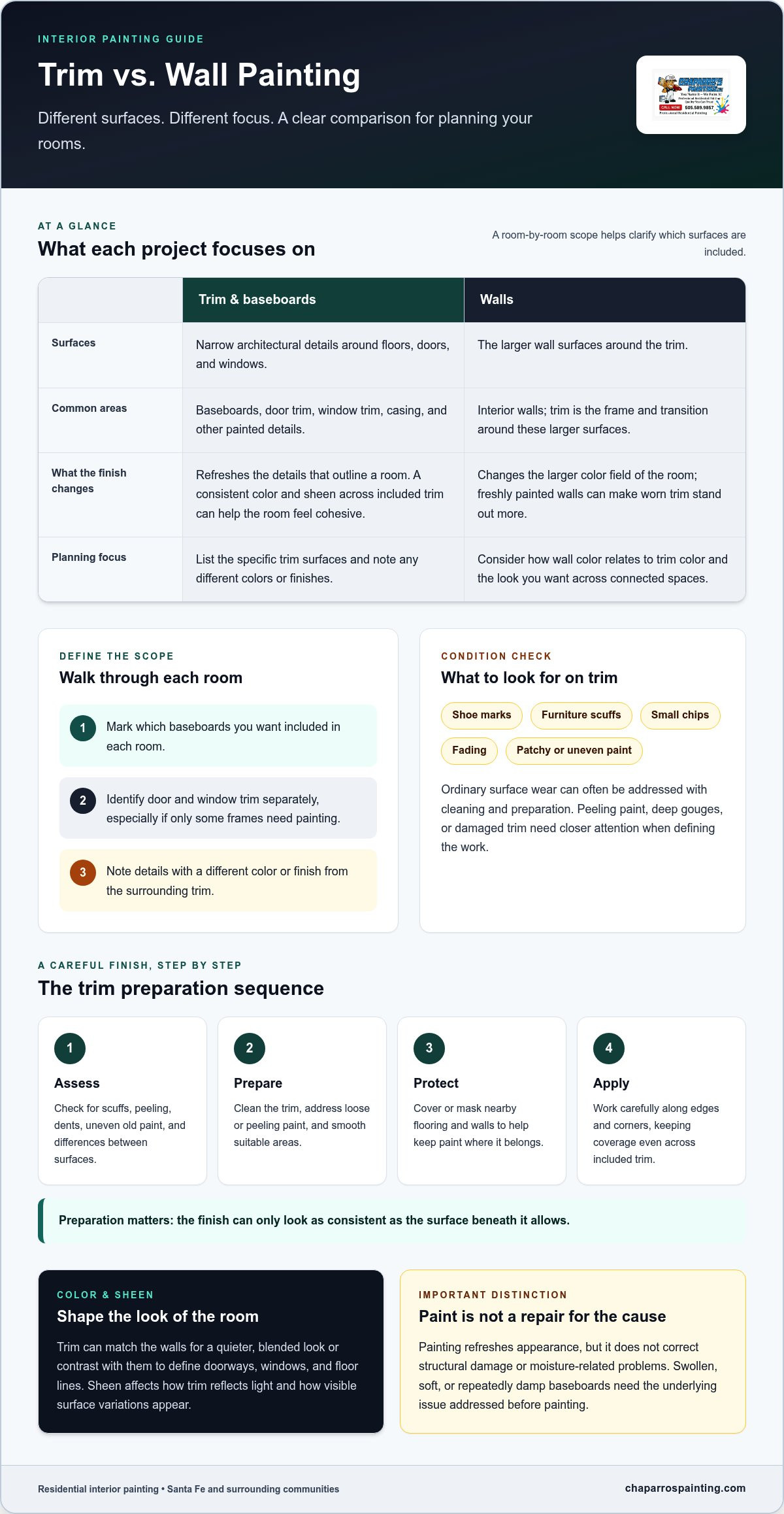
Trim can be easy to overlook until it becomes scuffed, chipped, faded, or uneven beside freshly painted walls. Because it outlines a room, worn trim can make a new wall color look less polished. A consistent color and sheen across the included surfaces can help the room feel more cohesive. Unlike wall painting, trim painting focuses on narrow architectural details and the transitions they create.
Trim painting refreshes selected interior features around floors, doors, and windows; wall painting covers the larger wall surfaces around them. Painting itself includes many forms and approaches, as described in The art of painting. For a home project, start by listing the trim you want refreshed and the finish you want it to have.
Which Interior Details Can a Trim Painting Project Address?
Common surfaces include baseboards, door trim, and window trim. Some rooms also have casing around openings or other painted details. Since homes differ in layout and trim, walk through each space and note what you want included. A room-by-room list helps define the scope and reduces the chance of overlooking a surface.
- Mark the baseboards in each room you want included.
- Identify door and window trim separately, especially if you want only some frames painted.
- Note details with a different color or finish from the surrounding trim.
When Is It Time to Refresh Painted Baseboards?
Look for recurring shoe marks, furniture scuffs, small chips, fading, or paint that appears patchy or uneven. These signs may stand out more after walls are repainted. Ordinary surface wear can often be addressed through cleaning and preparation before a new finish is applied. Peeling paint, deep gouges, or damaged trim need closer attention when defining the work.
Paint refreshes appearance, but it doesn’t correct the cause of structural damage or moisture-related problems. If a baseboard is swollen, soft, or repeatedly affected by dampness, address the underlying issue before painting. For sound trim, define which surfaces are included and what preparation their condition calls for. This helps tailor the work to the home rather than assuming every Santa Fe project needs the same treatment.
How Professional Trim Painting Creates a Cleaner, More Durable Finish
A neat trim finish depends on the steps taken before paint goes on. Dust, grease, loose paint, and rough patches can interfere with adhesion or show through a new coat. A professional trim and baseboard painting service Santa Fe homeowners choose follows a clear sequence: assess the surfaces, prepare them, protect nearby areas, then apply the finish with care.
- Assess the condition. Look for scuffs, peeling areas, dents, uneven old paint, and differences between trim surfaces. Their condition helps determine the preparation needed.
- Prepare the trim. Clean the surface, address loose or peeling paint, and smooth suitable areas to create a sound base.
- Protect adjacent surfaces. Cover or mask nearby flooring and walls to help keep paint where it belongs.
- Apply the finish. Work carefully along edges and corners, keeping coverage even across the included trim.
Preparation matters because the finish can only look as consistent as the surface beneath it allows. It also helps the coating adhere to clean, sound trim. The right approach depends on the surface: a small imperfection may need different attention from extensive peeling or damage. Professional organizations such as the Painting Contractors Association (PCA) provide resources for painting contractors, reflecting the value of informed, methodical workmanship.
What Preparation Helps Baseboards Look Their Best?
Baseboards collect dust and everyday marks, so cleaning is a practical first step. Address loose or peeling paint before applying a new coat, and smooth suitable rough areas to reduce visible ridges. The right repair depends on the trim’s material and condition. Protect nearby flooring and walls during the work to help create cleaner edges and prevent unwanted paint marks.
Follow the preparation sequence rather than painting over residue or unstable paint. Skipping cleaning may leave residue beneath the finish, while painting over loose paint can leave an unstable surface. An assessment helps determine how much preparation each section needs instead of treating every baseboard the same way.
How Do Paint Colour and Sheen Affect Trim?
Trim can match the walls for a quieter, more blended look, or contrast with them to define doorways, windows, and floor lines. Sheen changes how trim reflects light and can affect how visible surface variations appear. There’s no single finish that suits every home. Consider the room’s lighting, wall colour, existing finishes, and the look you want across connected spaces.
For a residential project, these choices work alongside the trim’s condition and the areas included. Chaparro’s Painting, LLC provides residential interior painting for homeowners in Santa Fe, Rio Rancho, Albuquerque, and Bernalillo, with detailed preparation as part of its work. Learn more about residential painting in Santa Fe as you consider the finish and scope that fit your home.
DIY or Professional Trim Painting: Which Approach Fits Your Santa Fe Home?
Choosing between a do-it-yourself project and professional help depends on the amount of trim, its condition, and the finish you want. A small touch-up on an accessible, sound baseboard may suit a homeowner with time and patience to work carefully. Painting several rooms or detailed door and window trim involves more setup and close control than a quick brush-over suggests.
| Consideration | DIY | Professional painting |
|---|---|---|
| Preparation | You handle cleaning, surface work, and protection. | Preparation is part of the planned project workflow. |
| Precision | Results depend on your tools, technique, and patience. | Experienced painters focus on steady coverage and careful edges. |
| Time and disruption | You fit the work around household routines and your available time. | The work is organized around an agreed scope and work area. |
Neither option suits every home. DIY can make sense for one small, easy-to-reach area where the existing paint is sound and the desired result is straightforward. Extensive wear, multiple rooms, or trim with many corners and profiles can make a professional project more practical. A trim and baseboard painting service Santa Fe residents choose brings focused attention to this detail-heavy part of interior painting and defines the work before it begins.
What Makes Trim Painting More Demanding Than It Looks?
Trim has narrow edges, joints, corners, and transitions close to walls and floors. Uneven coverage or a brush that strays can stand out along those lines, so steady application takes patience. Surface conditions can also vary from room to room: an older coating may be intact in one area and peeling in another. The condition of the trim should guide the preparation, without assuming every project needs extensive repairs.
How Santa Fe Home Conditions Can Shape the Project
Start with the trim itself. Wood, composite, and previously painted surfaces can call for different preparation, so identify the material and note whether the existing finish is sound, chipped, or peeling. Follow the paint label directions, including any stated conditions for use and drying. Product instructions and the conditions in the room are more useful than a general climate assumption.
For homes built before 1978, the age of the home is relevant if painting work will disturb existing paint. The EPA Lead Renovation, Repair, and Painting (RRP) Rule explains lead-safe requirements for covered renovation work. Review the EPA guidance to understand when it applies rather than assuming all older trim work has the same requirements.
For multiple rooms or detailed trim, clear expectations can make planning easier. Chaparro’s Painting provides residential interior painting in Santa Fe, Rio Rancho, Albuquerque, and Bernalillo, with careful preparation. Explore residential painting services to learn more about the company’s work.
How to Prepare Your Home for a Santa Fe Trim Painting Project
Planning helps define the work and makes a painting project easier to manage at home. Before a trim and baseboard painting service Santa Fe project begins, identify the rooms and surfaces you want painted, choose the finish, and make a clear path to the work areas. This gives everyone a shared picture of the project before preparation starts.
What Should You Decide Before Work Begins?
Use this checklist to organize your priorities:
- List the rooms. Note each space you want included, such as the living room, hallway, or bedrooms.
- Name the trim surfaces. Specify baseboards, door trim, window trim, or other painted details. Don’t assume every surface in a room is automatically part of the scope.
- Choose the look. Decide whether trim should match the walls, complement their colour, or create contrast. Consider sheen as well as colour, since both affect the overall appearance.
- Plan for access. Think about household routines and where furniture, pets, or family members may need to be during the work.
A room-by-room note and a few reference photos can help communicate which areas matter most. If walls are also part of a wider interior refresh, the interior painting service overview offers broader context for coordinating the work.
What Project Details Help Keep Expectations Clear?
Describe what you see on the existing trim. Note where paint is peeling, chipped, or uneven, and point out any areas that appear damaged. Surface condition affects preparation, so recording these details helps shape a practical plan. Agree on which surfaces are included and the colour and sheen you prefer. A shared scope prevents different assumptions about what the project covers.
Before work begins, move small furniture and belongings away from baseboards to provide clear access. Take fragile items off nearby shelves and window ledges, and put breakables somewhere secure. Shift larger furniture as needed to open a path along the walls. Keep everyday essentials accessible and consider which rooms your household will need to use during the project.
Protecting belongings and planning access can reduce avoidable disruption. The painting plan should reflect the trim’s condition and your priorities rather than assume every room needs the same preparation or repair work. For residential interior painting in Santa Fe, Rio Rancho, Albuquerque, or Bernalillo, connect with Chaparro’s Painting to discuss the surfaces and finish you have in mind.
Arrange Residential Trim and Baseboard Painting with Chaparro’s Painting
Trim and baseboards are small features with a strong effect on how finished a room feels. Chaparro’s Painting, LLC provides residential interior painting for homeowners in Santa Fe, Rio Rancho, Albuquerque, and Bernalillo, including trim and baseboard painting. Owner Jaime Chaparro brings more than 20 years of painting industry experience to the work, with careful preparation and clear project expectations as part of the company’s approach.
A useful trim project reflects the home rather than following a one-size-fits-all checklist. One homeowner may want worn baseboards refreshed throughout the main living areas. Another may be focused on door and window trim in a recently updated room. Identifying those priorities helps shape a practical discussion about the surfaces, their condition, and the finish you want.
A Residential Painting Approach Built Around Careful Preparation
Good planning starts with understanding the existing trim and your goals. Preparation is part of residential painting work, not an afterthought. The condition of each surface informs the work plan, while clear communication aligns expectations about what is included. Chaparro’s Painting brings more than 20 years of painting experience to detail-focused interior projects, with attention to the steps needed before paint is applied.
The project discussion can cover the rooms you want addressed, which surfaces are in scope, and whether the finish should match or contrast with nearby walls. It can also account for visible wear or peeling that may affect preparation. Specific details help keep the plan grounded in your home and create a shared understanding of the work before it begins.
Start a Conversation About Your Santa Fe Trim Project
To get started, describe the rooms you have in mind and the trim that needs attention. Mention what you’ve noticed, such as scuffs, chips, fading, or uneven paint. Include any preferred colour or sheen. These details help focus the project discussion and clarify the result you’re aiming for.
The scope is tailored to the home and requested work. It may include selected baseboards, door trim, window trim, or a combination of interior details. Discuss access to the work areas and household routines to consider during the project. You don’t need every decision settled before starting the conversation; sharing your priorities is a useful first step.
If you’re considering a trim and baseboard painting service Santa Fe homeowners can tailor to their homes, contact Chaparro’s Painting to discuss your project goals. A clear conversation helps establish which surfaces matter most and what to expect from the residential painting work.
Give Your Santa Fe Trim a Fresh Start
Before planning the work, consider how you want the room to feel when the trim is refreshed. A subtle match can keep the look calm, while contrast can bring definition to windows, doors, and floors. Your preferred look, the trim’s condition, and the rooms involved are practical starting points for a trim and baseboard painting service Santa Fe homeowners can tailor to their homes.
Chaparro’s Painting focuses on residential painting and serves Santa Fe, Rio Rancho, Albuquerque, and Bernalillo. Owner Jaime Chaparro brings more than 20 years of painting industry experience to interior projects. Share the rooms you have in mind, describe the trim’s condition, and explain the finish you’re considering. Then discuss a scope that fits your home and priorities.
Discuss your Santa Fe trim painting project with Chaparro’s Painting. A clear first conversation can help you move toward trim that feels considered and at home in your space.
Frequently Asked Questions
How much does trim and baseboard painting cost in Santa Fe?
For a trim and baseboard painting service Santa Fe homeowners are considering, cost depends on the amount of trim, its condition, preparation needs, and the requested scope. A few rooms with sound baseboards differ from a home with several trim types or worn surfaces. Describe the rooms and surfaces you have in mind to discuss the specific project with Chaparro’s Painting.
How long does it take for freshly painted baseboards to dry?
Drying time varies, so follow the paint label and the painter’s instructions for your project. Paint that feels dry to the touch may not yet be ready for routine contact, such as vacuuming near the edge or moving furniture against the baseboard. The specific paint, how it was applied, and room conditions all affect drying and curing. Avoid touching or cleaning the finish prematurely, even if it looks dry.
Can you paint baseboards without removing them?
Yes, baseboards are commonly painted in place when their condition and the project setup allow it. This avoids removing sound trim solely for painting. The work still requires access along the wall and care around adjacent flooring and surfaces. Existing material, installation, and condition can affect the approach, so the plan should suit the actual trim rather than assume every baseboard can be treated identically.
Should trim and baseboards be painted before or after new flooring?
The right sequence depends on whether flooring is being replaced and whether baseboards will stay in place or be handled as part of that work. Coordinate the painting and flooring plans before either begins. This helps protect fresh surfaces and clarify how the trim edge will meet the new floor. Share the project scope with everyone involved so the order fits the home rather than relying on one sequence for every renovation.
Can I change the trim colour without repainting the walls?
Yes, trim can be a different colour from the walls, whether you prefer a close complement or a stronger contrast. Repainting the walls isn’t automatically required. The existing wall condition, selected trim colour, and care during application all influence how clean the transition looks. Consider the room as a whole, including its lighting and nearby finishes, before choosing a colour. That helps the new trim feel intentional alongside the current walls.
How should I clean painted baseboards after the project?
Wait until the paint has dried and cured according to its product directions before routine cleaning. For light dust, start gently with a soft cloth; avoid abrasive pads and harsh cleaners that could mark the finish. Cleaning guidance can vary with the coating and surface, so follow the care instructions for the paint used on your baseboards. If you’re unsure whether the finish is ready, don’t test it by scrubbing or pressing hard.


