

A small dent can seem simple to fix until fresh paint makes the patch stand out. For drywall repair Santa Fe homeowners need more than a quick fill. The right approach depends on the damage and the condition of the surrounding surface. Careful preparation helps the repair blend with the wall.
It’s reasonable to wonder whether a spot needs a small patch or more extensive work. You may also want to know how the repair will be kept clean and what “ready for paint” means. A sound repair addresses the damaged area, smooths the surface, and prepares it for a consistent finish.
This guide explains what affects the repair approach, what professional drywall repair and preparation can involve, and how repair connects to painting. You’ll also learn what to expect around dust and disruption so you can plan ahead. Chaparro’s Painting, LLC provides residential drywall repair and painting in Santa Fe, with the work planned around the home and the condition of the surface.
Key Takeaways
- Small holes, cracks, loose tape, and damaged corners can make a room feel unfinished. Learn which signs may need closer attention.
- For drywall repair Santa Fe homeowners can expect the method to depend on the damage and the surrounding surface.
- Compare limited surface fixes with larger or recurring damage to decide whether DIY work fits your skills and finish expectations.
- Clearing access and moving fragile items helps prepare your home for repair and painting.
- See how residential drywall repair and painting come together at Chaparro’s Painting, led by Jaime Chaparro, who brings more than 20 years of industry experience.
Drywall Repair in Santa Fe: Recognizing Damage That Needs Attention
A dent near a doorway or a crack above a window can make an otherwise well-kept room feel unfinished. The damage may be limited to the visible surface, or it may need a closer look before anyone decides how to repair it. For drywall repair Santa Fe homeowners can start by noting what they see, where it appears, and whether it changes over time.
Drywall repair restores damaged board and prepares its surface for finishing. The goal is more than covering a mark. A repair needs a sound, smooth surface that can be finished to suit the surrounding wall. The Drywall overview explains the material’s composition and types, useful background when describing a surface in your home.
What common drywall damage can look like
A puncture breaks through the wall surface and may leave a hole. A shallow dent compresses or scuffs the surface without creating a full opening. Fine surface cracks appear as narrow lines in the finish, while damaged seams may show as a crack or raised line where sections of board meet. Loose tape can lift or wrinkle along a seam. A chipped or crushed corner may expose the edge beneath its protective trim.
These descriptions help you communicate what’s visible, but they don’t establish the cause or the amount of repair needed. Note the room and wall location, the approximate size and shape, and whether the mark is changing. Take one clear photo straight on and another from a few steps back to show its position in the room. Include a familiar object for scale if useful, but don’t touch or enlarge the damaged area.
- Record whether the damage is on a wall or ceiling.
- Note if a crack, seam, or stain has changed since you first saw it.
- Photograph nearby edges, corners, and seams when they help show the full affected area.
When a closer assessment matters
Some signs deserve more than a cosmetic cover-up. A crack that appears to be spreading, damage that returns after previous work, or an area that looks soft or swollen calls for further assessment. These clues don’t identify a cause on their own. They do indicate that the repair plan should account for the condition around the visible mark, not just its appearance.
Pay attention to staining, dampness, or other moisture concerns before planning surface repair and paint. Covering a stain without understanding whether moisture is still present can leave the underlying issue unresolved and may affect the finish. Note when you first saw the mark and whether it has changed. Don’t assume its source based on appearance alone.
Homes in Santa Fe, Rio Rancho, Albuquerque, and Bernalillo vary in age, construction, and finish, so location alone doesn’t determine the repair approach. A clear description and photos provide a useful starting point for assessment. The scope of work depends on what’s visible and the condition of the surrounding surface.
How Professional Drywall Repair in Santa Fe Moves from Assessment to a Smooth Surface
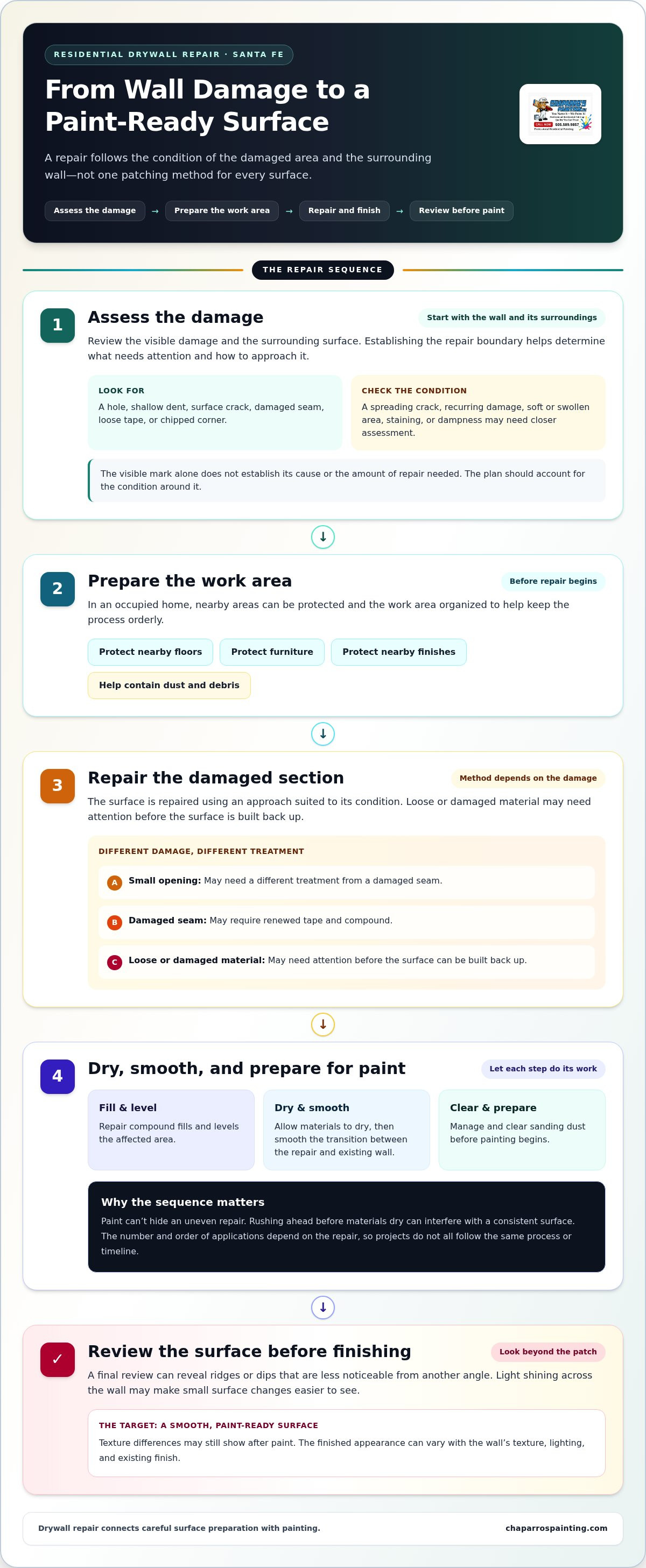
A good repair follows a clear sequence, but the exact method depends on the damage and the surrounding surface. A shallow dent, a hole, and a damaged seam don’t call for identical treatment. In residential drywall repair, the aim is to address the damaged area and leave a sound surface ready for the next finishing steps.
What happens before the patch is finished
Work begins with a review of the visible damage and the area around it. Establishing the repair boundary helps determine what needs attention and how to approach the surface. Before work starts, nearby floors, furniture, and finishes can be protected, and the work area prepared to help contain dust and debris. These steps help keep the process orderly in an occupied home.
The surface is then repaired using an approach suited to its condition. A small opening may need different treatment from a seam that requires renewed tape and compound. Loose or damaged material may need attention before the surface can be built back up. There isn’t one patching method for every wall, so repair details should reflect what the assessment reveals.
- Assess: Review the damaged area and surrounding surface.
- Prepare: Protect nearby surfaces and organize the work area.
- Repair: Address the damaged section with a method suited to its condition.
- Dry and finish: Allow materials to dry, smooth the surface, and prepare it for paint.
Why finishing and drying affect the result
Repair compound fills and levels the affected area. Smoothing softens the transition between the repair and the existing wall. Materials need adequate drying time before the next finishing step. Rushing ahead can interfere with a consistent surface. The number and sequence of applications depend on the repair, so don’t assume every project follows the same process or timeline.
Surface preparation belongs between patching and painting because paint can’t hide an uneven repair. Once the surface is dry, careful finishing helps reduce ridges, rough edges, and visible transitions. Dust from sanding should also be managed and cleared before painting begins, so it doesn’t interfere with the prepared surface.
Light can reveal imperfections that are harder to notice from another angle. A window or lamp shining across the wall may make a slight ridge or dip more apparent, while texture differences can still show after paint is applied. That’s why a final review matters before finishing. The goal is a smooth, paint-ready surface, though the appearance can vary with the wall’s texture, lighting, and existing finish.
For a Santa Fe home, repair and painting can be planned together as connected parts of the same surface-preparation project. Chaparro’s Painting provides residential drywall repair and painting.
DIY or Professional Drywall Repair in Santa Fe: Choosing the Right Scope
Choosing between a DIY patch and professional help comes down to more than the size of the mark. Consider whether the damage is limited, whether it has returned, and how demanding the finished surface needs to be. Even a small patch can show after painting if its edges, texture, or sheen don’t blend with the surrounding wall.
| Situation | DIY may fit when… | Professional repair may help when… |
|---|---|---|
| Limited surface damage | The spot is small, accessible, and there’s no apparent underlying concern. | The repair is in a prominent area or needs to match a particular wall texture. |
| Larger or recurring damage | Not usually a simple patching task. | The damaged area is extensive, cracks return, or several spots need attention. |
| Finish expectations | You’re comfortable preparing, patching, sanding, and cleaning up. | The repair needs to transition neatly into a painted finish. |
When a small repair may suit a capable DIYer
A limited, reachable area with no visible sign of a broader concern may be manageable for a homeowner who’s comfortable with finish work. The task takes patience: preparation, patching, drying, smoothing, and cleanup all affect the result. Consider your tolerance for dust and repeated work, too. If the spot is in a highly visible place, even a modest repair needs careful finishing to avoid a noticeable outline.
When professional repair can make more sense
Consider professional repair for larger damage, recurring cracks, multiple affected areas, or a repair that needs to meet a painted finish. These situations call for attention to both the damaged section and the appearance of the final surface across the wall. A residential painting contractor can consider repair and finishing together, rather than treating the patch as separate from the paint-ready surface.
This approach can be useful when the wall has a distinctive texture or the repaired area sits under lighting that makes unevenness easier to see. It can also reduce the time a homeowner spends managing preparation, sanding, and cleanup. The decision isn’t about treating every mark as a major project. It’s about matching the scope to your skills, available time, and finish expectations.
For drywall repair Santa Fe homeowners can weigh these factors against the result they want. If repair and painting are part of the same residential project, Chaparro’s Painting handles both. Learn about residential drywall repair and painting as connected parts of the finish work.
Preparing a Santa Fe Home for Drywall Repair and Painting
A little preparation can make repair work easier to manage in an occupied home. You don’t need to empty the room. Clear a path to the damaged wall, move small valuables and fragile items away from the work area, and make nearby surfaces easy to reach. If a large piece of furniture can’t be moved, note its location so the work area can be planned around it.
Repair and finishing can create dust or debris, particularly during surface smoothing. Nearby furniture and flooring may need protection to keep them cleaner. The protection required depends on the repair and the room. Preparation should suit the home without creating unnecessary work for you.
Before the repair visit
Make the wall accessible where practical. Clear small items from shelves or nearby tables, and move breakable décor out of the immediate area. Note when you first noticed the damage and whether it has changed. You don’t need to identify its cause. These details help describe the project and provide useful context for assessing the work.
Use this short checklist to set expectations:
- Damage locations: List each affected wall or room and mark the spots in a photo if helpful.
- Access needs: Note furniture, narrow pathways, or fragile belongings near the work area.
- Changes over time: Record when you noticed the damage and whether its appearance has changed.
- Desired finish: Describe whether you’re preparing the area for paint or have a particular appearance in mind.
Every home and repair is different. A single accessible patch may require less room preparation than several damaged areas in a furnished space. Sharing access details and finish expectations helps clarify the plan without asking you to diagnose the wall yourself.
Connecting the repair to a painted finish
A repaired area needs suitable smoothing and preparation before paint is applied. Otherwise, a rough edge or difference in surface texture may stand out against the finished wall. The transition from repair to painting is a good time to consider the surrounding surface and the appearance you want, rather than treating the patch as an isolated spot.
Planning drywall repair and painting together can simplify the project. It gives the homeowner one coordinated plan for the repaired surface and the room’s finish. If you’re considering a wider interior painting project, think about how the repaired area will fit into the finished room.
For drywall repair Santa Fe homeowners can plan around the room, damaged areas, and desired finish. Chaparro’s Painting provides residential drywall repair and painting. Plan your drywall repair and painting project.
Residential Drywall Repair in Santa Fe with Chaparro’s Painting
Chaparro’s Painting, LLC provides residential drywall repair and painting in Santa Fe and nearby New Mexico communities, including Rio Rancho, Albuquerque, and Bernalillo. These services work naturally together: repairing a damaged surface helps prepare it for painting, and painting completes the finish. Owner Jaime Chaparro brings more than 20 years of industry experience to the work.
A local residential approach to repair and painting
A home repair needs a clear scope and a finish that suits the room. Chaparro’s Painting approaches residential projects with attention to preparation and the condition of the surface, then connects repair work with the planned painted finish. Because homes and damage vary, the repair approach and preparation are based on the affected area and its surroundings.
Patching is only part of a finished result. A repaired area needs appropriate preparation before paint so it can sit more evenly against the surrounding surface. Chaparro’s residential painting experience keeps those stages connected, rather than leaving the homeowner to coordinate separate repair and finishing plans.
Clear expectations also make it easier to plan around work in an occupied home. Sharing which rooms are affected, where the damage is, and what finish you want gives the project a practical starting point. Preparation can then account for access and nearby belongings, with details suited to the home and repair scope. The goal is careful residential work and a surface prepared for its next finish.
What to share when planning a repair
You don’t need to diagnose the wall before discussing the work. Start with a simple description: identify the room and location, describe what the damage looks like, and note whether it has changed. Photos can show the affected area in context. If a particular finished appearance matters to you, such as a smooth transition into the surrounding painted wall, include that expectation.
- Location: Name the room and point out each damaged area.
- Visible details: Describe the size and appearance, and mention any changes you’ve observed.
- Finish preference: Explain how you want the repaired area to look once painting is complete.
These details help frame the repair without assuming every wall needs the same treatment. Chaparro’s Painting tailors residential drywall repair and painting to the home, visible damage, and intended finish. For drywall repair Santa Fe homeowners can plan with clear expectations, discuss your residential drywall repair.
Plan the Finish You Want
A damaged wall is a chance to think beyond the patch itself. Consider how you want the room to look when the work is complete, whether that means addressing one noticeable spot or planning the repair alongside a broader paint refresh. That goal gives the project direction without requiring you to diagnose the damage yourself.
For drywall repair Santa Fe homeowners can start with a simple step: describe what you see, where it is, and what finished appearance you have in mind. Clear expectations help shape a repair plan around your home and priorities. Consider the scope that feels right, then move forward when you’re ready.
Chaparro’s Painting provides residential drywall repair and painting. Discuss your residential drywall repair and take a practical step toward a home that feels cared for from wall to wall.
Frequently Asked Questions
How much does drywall repair cost in Santa Fe?
The cost depends on the scope of the repair, not just the visible size of the damaged spot. Several areas, damaged seams, surface texture, access, and whether painting is part of the project can all affect the work involved. There isn’t one price that fits every drywall repair in Santa Fe. A useful starting point is to describe each affected area and the finish you want so the project can be assessed on its details.
How long does a drywall repair take to finish?
There’s no single completion time for every drywall repair. The work may involve preparation, repair materials that need to dry, and finishing before the surface is ready for paint. A small patch and several damaged areas won’t necessarily follow the same schedule. Drying conditions and the repair method also matter. When planning, consider whether the room needs to remain accessible between work stages, especially if furniture or household activities are close to the repair.
Can homeowners repair drywall themselves?
Yes, homeowners can take on a limited repair if they’re comfortable handling the materials and finish work. The real test is whether you can create a surface that looks consistent in the room’s usual lighting, not just cover the opening. A patch in a hidden spot may be more forgiving than one beside a window or in a hallway. If repeated sanding and cleanup don’t appeal to you, professional repair may better fit your priorities.
Does homeowners insurance cover drywall repair?
It depends on the policy and what caused the damage. Coverage terms, exclusions, and deductibles vary, so a visible crack or hole alone doesn’t determine whether a claim applies. Before arranging cosmetic work, take photos and keep notes about when you noticed the damage. Review your policy and speak with your insurer about the specific situation. This helps you understand your coverage before deciding how to proceed with the repair.
Should water-damaged drywall be repaired before the moisture issue is resolved?
No. Address the moisture source and allow the affected area to dry before treating the damage as a cosmetic repair. Patching or painting over a damp area can leave the underlying concern unresolved and may compromise the new finish. If staining, softness, or dampness is present, don’t assume the surface is ready for repair just because it looks dry on the outside. The condition of the wall needs to be understood first.
Can a drywall patch be made to match the surrounding wall?
A patch can be finished to blend with the wall, but an exact match isn’t guaranteed in every light or texture. Differences in the existing finish, paint, and how light falls across the surface can make a repair more noticeable. For example, a smooth patch on a textured wall may stand out unless the transition is handled carefully. Discuss the desired appearance and whether painting the surrounding area is part of the plan.
Why do drywall cracks keep coming back?
Recurring cracks can mean the visible line isn’t the only factor involved. Changes or movement in the surrounding surface, a seam that needs attention, or moisture concerns may contribute, but appearance alone can’t identify the cause. Note whether the crack returns in the same place, grows, or appears alongside staining or other changes. That history helps guide a closer assessment and can prevent simply covering the same line again.


