

Skipping a deep clean before painting your home isn't just a shortcut; it's the fastest way to ensure your new coat of paint peels off within a single New Mexico summer. You likely worry that a high-pressure blast might crumble your stucco or cause hidden water damage. It's also natural to feel confused by conflicting advice when looking up how to pressure wash stucco before painting on your own. We understand those anxieties because we've seen the results of poor prep work firsthand over the last twenty years.
A professional wash is the secret to an exterior finish that stays bonded for ten years or more. In our state's arid climate, where 94 percent of the land faced drought conditions in early 2026, managing water and dust requires a disciplined approach. This guide will show you why meticulous cleaning is the most critical step in a professional residential process. You'll learn how we balance deep cleaning with careful moisture management to protect your home's structural integrity. By the end, you'll have the confidence to ensure your next painting project starts with a perfectly prepared surface.
Key Takeaways
- Proper cleaning ensures paint bonds directly to the surface of your home rather than a layer of loose dirt or chalky residue.
- Discover why soft washing is the safest method for New Mexico stucco to prevent structural damage while achieving a deep clean.
- Learn the essential steps for how to pressure wash stucco before painting, including surface inspection and protecting your home’s electrical outlets.
- Find out how professional prep work prevents water intrusion in window casings and vents, protecting your home’s interior.
- Understand why professional powerwashing is a time-saving investment that guarantees a finish built to withstand the Albuquerque sun.
The Critical Role of Pressure Washing for Paint Adhesion
Pressure washing is more than just spraying water at a wall. It is the mechanical process of removing loose paint, dirt, mold, and chalk using pressurized water. For a residential specialist, this is the foundation of the entire project. Paint is designed to bond to a solid surface, not to the layer of grime sitting on top of it. If that layer stays, your new paint will eventually peel, regardless of how expensive the product was. This step is the difference between a job that lasts three years and one that lasts ten.
The Albuquerque sun creates a specific challenge known as "chalking." Over time, intense UV rays break down the binders in old paint. This creates a fine, powdery residue that sits on the surface of your home. If you rub your hand across your siding and see white dust, you have a chalking problem. New paint cannot grip this powder. It requires a professional powerwash to strip that residue away and reveal a stable surface. A common myth is that a garden hose is enough for prep work. In reality, a hose lacks the pressure to displace chalk or remove years of baked-on desert dust.
Removing Environmental Contaminants
High-desert dust is incredibly fine. It settles into the deep texture of your stucco and creates a microscopic barrier that prevents acrylic latex paint from grabbing hold. Beyond dust, our team looks for organic debris like bird droppings and spider webs tucked into the eaves. These contaminants contain oils and proteins that cause "holidays" or bubbles in a fresh coat of paint. When we discuss exterior paint prep work, our standard is clean-to-the-touch. If a white glove comes away dirty, the wall isn't ready for a brush.
The Science of Paint Adhesion
Adhesion is the physical link between the paint film and the house siding. For a long-lasting finish, we rely on mechanical bonding. This means the paint actually flows into the microscopic pores of the substrate and locks into place as it dries. Pressure washing aids this by etching the surface slightly, giving the paint more "teeth" to grab. This is especially vital when considering how to pressure wash stucco before painting, as the material's porous nature requires a thorough but careful approach.
To achieve this without causing damage, we often utilize a Soft washing method. This technique uses specialized detergents to break down dirt at lower pressures, ensuring the surface is sterile without risking structural damage. By removing every barrier to adhesion, we ensure your home’s new look stays intact for years to come.
New Mexico’s Climate: How Arid Air and Stucco Affect Prep
New Mexico’s high-desert environment presents a set of challenges that most national painting guides simply don't address. While the air is dry, it's also aggressive. Our intense UV exposure and persistent winds mean that your home’s exterior is constantly bombarded by fine grit and heat. When you are looking into how to pressure wash stucco before painting, you have to account for more than just dirt. You are fighting the elements of the Southwest.
Stucco is the most common exterior material in Albuquerque and Rio Rancho for a reason, but its texture is a magnet for trouble. The porous surface traps microscopic dust that a simple rinse won't touch. Additionally, while the 15 percent moisture rule for painting is easier to achieve in our arid climate, it's still a vital standard. We ensure the substrate is dry enough for the paint to bond without trapping water that could cause bubbling later. If you're unsure about your home's current condition, our team can provide a professional assessment of your exterior surfaces.
Stucco-Specific Cleaning Challenges
One major issue we see is efflorescence. These are the white, salty deposits that appear on stucco when moisture evaporates and leaves minerals behind. If you paint over these salts, the paint will fail almost immediately. Following professional stucco maintenance guidelines is the only way to remove these deposits safely. High pressure is often the enemy here. Using too much force on aged stucco can blow holes in the finish or widen existing hairline cracks. We use the wash as an opportunity for discovery, identifying areas that need stucco repair in Rio Rancho NM before any paint is applied.
Timing Your Project with the NM Seasons
Timing is everything in the high desert. The Albuquerque sun can heat up a wall so quickly that cleaning detergents "flash dry" before they can be rinsed away. This traps soap and dirt in the stucco pores, which is exactly what we want to avoid. We typically schedule washing for the early morning hours to keep the surface cool. During the monsoon season, we monitor humidity levels closely. Jaime Chaparro uses his 20 years of local experience to navigate these shifts, ensuring the wind doesn't re-contaminate a freshly washed wall with Rio Rancho dust before the primer hits the surface. This methodical approach is why we don't cut corners on the prep phase.
Pressure Washing vs. Soft Washing: Choosing the Right Method
Choosing the right tool for the job is what separates a seasoned craftsman from a weekend DIYer. High-pressure washing and soft washing aren't interchangeable. One relies on raw force to strip surfaces, while the other uses chemistry to protect your home's exterior. Understanding the difference is vital for anyone researching how to pressure wash stucco before painting without causing permanent damage.
Most commercial pressure washers operate at 3000 PSI or higher. At that strength, water acts like a physical blade. It can scar wood trim, shred window screens, or punch holes directly through aged stucco. We don't use that kind of force on your home's walls. High pressure is a specialized tool, and its misuse is a leading cause of expensive residential repairs. Our process focuses on using the right amount of power for each specific material.
When to Use High Pressure
High pressure has a specific place in the prep process. It's excellent for blasting away stubborn, peeling paint on fascia boards or solid wood trim where the wood is still structurally sound. It's also the professional standard for preparing an epoxy garage floor New Mexico homeowners expect to last for years. We use high-pressure streams on driveways and walkways to clear away oil and grime before we start painting nearby. This ensures we don't track grease or heavy oils onto your freshly cleaned walls during the project.
The Benefits of Soft Washing for Homes
For the majority of a home's exterior, especially in Rio Rancho, soft washing is the preferred method. This technique uses low pressure, often under 500 PSI, combined with specialized detergents. It's the safest way to clean the delicate stucco envelope without risking structural damage or forcing water behind window casings. When considering how to pressure wash stucco before painting, the goal is a sterile surface, not a battered one.
Soft washing doesn't just move dirt around; it kills mold, mildew, and algae spores at the root. We use professional-grade cleaners like Trisodium Phosphate (TSP) or eco-friendly alternatives that are safer for your landscaping. These solutions break down the bond between the dirt and the wall, allowing us to rinse the contaminants away gently. This thorough approach ensures your new paint bonds to a clean, stable substrate, providing the peace of mind that comes from a job done right the first time.
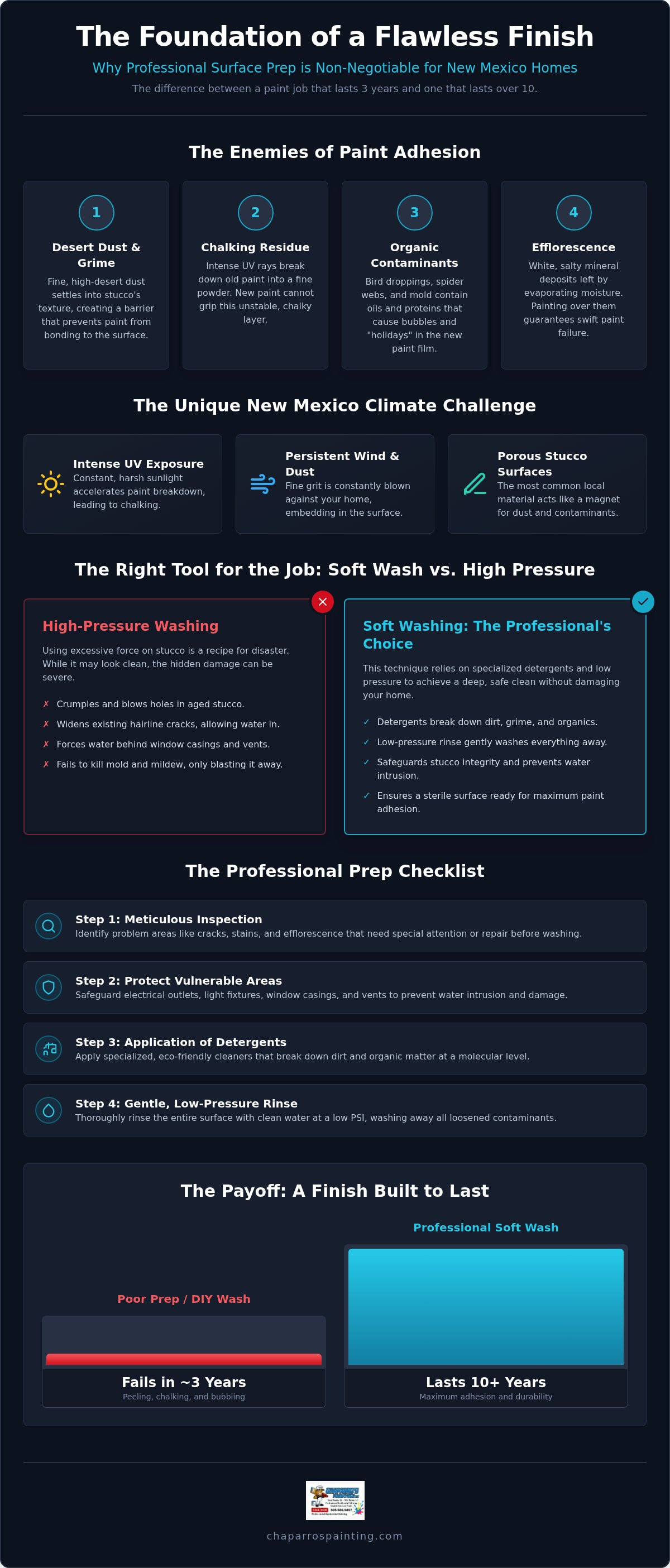
The Professional Prep Checklist: Ensuring a Surface Ready for Paint
A successful paint job relies on a disciplined sequence of events. We don't just show up and start spraying water. Our process is methodical, ensuring that every square inch of your home is ready to receive a new coating. This structured approach prevents the common failures that lead to peeling or bubbling within the first year. If you want a finish that lasts, you have to follow a professional standard.
- Step 1: Inspection. We begin by identifying structural damage or deep cracks that require exterior paint prep work. This ensures the substrate is sound before moisture is introduced.
- Step 2: Protection. We cover landscaping, lighting fixtures, and electrical outlets. Protecting your property is as important as cleaning it.
- Step 3: The Wash. When we execute how to pressure wash stucco before painting, we work from the top down. This prevents dirty runoff from contaminating areas we've already cleaned.
- Step 4: The Rinse. We rinse the surface thoroughly. This step is vital to ensure no detergent residue remains, as leftover soap can act as a bond-breaker for new paint.
- Step 5: The Dry. We allow the home to dry completely. Visible dryness is often deceptive, so we verify the moisture levels before moving forward.
Verification and Moisture Testing
Visible dryness doesn't always mean the stucco is ready deep down. Stucco is a thick, cementitious material that can hold moisture in its core even when the surface feels parched. We use a professional moisture meter to ensure levels are below the industry standard of 15 percent. Painting over trapped moisture is a recipe for disaster. Homeowners can perform a "Chalk Test" by rubbing a clean hand over the dry wall. If no powdery residue comes off, the wash was successful. If you want to ensure your home is truly ready for its next coat, contact our residential experts for a thorough assessment.
Post-Wash Inspection
Once the walls are clean and dry, we perform a final walk-through. A professional wash often reveals repairs that were hidden under years of desert dirt and grime. We look for newly revealed hairline cracks or areas where old paint has started alligatoring. These spots must be addressed before the first drop of primer touches the wall. The goal of the wash is a stable, sound surface for the primer. By identifying these issues early, we maintain the integrity of our "Professional Results" standard and ensure your project stays on schedule.
Why Professional Powerwashing is a Smart Investment
Hiring a professional for prep work isn't just about convenience. It's about protecting your largest investment. While many homeowners research how to pressure wash stucco before painting to save money, the risks of DIY often outweigh the rewards. Professional washing prevents water from entering attic vents or seeping behind window casings. These are common mistakes that lead to mold issues inside your walls. Our team understands how to navigate these vulnerable areas safely.
A job that takes a homeowner an entire weekend can be completed by a professional crew in a few hours. This efficiency ensures the prep is done correctly to double the lifespan of your exterior refresh. It also provides a clean, professional environment if you are planning a related interior painting Rio Rancho project. Proper prep work is the only way to guarantee a finish that stands up to the New Mexico sun. You gain the peace of mind that comes from knowing every step was handled by a specialist.
Professional Equipment vs. Consumer Units
Most consumer-grade electric washers prioritize high PSI but have low GPM (Gallons Per Minute). While PSI provides the blast, GPM provides the actual cleaning and rinsing power needed to remove stubborn New Mexico chalking. Professional units balance these two metrics to clean deeply without damaging the substrate. We also utilize specialized nozzles for different home sections. We never use a one-size-fits-all approach on your delicate stucco or wood trim. This precision ensures a sterile surface without the risk of scarring your home's exterior.
The Chaparro’s Painting Difference
We believe in transparent communication. Our team tells you exactly how long the dry time will be and why it matters for your specific home. Our no-nonsense pricing means that meticulous prep work is built into our professional standards. It is never added as an afterthought or a hidden fee. Every project is owner-operated, meaning Jaime Chaparro personally oversees the prep to ensure it meets our 20-year standard of excellence. We are committed to doing the job right for our Rio Rancho neighbors. Your home’s durability is a direct reflection of our craftsmanship and integrity.
Invest in a Finish That Lasts
A durable exterior paint job is only as strong as the surface beneath it. You've learned that removing "chalking" and desert dust is essential for proper adhesion. We've also discussed why soft washing is the safest way to handle New Mexico’s delicate stucco without causing structural damage. Understanding how to pressure wash stucco before painting is the first step toward a home that looks fresh for a decade rather than just a few seasons.
At Chaparro’s Painting, LLC, we don't take shortcuts with your home. Jaime Chaparro personally oversees every project, bringing over 20 years of local NM experience to your doorstep. As a family-owned and operated residential specialist, we prioritize meticulous prep work because it's the only way to guarantee professional results. We handle the technical details like moisture testing and surface repairs so you don't have to worry about premature peeling or water intrusion.
Ready to transform your home with a team that values craftsmanship? Get a Professional Exterior Painting Quote from Chaparro’s Painting Today. Let's build a finish that stands up to the Albuquerque sun together.
Frequently Asked Questions
How long should I wait to paint after pressure washing?
You should typically wait 24 to 48 hours for the surface to dry completely before applying paint. While New Mexico’s arid air accelerates evaporation, stucco is highly porous and can hold moisture deep within its core. We use a professional moisture meter to verify levels are below 15 percent. Painting too early traps water, which eventually causes the new coat to bubble and peel away from the wall.
Can pressure washing damage my stucco?
Yes, high pressure can easily gouge stucco or force water into structural gaps if handled by an inexperienced operator. This is why we prioritize the soft washing method for residential exteriors. By using specialized detergents and low pressure, we remove contaminants without risking the integrity of your home’s envelope. It is a safer, more effective way to prepare a delicate surface for a long-lasting finish.
Do I need to use chemicals when pressure washing my house?
Detergents are necessary to kill organic growth like mold and mildew rather than just moving dirt around. We use professional solutions like Trisodium Phosphate (TSP) or eco-friendly alternatives to break down the bond between grime and your siding. This ensures a sterile surface for the primer to grab. Without these cleaners, microscopic spores remain on the wall, which can lead to premature paint failure and unsightly stains.
What happens if you paint over a damp surface?
Painting over a damp surface prevents the coating from forming a proper mechanical bond with the substrate. As the trapped moisture eventually tries to evaporate, it pushes against the paint film from the inside out. This results in unsightly bubbles, blistering, and total adhesion failure. Waiting for a fully dry surface is a non-negotiable step in our professional prep process to ensure your investment stays protected.
Is pressure washing enough to remove all old paint?
Pressure washing is designed to remove loose, flaking, or peeling paint, but it won't strip away well-bonded coatings. After the wash, we perform a manual inspection to scrape any remaining alligatoring sections that the water didn't displace. The goal is to create a stable foundation. If you are learning how to pressure wash stucco before painting, remember that the wash is just the first stage of a thorough prep sequence.
Can I just use a garden hose and a scrub brush instead?
A garden hose lacks the necessary force to displace the heavy chalking and fine desert dust common in New Mexico. While scrubbing helps, it often fails to reach deep into the texture of the stucco. Professional powerwashing provides the consistent pressure and volume required to flush out contaminants that a manual brush simply misses. Skipping this step often leads to paint peeling within just a few years of application.
Should I pressure wash my windows while cleaning the siding?
You should avoid direct high pressure on windows because it can shatter glass or break the seals on double-pane units. We focus our cleaning on the siding and trim, using a gentle rinse for window frames to remove runoff. Forcing water around window casings is a common DIY mistake that leads to hidden rot and interior water damage. Our team uses specialized nozzles to protect these vulnerable areas during the wash.
How do I know if my house is clean enough to start painting?
A clean surface should be free of all visible dirt, organic growth, and powdery residue. You can perform a simple chalk test by rubbing your hand across the dry wall. If your palm comes away clean, the surface is likely ready. However, we also use moisture meters to ensure the substrate is dry deep down. This scientific approach is how to pressure wash stucco before painting with total confidence in the results.


