

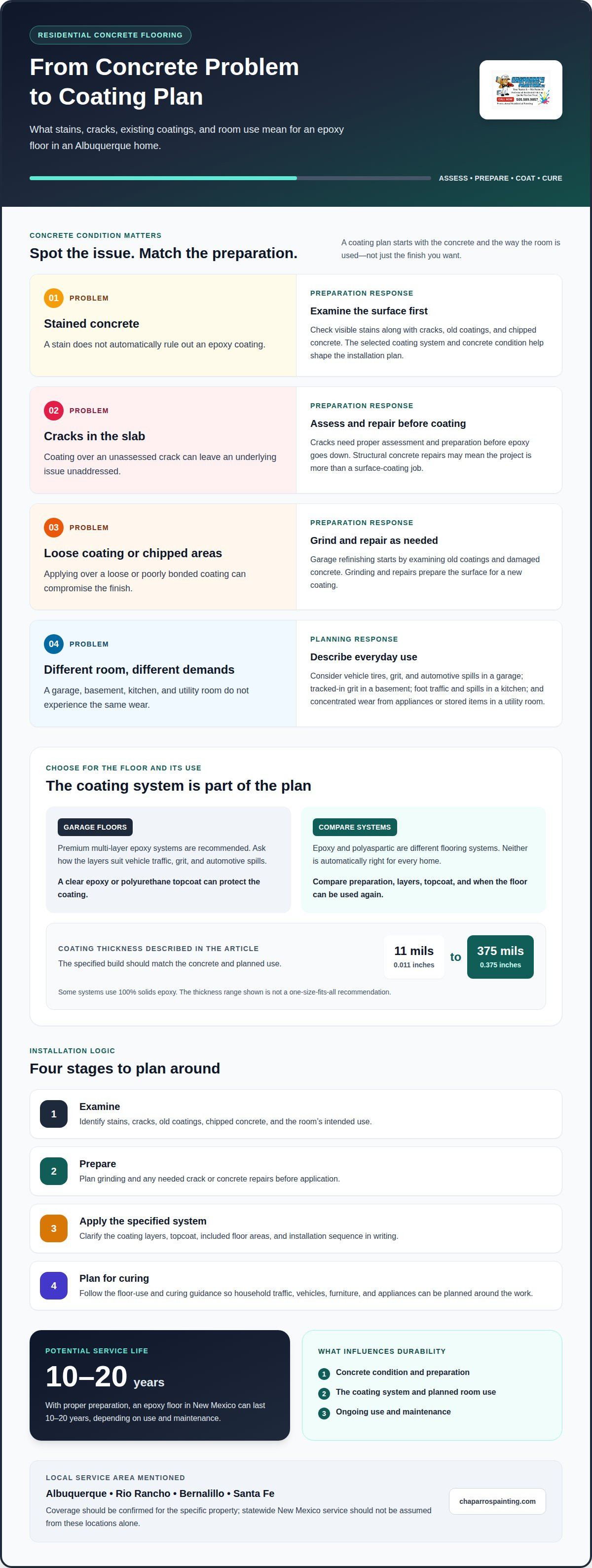
A stained or cracked concrete floor isn’t automatically beyond repair. Residential epoxy flooring installers in Albuquerque can often coat stained concrete, while cracks need proper assessment and preparation before the coating goes down. With proper preparation, an epoxy floor in New Mexico can last 10-20 years, depending on use and maintenance.
It’s reasonable to want a clean, durable surface without covering up a problem that could affect the finished floor. This guide explains how installers prepare concrete, what epoxy can and can’t address, how long installation and curing take, and what influences durability. You’ll also learn how residential epoxy flooring service applies to Albuquerque homes and when a different floor repair may be needed before coating.
Key Takeaways
- Learn which stained or cracked concrete conditions can be addressed before an epoxy coating is applied.
- See how garage, basement, kitchen, and utility-room use can shape the right flooring approach.
- Understand why grinding and surface preparation matter to the finished floor’s bond and appearance.
- Find out what affects epoxy’s resistance to everyday wear and what maintenance can help protect it.
- Get a clear picture of the installation process, curing time, and how residential epoxy flooring service relates to Albuquerque and New Mexico.
Residential garage, basement, kitchen, and utility-room epoxy floors
Epoxy can cover stained concrete, but cracks should be assessed and repaired before coating. The room’s use, the concrete’s condition, and the selected coating system all shape the installation plan.
There’s no single Albuquerque installer that suits every home or project. Reviews are most useful when they describe practical details, such as surface grinding, crack preparation, coating layers, and how the finished garage floor looks and performs.
For a coating-only project, permit and code requirements depend on the work’s scope. Structural concrete repairs or changes to drainage or electrical systems can make a project more than a surface-coating job.
Warranty terms and insurance coverage vary by project and provider. Review the written terms to understand what is covered, what is excluded, and how issues such as concrete movement are handled.
Garage Coatings and Refinishing
Garage floor refinishing starts with examining stains, cracks, old coatings, and chipped concrete. Grinding and repairs prepare the surface for a new coating. Applying material over a loose or poorly bonded coating can compromise the finish. Because garages encounter vehicle tires, grit, and automotive spills, ask how the proposed system’s layers suit the floor’s intended use.
Premium multi-layer epoxy systems are recommended for garage floors, with a clear epoxy or polyurethane topcoat to protect the coating. Some systems use 100% solids epoxy. Coating thickness can range from 0.011 inches (11 mils) to 0.375 inches (375 mils), so the specified build should match the concrete and planned use.
Flooring for Basements, Kitchens, and Utility Rooms
Basements, kitchens, and utility rooms face different demands. A basement may collect tracked-in grit, while a kitchen sees frequent foot traffic and spills. In a utility room, appliances and stored items can concentrate wear in a small area. Describe how you use the room so the coating and finish suit its daily demands, not just its appearance.
Stains don’t automatically rule out epoxy, but cracks need attention before application. Preparation around floor edges, thresholds, and appliance spaces matters too, since incomplete coverage can leave concrete exposed. Plan how furniture and appliances will be moved during installation and curing.
Epoxy and Polyaspartic Flooring Options
Epoxy and polyaspartic are different flooring systems, and neither is automatically right for every Albuquerque home. Compare the proposed layers, surface preparation, topcoat, and guidance on when the floor can be used again. A garage exposed to vehicle traffic and automotive spills, for example, has different needs from a lightly used basement.
Ask for the flooring system and installation sequence in writing, including how the plan addresses cracks and stains. A clearly defined scope helps you understand what protects the concrete and what finish to expect. The key considerations are the floor’s condition and how the room is used.
Albuquerque and statewide New Mexico service coverage
For Albuquerque homeowners, residential epoxy flooring work starts with the specific concrete floor, its condition, and its intended use. As a dedicated local provider, Chaparro's Painting, LLC focuses its service area on Albuquerque, Rio Rancho, Bernalillo, and Santa Fe; statewide New Mexico coverage should not be assumed from those locations alone.
A floor-coating project depends on more than the city where a home is located. The room, floor area, access, existing coating, and visible stains all help define the work. For example, a garage in Albuquerque may need a different preparation plan from a small utility room in Rio Rancho.
Coverage details should be clear before a project is scheduled. A useful scope identifies the property location, the rooms involved, and the concrete areas that need attention. It also records whether the floor has cracks, old coating, or sections that need repair before application. These details help match the work plan to the actual home rather than a general description of New Mexico.
Albuquerque and Rio Rancho service area
For a home in Albuquerque, Rio Rancho, Bernalillo, or Santa Fe, note the room type, approximate floor dimensions, and access route to the work area. A garage with a direct driveway entrance differs from a basement reached through the home, which can affect how materials and equipment reach the concrete.
Location also helps frame practical scheduling. A homeowner can identify whether the project involves one room or several spaces, then describe household traffic that could affect access during installation. For example, a garage used for daily parking needs a plan for moving vehicles and keeping the floor clear during coating and curing.
Planning an estimate and application
A useful estimate starts with project details. Include the local service address, the rooms involved, the concrete’s visible condition, and any existing coatings. Photos can show stains, cracks, or peeling areas, while an in-person assessment can clarify conditions that images may not reveal.
Before work begins, the scope should explain which floor areas are included and what preparation is planned. Ask for the application sequence and curing guidance in writing so you can arrange household routines around the work. This is especially helpful when a garage, kitchen, and utility room have different access needs.
Free estimates and regional availability should be confirmed directly with the contractor rather than treated as automatic features. The scope and estimate process depend on project details, including location, floor condition, and the number of spaces involved. For a locally focused project, residential epoxy flooring installers Albuquerque homeowners rely on can be considered around those specific concrete-floor needs.
Concrete grinding and surface preparation
Epoxy floor coatings depend on the concrete beneath them. Preparation starts with checking for stains, cracks, loose material, old coatings, and uneven areas. A garage floor with peeling sealer, for example, needs a different preparation plan from clean, bare concrete. The estimate should describe the visible conditions and the work planned to address them.
Grinding removes weak surface material and creates a consistent profile for the coating system. The entire floor, including edges and corners, needs attention, not just the open center. Dust is removed before application. Skipping these steps can leave residue or weak spots between the concrete and coating. An oil stain near a parked vehicle, for instance, needs to be addressed during preparation, not hidden under a new finish.
Cracks need assessment before coating. A surface crack may be cleaned and repaired as part of preparation, while a crack that changes over time may indicate movement that a coating cannot correct. Any repair should be completed before the epoxy goes down, and the repaired area prepared to blend with the surrounding surface. Coating over an untreated crack may leave its outline visible or allow the issue to affect the finished floor.
Sealing and staining are separate concrete treatments, not automatic substitutes for grinding. Existing sealer can affect how a new coating bonds, so it needs to be identified and addressed in the preparation plan. Stained concrete may remain discolored after cleaning. In a utility room with dark marks near a water heater, for example, epoxy creates a prepared, coated surface, but shouldn’t be expected to make every underlying stain disappear.
Resurfacing and polishing are also different from coating preparation. Resurfacing adds a cement-based layer to address worn or uneven concrete, while polishing mechanically refines exposed concrete for a different finish. If the slab has deep damage or substantial height differences, grinding alone may not create a suitable surface for coating. The estimate should clarify whether the plan involves localized repair, resurfacing, or preparation for epoxy.
A sound preparation sequence gives each step a clear purpose:
- Inspect the concrete and identify stains, cracks, old coatings, and uneven areas.
- Remove incompatible or loose material and grind the surface.
- Repair cracks and damaged spots, then prepare those repairs.
- Remove dust and apply the coating system to the prepared floor.
That sequence helps the finished surface withstand ordinary use, but preparation needs to match the slab. A garage with old sealer and several repairs needs a more involved plan than bare, sound concrete.
Epoxy flooring durability and resistance
With proper preparation, residential epoxy flooring in New Mexico can last 10-20 years, depending on use and maintenance. That range is a planning guide, not a fixed service life for every home. A lightly used basement and a garage exposed to vehicle traffic place different demands on the same coating.
Common residential concerns include peeling, visible cracks, scratches, and slippery areas. These issues may result from poor preparation, concrete movement, heavy impacts, or a finish that doesn’t suit the room. The floor’s condition and the coating system both affect durability.
Garage floors face hot tires, grit, and automotive fluids. Epoxy can resist scratches, especially with a topcoat, but heavy impacts can still scratch or gouge the surface. Wipe up chemical spills, including automotive fluids, before they leave permanent spots. Regular sweeping, dust mopping, or vacuuming removes grit that could wear the finish during everyday use.
Consider slip resistance wherever water or spills may reach the floor. Slip-resistant additives can be included based on the application and environment. A utility room with a sink, for example, may need a different surface from a dry storage area. The texture should suit the room’s use while remaining practical to clean.
Weather exposure matters too. A covered interior floor differs from concrete exposed to outdoor conditions, so the installation plan should suit the actual location. A clear epoxy or polyurethane topcoat can protect a garage coating, while the system and exposure conditions affect expected performance. Don’t assume an interior coating is suitable for every exterior surface.
Maintenance helps preserve appearance and performance. Remove grit regularly, clean spills promptly, and avoid dragging heavy objects across the floor. A topcoat adds scratch protection but doesn’t make the surface immune to damage. In a garage, lifting a heavy tool instead of scraping it across the coating can help prevent gouges.
High-traffic areas may need recoating every couple of years, including coated concrete floors in busy settings. That interval reflects the extra wear some surfaces receive and doesn’t replace their potential service life. A clear maintenance plan should distinguish routine cleaning, spot repairs, and recoating so homeowners understand how each step supports durability.
Before choosing a coating for a floor that will see daily use, consider the concrete’s condition, room traffic, likely spills, and exposure. These factors help set realistic expectations for resistance, cleaning, and long-term appearance.
Residential epoxy floor installation
A residential epoxy installation is a sequence of surface preparation, coating application, and curing. Most projects take 1-2 days to install, with additional curing time before full use. That means the work may finish before the floor is ready for furniture, foot traffic, or a parked vehicle.
Start by defining the floor’s purpose and the finish you want. A garage used daily needs a different plan from a decorative basement floor. Decide whether you prefer a simple, seamless appearance or a more expressive finish with metallic effects and varied colors. These choices guide the coating and application plan, while the concrete’s condition determines preparation needs.
Next, the concrete is assessed and its surface prepared. The process typically includes addressing existing coatings and damage, grinding the concrete, removing dust, and repairing suitable cracks before coating. Even a metallic epoxy finish depends on a properly prepared base. Decorative effects can enhance the appearance, but they don’t replace sound preparation.
Application follows the selected system’s instructions. Each layer needs even coverage across the floor, including edges and corners. A multi-layer garage system may include a protective topcoat. The installer should explain the planned layers and how the final finish relates to the room’s use. Clear expectations matter, especially when one home project includes both a garage and an interior space.
After application, the floor needs time to cure. Installation commonly takes 1-2 days, but that is not the same as a promise that the room is ready for full use immediately. Keep people, pets, furniture, and vehicles off the coated area until the applicable curing period has passed. The project plan should identify when each area can be used again.
Before work begins, arrange access to the area and remove anything that would obstruct the floor. For a garage, plan where the vehicle will stay while the coating is applied and cures. For a basement or kitchen, consider how people will move through the home while the treated area is unavailable. These details help prevent interruptions and protect the finish.
A well-defined installation plan connects the concrete’s condition, the chosen appearance, coating layers, and return-to-use timing. For residential epoxy flooring in Albuquerque, ask for the work sequence and curing guidance as part of the project scope. To discuss an epoxy floor project, contact Chaparro's Painting.
Chaparro's Painting: Epoxy Flooring
Epoxy flooring can be an option for homeowners planning to coat concrete floors. Consider the service when a garage, basement, or utility-room floor needs a careful preparation and coating plan. Stains and cracks need attention before application, and the floor’s intended use helps shape the finish and installation approach.
A useful project discussion covers the concrete’s condition, the rooms involved, and how household traffic affects access during installation and curing. These details help set clear expectations for the work and finished floor. Chaparro's Painting, LLC also offers interior painting, exterior painting, and cabinet painting as separate home services.
Contact Chaparro's Painting, LLC to discuss residential epoxy flooring for your concrete floor.
Plan the next step for your concrete floor
A floor project is easier to scope when you can describe how the space should function and look. Before speaking with residential epoxy flooring installers in Albuquerque, note which rooms are involved, how you use them, and which finish suits your home. Those priorities keep the project discussion focused on your household’s needs.
If you’re planning broader updates, consider how the floor fits with the rest of the room. Chaparro's Painting, LLC also offers interior painting, exterior painting, and cabinet painting for separate home projects. Keep each project’s scope clear so the flooring conversation stays focused on the concrete and finish you want.
When you’re ready to discuss your flooring project, contact Chaparro's Painting, LLC. A clear first conversation can help you move toward a practical plan for your home.
Frequently Asked Questions
Can epoxy cover my stained or cracked concrete?
Epoxy can cover stained concrete, but stains may remain visible if they aren’t properly addressed first. Cracks need evaluation and repair before coating, and epoxy doesn’t correct concrete movement. An oil-marked garage slab and a widening crack, for example, call for different preparation decisions. The surface condition helps determine whether coating is suitable and what repairs are needed beforehand.
Do you install epoxy in my area?
Chaparro's Painting, LLC serves homeowners in Albuquerque and Rio Rancho, New Mexico. If your home is in either city, the project discussion can focus on the concrete floor, rooms involved, and access needs. Residential epoxy flooring installers in Albuquerque can help homeowners plan garage and interior floor projects around the space’s use and condition.
What design options are available?
Epoxy floors can have different appearances depending on the coating system and finish. A homeowner might prefer a simple, consistent look for a garage or a more decorative appearance in a basement. Room lighting, nearby finishes, and cleaning needs can guide the choice. Discuss the desired look early so appearance and practical use are considered together.
Why choose professional epoxy over a DIY kit?
Professional installation includes assessing and preparing the concrete, not just applying the coating. That matters in a home garage with old sealer, oil stains, or repaired cracks. DIY kits also require careful preparation and application. The result depends on matching product directions to the concrete and following the full process, including the specified curing period.
How do Albuquerque homeowners get epoxy floor installation estimates?
An estimate depends on the floor area, concrete condition, existing coatings, and preparation or repairs needed. Include the rooms involved and describe issues such as stains, cracks, or peeling material. The price depends on the specific project and is provided after a quote request. Clear project details help define the scope, so the estimate reflects the actual floor rather than a generic room description.
How should I prepare my home for epoxy floor installation in Albuquerque?
Clear furniture, stored items, and vehicles from areas to be coated, then plan how household members will move around them. For a garage, arrange another place to park while the coating is applied and cures. For a basement or utility room, remove items from the floor and keep the route to the work area accessible. Follow the project instructions for when the room can be used again.
What are epoxy flooring cure time and ventilation needs for residential installation?
Most epoxy flooring installations take 1-2 days, with additional curing time before full use. Installation time doesn’t mean the floor is ready for foot traffic or vehicles immediately afterward. Keep the area clear for the stated curing period. Ventilation needs depend on the product being applied, so follow its label directions for airflow and occupancy rather than assuming every epoxy system has identical requirements.
How durable is epoxy flooring in New Mexico’s climate and garages?
With proper preparation, epoxy flooring in New Mexico can last 10-20 years, depending on use and maintenance. A garage with vehicle traffic, grit, and automotive-fluid spills faces different wear than a lightly used room. Sweep or vacuum grit and clean spills promptly. Heavy impacts can still scratch or gouge a coated floor, so durability depends partly on how the space is used and maintained.


