

Laminate cabinets can be painted, but their condition and surface type matter as much as the color you choose. The cost to paint cabinets and walls depends on preparation, the number of doors and drawers, wall area, and the finish. No single price or timeline fits every kitchen.
It’s reasonable to want a clear picture of the work before it begins. This guide explains what shapes an estimate and how to plan cabinet and wall painting together, while accounting for the different needs of each surface.
You’ll learn why laminate and thermofoil need careful assessment, what can affect the project schedule, and how to choose finishes suited to cabinets. Understanding these factors helps set expectations and identify the details to share when planning a professional painting project.
Key Takeaways
- Cabinet surface condition and preparation needs influence which coating approach is suitable, especially for laminate and thermofoil.
- Cabinet and wall estimates use different measurements, so the number of doors and drawers and the wall area both matter.
- Labor, surface preparation, and coating materials all shape the project scope; more detail in the estimate helps clarify what the work includes.
- Plan for more than painting time: preparation and the sequence of coating work also affect how long the kitchen is disrupted.
- Chaparro's Painting, LLC offers cabinet and interior painting for homeowners planning to refresh cabinetry, walls, or both.
Labor, preparation, and coating materials
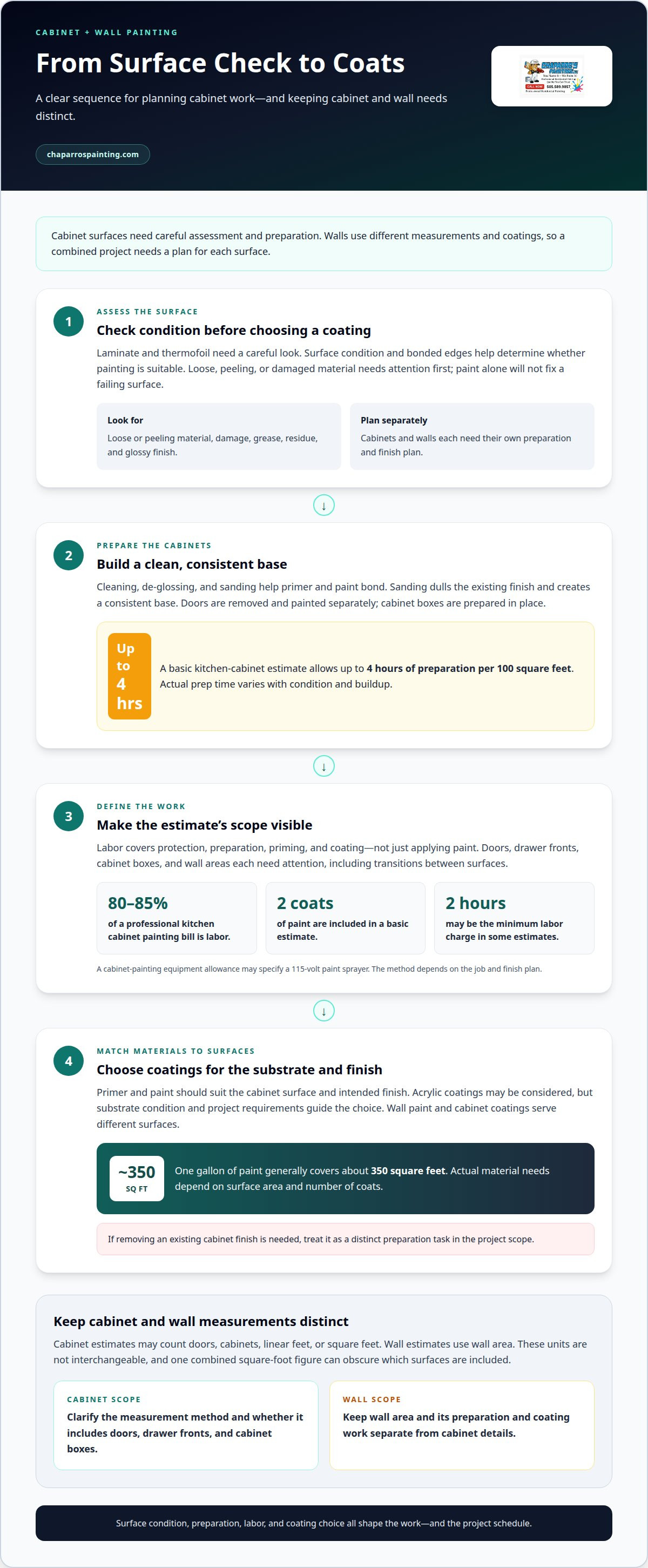
Cabinet painting involves more than applying color. Surface condition, preparation, labor, and coating choice all affect the work. When cabinets and walls are painted together, each surface needs its own preparation and finish plan.
Cabinet Surface Preparation and Sanding
Preparation involves cleaning, de-glossing, and sanding cabinets so primer and paint can bond. Grease, residue, or a glossy finish can interfere with adhesion and cause peeling, so these steps matter.
Cabinet doors are removed and painted separately, while cabinet boxes are prepared in place. Sanding dulls the existing finish and creates a consistent base. With laminate or thermofoil, the surface condition and bonded edges help determine whether painting is suitable. Loose, peeling, or damaged material needs attention before coating. Paint alone won’t fix a failing surface.
Preparation time varies with the cabinet’s condition and the amount of buildup. A basic kitchen-cabinet estimate allows up to 4 hours of preparation per 100 square feet. That allowance makes clear why cleaning and surface preparation can take a meaningful share of the painting project, even before the first coat goes on.
Labor and Painting Tasks
Labor includes protecting, preparing, priming, and coating cabinets, not just applying paint. Doors, drawer fronts, cabinet boxes, and wall areas each need separate attention, including careful transitions between surfaces.
A basic estimate includes rolling or brushing 2 coats of paint. The crew also handles masking and protection, prepares the cabinet surface, and applies coatings in a controlled sequence. For spray work, equipment matters: a cabinet-painting equipment allowance may specify a 115-volt paint sprayer. The method depends on the job and finish plan, not a one-size-fits-all rule.
Labor accounts for 80% to 85% of a professional kitchen cabinet painting bill. This proportion reflects the hands-on work involved, including preparation and finishing. Some estimates also include a 2-hour minimum labor charge, which can affect smaller jobs where the required setup and painting time is limited.
Professional Cabinet Painting Costs and Preparation
Preparation and materials include the planned labor, coatings, and supplies needed for a finished surface. Cutting preparation can undermine the coating, while the selected finish and application method affect the work involved.
Primer and paint should suit the cabinet surface and intended finish. Acrylic coatings may be considered, but the substrate condition and project requirements guide the choice. Wall paint and cabinet coatings serve different surfaces, so a combined project doesn’t mean using the same coating everywhere.
Coverage helps estimate material needs: one gallon of paint generally covers about 350 square feet. Actual requirements depend on the surface area and the number of coats. If removing an existing cabinet finish is needed, that adds a distinct preparation task. A clear project scope separates that work from cleaning, sanding, priming, and painting, so the estimate reflects the condition of the cabinets and the finish plan.
National average cabinet-painting cost per square foot
Cabinet and wall estimates use different measurements, so one square-foot figure can’t describe every kitchen. The method used, surface area, cabinet layout, and location all affect how the work is scoped.
Hourly or square-foot charges depend on the work included. Cabinet preparation and detailed door work differ from measuring open wall areas. Local labor and project conditions affect estimates, so national figures don’t establish a reliable regional comparison.
Cabinet Pricing by Measurement
Measurement-based cabinet pricing may use doors, cabinets, linear feet, or square feet. Knowing the unit helps you understand what the estimate counts and how the cabinet layout shapes the scope.
A door-based estimate counts each door or drawer front, while a cabinet-based estimate groups work by cabinet sections. Linear-foot pricing measures the length of a cabinet run; square-foot pricing uses measured surface area. These units aren’t interchangeable: a long run can contain a different number of doors, and a square-foot calculation depends on which surfaces are included.
For example, a door-count estimate makes each drawer front visible in the scope. A linear-foot estimate may represent a continuous cabinet run more clearly, but doesn’t show the piece count by itself. Ask which measurement unit is used and which surfaces it includes, such as doors, drawer fronts, and cabinet boxes. That makes the estimate easier to interpret.
Hourly and Square-Foot Charges
Hourly pricing tracks the labor time assigned to the work, while square-foot pricing applies a rate to measured surface area. This distinction matters because cabinet details and wall surfaces require different tasks.
Cabinets involve separate doors, drawer fronts, and boxes; walls are measured across broad, continuous surfaces. An hourly estimate reflects time spent on the defined work. A square-foot estimate depends on the area counted and whether it covers cabinet faces, wall surfaces, or both. The project price depends on the case and is provided after a quote request, with preparation, surface area, layout, and finish affecting scope.
For a combined project, keep cabinet and wall measurements separate. One total square-foot figure can obscure which surfaces are included. A clear scope identifies the cabinet measurement method, wall area, and preparation or coating work for each surface. This helps explain why two kitchens with similar floor plans may need different work.
Location-Based Price Variation
Estimates can vary among U.S. markets because local labor conditions and project requirements differ. Keep this in mind when using a national average as a planning reference.
National figures don’t provide a consistent city-by-city comparison for cabinet and wall work, so a national square-foot average shouldn’t be treated as a local quote. Even within one area, estimates can differ based on cabinet layout, wall surface, coating plan, and preparation.
Laminate needs its own surface assessment because its condition affects preparation and scope. For a useful estimate, separate cabinet measurements from wall measurements, then note the finish and preparation for each. This gives you a more practical basis for comparing scopes than relying on a typical per-square-foot figure.
Project duration
A professional crew typically takes 3 to 5 days to paint an average kitchen’s cabinets; walls add work based on their area and preparation. A professionally sprayed cabinet finish with premium enamel can last 8 to 15 years with normal use.
That project timeline is different from a modeled task estimate: the U.S. Environmental Protection Agency estimates 3.99 hours for a modeled professional painting job.
What the Project Timeline Includes
A cabinet painting timeline includes preparation, coating, and the work needed to handle doors and cabinet boxes. The 3-to-5-day estimate for an average kitchen describes a crew’s project schedule, while the EPA’s 3.99-hour figure describes a modeled job. They measure different scopes, so the shorter figure shouldn’t be read as the total time for a full kitchen.
Layout affects how the work is organized. A kitchen with many separate doors and drawer fronts requires those pieces to be handled alongside the cabinet boxes. Painting the walls adds another surface and sequence. The schedule depends on which areas are included and their condition.
Preparation, Coats, and Schedule
Preparation is part of the timeline, not a separate detail to overlook. Cabinet work can include cleaning, sanding, priming, and applying 2 coats of paint. The basic estimate allows up to 4 hours of preparation per 100 square feet, showing how surface condition and measured area influence the work plan.
Primer and coatings also affect the sequence. Each surface must be ready for its next stage before the crew proceeds. A gallon of paint generally covers about 350 square feet, but coverage alone doesn’t establish the project schedule. The measured area, cabinet layout, and number of separate pieces also matter.
Estimate Assumptions and Exclusions
A useful estimate defines the project scope: which cabinet surfaces and walls are included, what preparation is planned, and how many coats are specified. For example, a basic cabinet estimate includes rolling or brushing 2 coats. An optional finish-removal process is a separate task, not automatically part of every painting scope.
Repairs, removing the existing finish, or changing the work area can alter the sequence and extend the schedule. Replacement is a different project from painting and shouldn’t be folded into a cabinet-painting timeline. Supplies and equipment should match the application method, including a sprayer when spray application is planned.
Before work begins, a clear scope should distinguish included preparation from additional tasks. That makes it easier to understand how the 3-to-5-day cabinet schedule applies to a particular kitchen and whether wall painting is part of the same project.
Cost by kitchen size and door-and-drawer count
Kitchen size helps describe a project, but door and drawer counts show how much cabinet detail needs attention. A smaller kitchen with a straightforward layout can still have many separate pieces, while a larger room may have fewer cabinet fronts and more open wall area.
For a useful scope, distinguish the cabinet components being painted:
- Doors: Count each separate cabinet door included in the work.
- Drawer fronts: Include each visible front, not just the drawer boxes.
- Cabinet boxes: Identify which exposed cabinet frames or sides are included.
These counts describe different surfaces and aren’t interchangeable. A detailed cabinet door needs different handling from a flat front. Drawer fronts are also separate pieces to prepare and coat. Cabinet condition matters too: worn edges, damage, or a failing finish may require additional preparation before painting.
Kitchen layout adds another consideration. Galley, L-shaped, and U-shaped kitchens arrange cabinets and walls differently. Room shape can affect cabinet-run length and exposed wall area, but it doesn’t replace an actual count or surface measurement. Two kitchens with similar layouts may have different numbers of doors, drawers, or exposed cabinet sides.
Scope wall painting separately from kitchen cabinets. Wall area depends on which surfaces are included and what interrupts them, such as windows, doors, or built-in features. A kitchen with broad, open wall sections has a different scope from one with little exposed wall. Keeping wall measurements distinct clarifies what the combined project covers.
The cost to paint cabinets and walls depends on cabinet quantity, layout, surface condition, wall area, preparation, and finish choices. The project price depends on the case and is provided after a quote request. Separating cabinet work from wall work makes the scope easier to understand and prevents room size from being mistaken for paintable surface area.
For a kitchen in Rio Rancho, Albuquerque, Bernalillo, or Santa Fe, a clear project scope can start with three details: the doors and drawer fronts included, the cabinet sections to be painted, and the wall surfaces in the work area. For example, a kitchen with many cabinet fronts but limited open wall space differs from one with fewer fronts and more wall area. These details give the estimate a practical basis.
What is the average combined cost to paint cabinets and walls?
A combined estimate covers two scopes: cabinet painting and wall painting. Cabinet work may be measured by sections, while walls are measured by paintable area. Because those units describe different work, a project-specific assessment is more useful than one average figure. A clear estimate separates each surface, its preparation, and its planned finish.
Start with the cabinet count and layout. Doors, drawer fronts, and cabinet boxes contribute different areas and details. A contractor may price cabinetry by sections, so the number and arrangement of cabinets help define the scope. Wall work adds another measurement, based on the areas included in the kitchen. A room’s floor dimensions alone don’t show how much wall surface will receive paint.
Preparation is another part of the combined scope. Cabinets may need cleaning, sanding, repairs, or removal of an existing finish before coating. Wall surfaces may need their own preparation, depending on condition. If an estimate only says “paint cabinets and walls,” it can be hard to tell which tasks are included. A clear breakdown identifies preparation for each surface.
The finish plan also shapes the work. Cabinet coatings should suit the cabinet surface and intended use, while wall paint is selected for walls. The estimate should distinguish the materials and identify which areas receive each coating. For example, painting cabinet fronts and walls while excluding cabinet interiors creates a different scope from coating every exposed cabinet surface.
The cost to paint cabinets and walls depends on cabinet count, wall area, surface condition, preparation, and finish choices. The price depends on the project and is provided after a quote request; those factors determine the scope. Comparing estimates is more meaningful when each describes the same cabinet sections, wall areas, and preparation tasks. This prevents a smaller scope from appearing equivalent to a more complete one.
To clarify a combined project, list the cabinet doors, drawer fronts, and boxes involved, then identify the walls to be painted. Note repairs or finish removal as separate tasks. That information helps establish a consistent scope before work is scheduled. For a project-specific assessment, request a painting quote based on the kitchen surfaces and preparation required.
There is no single average combined cost because cabinet sections and paintable wall areas are measured differently. The total depends on the project scope and requires an assessment.
Chaparro's Painting, LLC: Cabinet Painting
Chaparro's Painting, LLC provides cabinet painting for homeowners who want to refresh their kitchen cabinets rather than replace them. When the surfaces are suitable for painting, the service includes assessing the preparation and finish involved.
For a coordinated update, interior painting can address kitchen walls alongside the cabinets. A clear scope separates cabinet doors, drawer fronts, cabinet boxes, and wall areas, making the planned work easier to understand. Surface condition and preparation needs help shape that scope.
Contact Chaparro's Painting, LLC to discuss your cabinet painting project.
Plan the kitchen refresh that fits your home
Treat the cost to paint cabinets and walls as one part of a broader planning decision. Consider how you want the kitchen to feel when the work is complete, including whether cabinet and wall colors should contrast or create a more unified look. Those choices help set a clear direction for the project.
It also helps to decide which surfaces matter most to your update. You may want to focus on cabinets, include the kitchen walls, or plan painting for other parts of your home. Chaparro’s Painting offers cabinet painting, interior painting, and exterior painting for homeowners’ residential painting projects.
A well-defined goal gives the conversation a useful starting point. Share the areas you want painted and the result you have in mind, then discuss the right scope for your home. Contact Chaparro's Painting for an estimate and take the next step toward a refreshed space.
Frequently Asked Questions
Can laminate or thermofoil cabinets be professionally painted?
Laminate or thermofoil cabinets can sometimes be professionally painted if the surface remains firmly bonded and sound. The key question is whether it can accept preparation and coating without lifting. Peeling thermofoil around an edge, for example, is different from intact, smooth laminate. A professional assessment can determine whether painting is suitable or whether damaged areas need attention first.
Is painting cabinets cheaper than replacing?
Painting can be a smaller-scope alternative when existing cabinet boxes and doors remain usable. Replacement involves removing existing cabinets and installing new ones, while painting updates the visible finish. The comparison changes if cabinets have structural damage, failing joints, or a layout that no longer works. A new finish won’t fix those underlying issues, so consider the work each option requires.
How much does it cost to paint kitchen cabinets?
There’s no single project price that applies to every kitchen. The estimate depends on cabinet quantity, surface condition, preparation, coating choices, and the application method. A kitchen with intact, straightforward cabinet fronts presents a different scope from one with damaged surfaces or complex profiles. The project price depends on the case and is provided after a quote request, based on the work involved.
How much does it cost to paint interior walls?
The scope depends on which rooms and wall surfaces are included, their condition, and the work needed before painting. A room with clear wall access differs from one with extensive obstacles or damaged surfaces. Color changes and finish selection can also affect the work. An estimate should identify the rooms and surfaces included, rather than rely only on the home’s overall size.
What factors affect cabinet and wall painting costs?
The main factors are the size of the work area, surface condition, preparation needs, finish selection, and project scope. Details matter too: ornate cabinet profiles require different handling from flat fronts, and a kitchen with open wall sections differs from one with little exposed wall. Repairs or removing an existing coating add separate tasks. Listing the areas and work included clarifies the estimate.
How much do materials add to the cost of professional cabinet and wall painting?
Material needs depend on the surfaces, coating system, and amount of paint required. Cabinet coatings and primers differ from products selected for walls, so a combined project may use separate materials for each. The estimate may also account for masking and other supplies used to protect nearby areas. A useful breakdown distinguishes coatings from preparation supplies and identifies the surfaces each material is intended to cover.
Does cabinet painting cost more than replacing or refacing cabinets?
Painting usually involves less replacement work than refacing or installing new cabinetry, but the comparison depends on what each option includes. Refacing changes cabinet fronts and coverings, while painting renews existing surfaces. Replacement changes the cabinetry itself. If the layout works and the cabinets are sound, painting may suit your goal with less disruption. Damaged cabinets or a desired layout change may make other options more relevant.
How do cabinet painting costs vary by kitchen size and cabinet condition?
A larger kitchen often has more cabinet surfaces, but door and drawer counts reveal details that floor area misses. Cabinet condition matters too: intact surfaces require different work from peeling coatings, damaged edges, or worn areas needing repair. Two kitchens with similar layouts can differ if one has more doors or needs extensive surface correction. The estimate reflects both quantity and condition.


