

The coating that lasts longest isn’t always the one that prevents peeling. A garage floor paint that doesn’t peel depends first on sound surface preparation and the right coating for the concrete. Typical garage floor paint may need touch-ups or repainting after 6-18 months, while professionally installed epoxy is listed with a lifespan of 10-20 years.
It makes sense to compare coatings by price, lifespan, and application effort. But even a suitable product can fail if the concrete isn’t properly prepared, so preparation matters as much as the coating itself.
This guide compares paint, DIY epoxy kits, and professional epoxy, with a focus on how preparation affects adhesion. It also covers traction, fumes, cure time, and application. Use these factors to choose a system that fits your garage, how you use it, and the upkeep you’re willing to handle.
Key Takeaways
- Prioritize concrete preparation before choosing a coating. Poor adhesion can undermine even a durable product.
- Compare expected upkeep as well as lifespan: garage floor paint is listed at 6-18 months, while professionally installed epoxy is listed at 10-20 years.
- Choose traction with the garage’s use in mind. Anti-skid additives can change the feel of the finished surface.
- Plan application around fumes, ventilation, and product-specific protective equipment, including respirator guidance.
- Weigh DIY epoxy’s lower upfront effort against its listed 2-5-year lifespan and the longer lifespan listed for professional epoxy.
Concrete surface preparation and coating adhesion
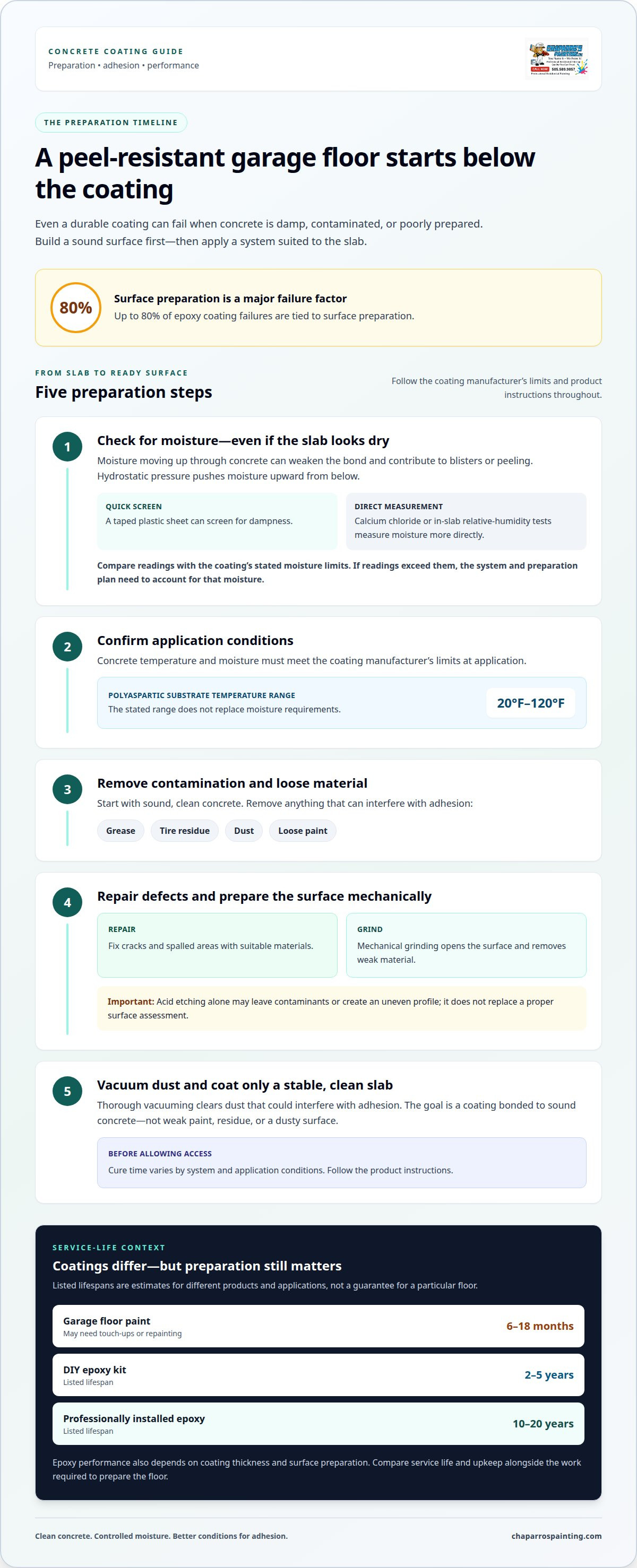
Moisture moving through concrete can weaken the bond with a coating, leading to blisters or peeling. Hydrostatic pressure pushes moisture upward from below. A taped plastic sheet can screen for dampness, while calcium chloride or in-slab relative-humidity tests measure moisture more directly.
Concrete temperature and moisture must meet the coating manufacturer’s limits at application. Polyaspartic coatings can be applied at substrate temperatures from 20°F to 120°F, but that range does not replace the product’s moisture requirements.
Start with sound, clean concrete. Remove grease, tire residue, dust, and loose paint, then repair cracks and spalled areas with suitable materials. Mechanical grinding opens the surface and removes weak material; thorough vacuuming clears dust that could interfere with adhesion. Acid etching alone may leave contaminants or create an uneven profile, so it does not replace a proper assessment of the surface.
Preparation has a direct effect on coating performance. Up to 80% of epoxy coating failures are tied to surface preparation. Situation: A garage slab has old paint, oil spots, and a dusty finish. Action: The coating team removes unsound material, treats contamination, repairs defects, and prepares the concrete mechanically. Result: The coating bonds to a stable, clean surface instead of weak paint or residue.
Check for moisture even if the slab looks dry. Moisture trapped beneath a coating can later contribute to bubbles or delamination. A plastic-sheet test is a useful screen, but it doesn’t measure the slab’s moisture level. Calcium chloride testing or an in-slab humidity probe provides a result to compare with the coating’s stated limits. If readings exceed those limits, the coating system and preparation plan need to account for the moisture.
Polyaspartic coatings resist UV exposure, which can help limit yellowing in garages exposed to sunlight through an open door. Cure time varies by system and application conditions, so follow the product instructions before allowing access. Epoxy can protect against routine abrasion and spills, while its performance also depends on coating thickness and surface preparation.
Situation: A garage has wet tires, freeze-thaw cycles, and regular vehicle traffic. Action: Choose a system suited to those conditions, repair cracks, and address moisture before application. Result: The prepared slab provides a better foundation for resisting peeling and wear. Freeze-thaw movement can stress damp, cracked concrete, so repairing damage and controlling moisture helps protect the coating bond.
Garage floor paint lifespan and cost
Garage floor paint has a shorter service life than thicker coating systems. A typical paint may need touch-ups or repainting after a year or two, and garage floor paint is listed with a lifespan of 6-18 months. Professionally installed epoxy is listed at 10-20 years. These estimates describe different products and applications, not a guarantee for a particular floor.
Product cost is only one part of the comparison. Lower-priced paint may need more frequent maintenance, while a longer-lasting system involves different materials and application work. Compare expected service life, preparation, number of coats, and upkeep alongside the purchase price. Check the label’s coverage estimate, too. Concrete texture and porosity can affect how much coating the floor absorbs.
Situation: A homeowner wants a quick refresh for a lightly used garage. Action: They compare paint labels, coverage estimates, and the likelihood of touch-ups with the time needed for preparation. Result: Paint may suit a short-term cosmetic update, but its shorter listed lifespan means repeat work is part of the overall cost.
Situation: A garage sees regular parking and the owner wants fewer recoating cycles. Action: They compare professionally installed epoxy’s 10-20-year listed lifespan with paint’s 6-18-month listing. Result: The longer-lived option may offer better value over time, although its material and installation costs differ. Coverage per container, required coats, repairs, and surface condition all affect the amount of product needed.
DIY epoxy kits are listed with a lifespan of 2-5 years. That makes the purchase price only one part of their value calculation. Include preparation materials, application tools, and the possibility of repeating the work sooner than with professional epoxy. Product labels also matter: compare coverage estimates for the same floor area and note whether listed coverage assumes one coat or multiple coats.
Garage floor coating warranties vary by product and installation terms. Read the written warranty for its coverage period, claim requirements, and exclusions, including provisions for moisture, surface preparation, existing coatings, abrasion, and chemical exposure.
For a garage mainly used for storage, a shorter-lived finish may be enough. For daily parking, frequent traffic, or repeated exposure to vehicle fluids, compare durability and maintenance needs before choosing. A useful cost comparison includes lifespan, coverage, upkeep, and the work required when the finish wears out.
Slip resistance and anti-skid additives
A smooth garage coating can become slippery when rainwater, snow, or automotive fluids reach the floor. Anti-skid additives add texture for better grip underfoot, but the right amount depends on how you use the garage. A home workshop with frequent wet cleanup calls for a different surface feel than a dry storage area.
Common texture options include silica sand and aluminum oxide, mixed into a compatible coating or broadcast over a wet layer. Product instructions should identify the suitable additive and application method. Too little texture may not provide enough grip; too much can make sweeping harder and trap dirt in surface valleys. A sample patch lets you assess the finished feel before coating the whole slab.
Situation: Rainwater from shoes and tires collects at the garage entrance. Action: Choose a coating system with suitable anti-skid texture, then assess a sample underfoot after it cures. Result: The walking surface gains texture, and the homeowner can judge whether routine cleaning remains manageable.
Texture does not determine chemical resistance. That depends on the coating chemistry and the substance, concentration, and exposure time. Motor oil, gasoline, brake fluid, and household cleaners can affect coatings differently. Compare the product’s chemical-resistance information with the materials likely to reach the floor. Clean spills promptly according to the coating maker’s care instructions, since abrasive scrubbing can also wear the finish.
Hot-tire lift is another concern. A warm tire parked on a coating can soften or stress a weak bond, especially if the concrete or coating was poorly prepared. Suitability depends on the formulation, application, and cure. Check product information for hot-tire performance rather than assuming all epoxy or floor paint handles the same conditions.
Situation: A daily-use garage has smooth concrete, vehicle traffic, and occasional oil drips. Action: Compare grip needs, chemical-resistance details, and hot-tire performance for each coating. Result: The choice reflects the garage’s actual conditions rather than relying on a generic “durable” label.
Anti-skid texture affects appearance and upkeep. A coarser finish feels more pronounced, while a finer additive may feel less rough underfoot. Application matters, too: uneven broadcasting can create inconsistent traction or visible patches. Follow the coating system’s instructions for mixing or broadcasting, and distribute the additive evenly across the work area.
If children, older adults, or anyone carrying items cross wet floors, prioritize predictable footing at entrances and along walking routes. In a vehicle-focused space, balance grip with ease of cleaning and chemical exposure. Consider traffic patterns, likely spills, tire contact, and the texture your household can maintain.
Application fumes and respirator use
Garage floor coatings contain different ingredients and have different application instructions, so fumes vary by product. Before opening a can or mixing a kit, read its label and Safety Data Sheet (SDS). Note the directions for ventilation, protective equipment, mixing, and re-entry. Don’t rely on odor alone to judge whether the air is suitable for work.
Prepare the work area before mixing. Remove people, pets, and stored items from the garage, then open doors and windows where the product instructions allow. Keep a route to fresh air clear. Avoid directing fumes into occupied rooms, and follow ventilation instructions throughout application and curing.
Respirator requirements depend on the coating and its SDS. If the SDS specifies a respirator, use the stated type and follow instructions for fit, filters, and replacement. A dust mask is not automatically a substitute for a respirator specified for coating vapors. If you don’t have the required protective equipment, stop before opening or mixing the product.
Situation: A homeowner plans to apply a two-part epoxy kit in an attached garage. Action: They read both components’ labels and SDS documents, arrange ventilation as directed, and separate the home’s interior from the work area. Result: The application plan follows product-specific precautions instead of assuming all epoxy kits have identical fumes or equipment requirements.
Mixing can change the work conditions. Follow the kit’s sequence, quantities, and handling directions, and keep containers closed when not in use. Don’t add extra solvent or combine leftovers from different products. Keep the SDS accessible during the job so you can refer to its spill, exposure, and cleanup instructions if needed.
Respirator use also depends on proper fit and maintenance. Follow the manufacturer’s instructions for fitting and use, and don’t use damaged equipment or filters beyond their stated service instructions. A respirator doesn’t replace ventilation or other protective equipment specified in the SDS. If you can’t use the specified protection as directed, postpone application rather than changing the product procedure.
Situation: A garage has limited airflow, and the coating instructions require ventilation and respiratory protection. Action: The homeowner adjusts the work plan to meet those directions before mixing. Result: The coating is applied under the product’s stated conditions, and people stay out until its re-entry guidance permits access.
Keep the label and SDS for cleanup and future maintenance. Follow their directions for spills, unused material, and disposal. Don’t assume the floor is ready for people or vehicles just because it feels dry; follow the coating’s cure and re-entry instructions.
Professional and DIY epoxy performance
DIY epoxy kits and professional epoxy differ in expected lifespan, application demands, and cure time. DIY kits are listed with a lifespan of 2-5 years; professionally installed epoxy coatings are listed at 10-20 years. Those figures help frame the choice, but the slab’s condition and the application process still matter.
With a kit, the homeowner manages surface preparation, mixing, coverage, and timing, and each step affects the finished coating. Applying epoxy over dusty or dirty concrete can create a weak bond; inaccurate mixing can affect curing. Follow the kit label for preparation, batch size, working time, coverage, and recoat window.
Situation: A homeowner chooses a DIY kit for a garage used for daily parking. Action: They prepare the slab and apply the coating themselves, following the kit instructions. Result: The finish may meet the short-term need, but DIY kits are listed with a 2-5-year lifespan. Their failure rate can reach 30% within two years, making careful execution especially important.
Professional application shifts surface assessment and coating placement to an experienced crew. Professional epoxy coatings are listed with a cure time of 2-3 days. That period is distinct from the time needed for each application stage, and vehicle access should follow the coating system’s cure instructions. Clear planning helps households account for the garage being unavailable during the work.
Situation: A household wants a longer service life and can plan around a curing period. Action: They select professional epoxy and arrange alternate parking while the coating cures. Result: They choose a system listed at 10-20 years, with vehicle use timed according to its instructions.
Product specifications also help explain differences between paint and coating systems. A leading one-part epoxy garage floor paint comparison lists 36% solids and a dry film thickness of 1.4 mils. Those figures describe that paint comparison, not every one-part product or professional epoxy. Review the specific product’s label for coats, coverage, and application conditions instead of assuming similar names mean similar performance.
The decision often comes down to time, skill, access, and expected lifespan. DIY can suit a homeowner prepared to manage every application step. Professional epoxy may suit a garage where the owner values a longer listed lifespan and wants the application handled as a complete process. Neither option can compensate for unsound concrete or poor preparation.
If professional application fits your garage plans, explore epoxy flooring options.
Chaparro's Painting: Epoxy Flooring
Chaparro's Painting, LLC provides epoxy flooring for homeowners who want a coated garage floor rather than short-lived paint. It may be a practical next step when you’re comparing DIY application with professional work, or when the concrete needs careful preparation before coating.
A sound result starts with understanding the slab, existing finish, and intended garage use. Preparation helps address the surface before epoxy is applied, because adhesion depends on more than the product alone. Describe how you use the garage and any problems you’ve noticed, such as peeling or worn areas, so the project can account for the floor’s condition.
For a straightforward discussion of your garage floor, contact Chaparro's Painting, LLC.
Choose the next step for your garage floor
Choose a coating to suit the concrete, how you use the garage, and the maintenance you’re prepared to handle. For garage floor paint that doesn’t peel, focus on a suitable system and careful application, not just the finish or product label. A professional assessment can help turn those considerations into a clear scope of work.
Chaparro's Painting, LLC provides epoxy flooring, along with interior painting, exterior painting, and cabinet painting. If you’re ready to discuss your garage floor and the work it needs, contact Chaparro's Painting, LLC about your garage floor. A practical plan is a good place to start.
Frequently Asked Questions
Which Coating Is Right for Your Garage?
Match the coating to how you use the garage and the upkeep you’re willing to handle. Choosing garage floor paint that doesn't peel starts with considering the concrete, traffic, and product requirements together. For homeowners in Rio Rancho, Albuquerque, Bernalillo, or Santa Fe, consider whether the floor is mainly for storage, daily parking, or a workshop. A coating suited to dry storage may not suit a busy work area.
What type of garage floor coating is least likely to peel: epoxy, polyaspartic, or concrete stain?
No coating type is peel-proof, and the concrete’s condition and preparation affect adhesion. Epoxy and polyaspartic form coating layers; concrete stain colors the concrete rather than acting as the same kind of film. Polyaspartic coatings are listed with a lifespan of 10-15 years, but that figure alone doesn’t establish which product will bond best to a particular slab. Compare product requirements with the floor’s moisture, existing finish, and use.
How should a concrete garage floor be tested and prepared before painting to prevent peeling?
To choose garage floor paint that doesn't peel, check for moisture, residue, weak concrete, cracks, and old coatings. A taped plastic sheet can screen for dampness; calcium chloride or in-slab relative-humidity testing provides measured moisture information. Remove grease and loose material, repair defects, prepare the surface mechanically as the coating requires, then clear away dust. For example, an old glossy finish may need more than washing before recoating.
How do you repair oil stains, cracks, and existing peeling paint before recoating a garage floor?
Remove oil residue with a concrete-compatible cleaner, then rinse and let the slab dry as product directions require. Repair cracks with material suited to both the crack and the planned coating system. Scrape or mechanically remove peeling paint until the remaining surface is firmly attached, then prepare the exposed concrete and clear away dust. Coating over an oily patch or loose paint edge can leave a weak point beneath the new finish.
How many coats of garage floor epoxy or polyaspartic coating are needed, and what are the cure times?
Coat count depends on the product system, so follow its label for primer, basecoat, and topcoat requirements. Professional epoxy coatings are listed with a cure time of 2-3 days. That figure doesn’t establish the cure schedule for every epoxy or any polyaspartic product. Check the selected system’s instructions for recoat windows and when foot or vehicle traffic can return; “dry to touch” isn’t the same as ready for use.
What is the cost per square foot to professionally coat a garage floor in the United States?
There is no single cost per square foot that applies to every garage. The amount depends on floor area, concrete condition, repairs, preparation, coating system, and required layers. A damaged or contaminated slab may need more preparation than sound concrete. For a useful estimate, describe the floor’s size and condition and the coating system you have in mind. Pricing for a specific project is determined after a quote request, not from a general national figure.
How much does DIY garage floor paint or epoxy cost, and how long does it last?
DIY material costs depend on the kit, coverage, and preparation supplies needed, so compare the product’s stated coverage with your floor area. DIY epoxy kits are listed with a lifespan of 2-5 years. Your actual result depends on the slab, preparation, mixing, and application. For example, a kit may require separate supplies for cleaning, repairs, or surface preparation, which affect the full project budget.
Which garage floor coatings resist hot-tire pickup, road salt, chemicals, and abrasion best?
Choose based on the product’s stated resistance to the conditions your garage faces; no single ranking applies to every coating and exposure. Check whether the technical information addresses hot tires, road salt, chemicals, and abrasion separately. A garage used for winter parking may need different resistance from a workshop exposed to cleaners or automotive fluids. Clean spills according to product care directions, as exposure time and cleaning methods can affect the coated floor.


