

Can stained cabinets take paint without peeling, or will the old finish show through? The answer depends less on the color you choose than on the condition of the wood and its existing stain or clear coat. Refinishing stained cabinets to painted finishes can refresh a kitchen, but poor diagnosis or rushed preparation can lead to weak adhesion, visible grain, or an uneven result.
It’s reasonable to be cautious about sanding or stripping doors and frames. The goal isn’t to remove sound material unnecessarily. It’s to create a clean, properly prepared surface for the new coating. This guide explains how to assess your cabinets, prepare them for paint, and choose an approach that suits your home.
You’ll also learn what the process involves, where DIY work can become demanding, and when professional cabinet painting may make more sense. Owner Jaime Chaparro brings more than 20 years of painting experience, with a focus on the thorough preparation that supports a clean cabinet finish. Knowing what to expect can help you make a confident decision before work begins.
Key Takeaways
- Check cabinet doors, frames, edges, and high-touch areas for peeling clear coat, grease, scratches, or damaged wood before choosing a finish.
- Compare paint, refreshed stain, and stripping based on the appearance you want and the preparation each requires.
- For refinishing stained cabinets to painted, match sanding and primer choices to the existing coating and cabinet material.
- Follow an orderly process from labeling and cleaning through priming, painting, curing, and reassembly to help avoid finish problems.
- Learn how professional cabinet painting and thorough preparation can help homeowners in Rio Rancho and nearby communities refresh suitable existing cabinets.
Can You Refinish Stained Cabinets to Painted Without Replacing Them?
Yes. Sound stained cabinets can often be painted without replacing them, provided the surfaces are properly assessed and prepared. Refinishing changes the visible finish while keeping cabinet components that are still in suitable condition. It doesn’t require replacing cabinet boxes, doors, or hardware. Painting can be a practical way to refresh an outdated color or worn appearance, but the existing coating and condition of the wood determine how the work should be done.
Judge the cabinets as they are, not just by the look you want afterward. Doors and frames with secure construction and intact surfaces may be suitable candidates. Loose veneer, swelling, or significant damage needs attention first because paint changes appearance but won’t correct an underlying problem. Consider your preferred result too: an opaque painted finish looks different from a renewed stain that keeps the wood grain visible.
When is painting over stained cabinets a practical choice?
Painting is worth considering when the cabinet components are sound but the color feels dated or the finish looks worn. Inspect door edges, corners, and areas around handles, where damage or coating failure can be easier to spot. If the structure is in good shape, refinishing stained cabinets to painted can update the room while retaining the existing cabinetry. Loose, swollen, or badly damaged surfaces need attention before painting.
What makes stained cabinets different from previously painted cabinets?
Stain colors the wood, while a clear topcoat can form a separate protective layer over it. Paint must adhere to that surface coating, not simply cover the stain. Grease, furniture polish, gloss, or a failing clear coat can interfere with adhesion and contribute to peeling or an uneven finish if left unaddressed. Different woods and coatings need different preparation, so one sanding or priming approach won’t suit every cabinet.
Identify the finish before deciding how much to sand or which primer to use. A sound clear coat may need a different preparation approach from one that’s peeling or worn through. The broader principles of wood finishing techniques help explain why the existing surface matters: the layers and their condition influence how a new finish performs. A careful assessment helps you decide whether painting suits the cabinets’ condition and the appearance you want.
How to Assess Stain, Clear Coat, and Cabinet Condition Before Painting
Before choosing a preparation method, inspect the cabinets as a group, then examine vulnerable spots up close. Check doors, drawer fronts, frames, exposed edges, and areas around handles. These frequently touched places can show grease buildup, worn coating, scratches, or peeling that may be hard to see from across the room.
Look for differences in sheen and wear. A glossy area may have a smooth clear coat, while dull or patchy spots can indicate wear or residue. Flaking and lifted edges suggest the topcoat is failing. Stain color alone won’t tell you which clear finish is on the wood or whether it’s still sound, so don’t base your preparation plan on color alone.
How can you tell what finish is on stained cabinets?
Start with a visual check in good light. Compare protected areas with spots near handles, sinks, or cooking surfaces. Then make a small adhesion test in a discreet location: clean and prepare a limited patch, apply the intended primer and paint according to their directions, and watch for poor grip, lifting, or wrinkling as the coating dries. A test can reveal a compatibility problem before you prepare every cabinet, though it can’t replace inspecting the full surface.
Wood grain is different from damage. Grain is the natural pattern of the wood and may remain visible beneath paint, especially if the surface isn’t filled smooth. Scratches, dents, and raised or peeling coating are defects. Distinguishing between them helps set realistic expectations for the finished appearance and identify where repairs or additional preparation may be needed.
Which cabinet problems need attention before refinishing?
Check for loose veneer, swollen areas, damaged corners, deep scratches, and joints that appear to be failing. These issues can affect the soundness of the surface and how well it can be prepared, not just its appearance. Note what you find on visible and less visible areas, including the inside edges of doors.
Kitchen residue needs attention too. Grease and polish can remain on cabinet surfaces even when they look clean, so wash them thoroughly before sanding or applying coatings. Sanding over contamination can spread it or interfere with adhesion. Complete needed repairs first, then prepare those repaired areas so they’re ready for primer and finish coats.
A methodical inspection helps clarify whether refinishing stained cabinets to painted is a practical next step and where preparation needs extra care. Homeowners looking for experienced help with residential cabinet painting can learn about cabinet painting with Chaparro's Painting, LLC, serving Albuquerque and nearby communities.
Paint, Restain, or Strip: Which Stained-Cabinet Finish Fits Your Goal?
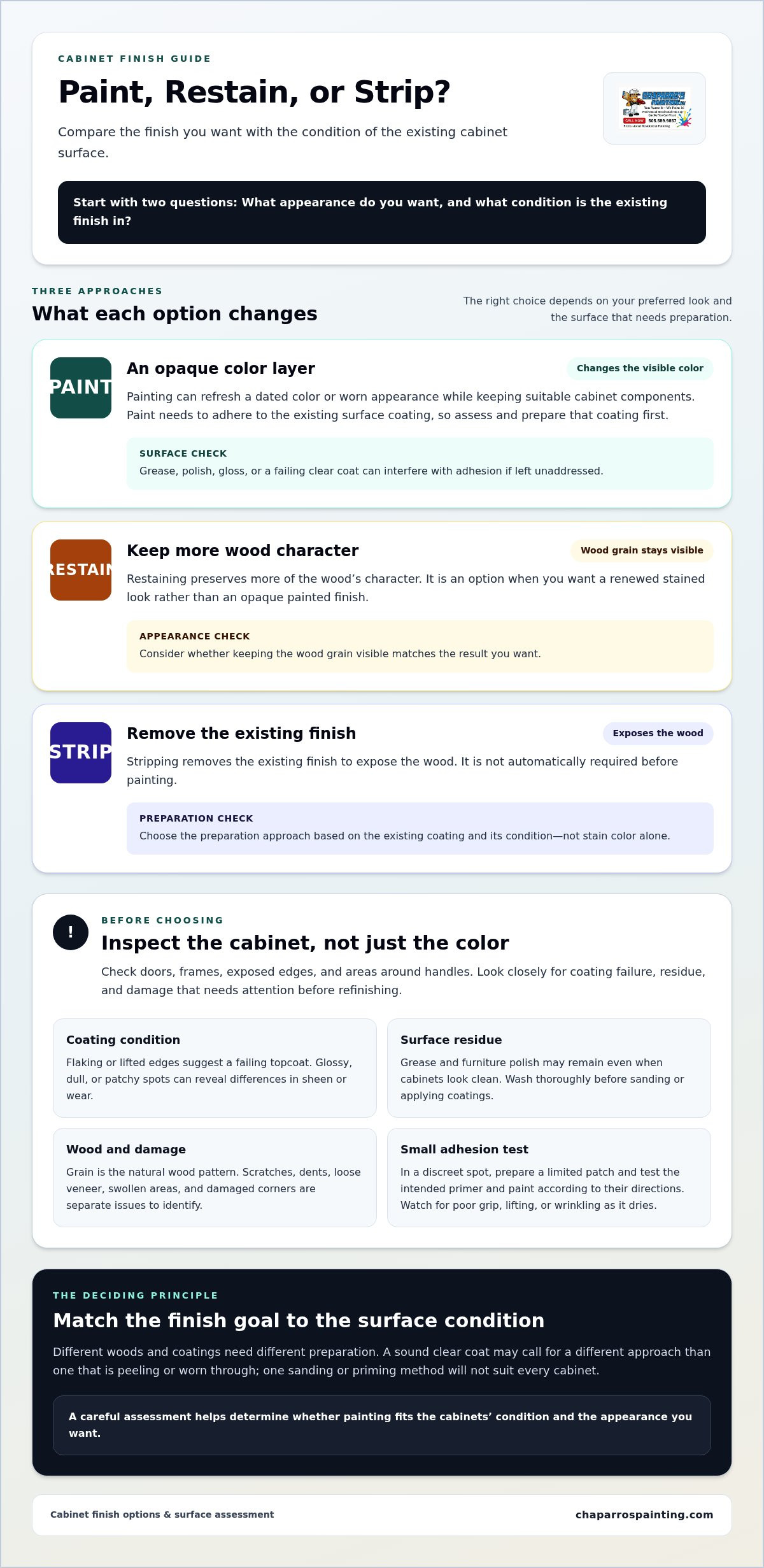
Choose a finish based on the look you want and the condition of the existing surface. Paint creates an opaque color layer. Restaining preserves more of the wood’s character. Stripping removes the existing finish to expose the wood, but it isn’t automatically required before painting. Each option suits different cabinets and goals.
For refinishing stained cabinets to painted, durability depends on more than the paint itself. The surface must be clean and properly prepared, and the primer and finish coats must be compatible with the existing layers. A weak or poorly bonded layer underneath can undermine the new finish.
| Finish direction | Appearance | Preparation considerations | Best fit |
|---|---|---|---|
| Paint | Opaque color; wood grain and repairs may still show through. | Clean, prepare, and prime based on the existing coating and cabinet material. | A changed color or more uniform look. |
| Restain | More wood grain and character remain visible. | The existing finish may need removal or adjustment for the new stain to take evenly. | Keeping a natural wood appearance while refreshing its tone. |
| Strip | Removes old finish to expose bare wood. | Requires careful removal and surface preparation; results depend on the wood and its condition. | A fresh start when the existing coating needs to come off or bare wood is the goal. |
What changes when you paint instead of preserving the stain?
Paint covers the stain with a solid color, while stain lets more of the grain show. That change can suit a kitchen where you want a different, more consistent cabinet color. Paint doesn’t necessarily hide every detail, though. Prominent grain, dents, and repairs may remain visible beneath the finished coating. Consider the cabinet condition and your preferred appearance together before choosing.
Is stripping necessary before painting stained cabinets?
No. Complete stripping isn’t a default step for every sound surface. The clear coat’s condition and the results of a discreet compatibility test help guide preparation. If the coating is firmly attached and suitable for the chosen primer and paint, preparation may not require removing every layer. If it’s peeling or failing, more extensive removal may be needed. Avoid aggressive sanding or chemical stripping as a one-size-fits-all solution. The goal is a properly prepared surface without unnecessary damage.
How to Refinish Stained Cabinets for a Painted Finish, Step by Step
A controlled process protects cabinet parts and helps each coating layer do its job. For refinishing stained cabinets to painted, the existing finish and cabinet material guide the sanding and primer approach. Don’t assume every door needs aggressive sanding or the same primer. Follow this sequence, adjusting preparation to the surface you’ve assessed.
- Label and remove components. Photograph the doors and hardware in place. Label each door and drawer, then remove them and store hardware together so reassembly is straightforward.
- Clean thoroughly. Remove grease, food residue, and polish before sanding. Protect nearby surfaces and set up a clean work area for the doors and drawer fronts.
- Assess and test. Check the clear coat, edges, and repairs. Try the planned preparation and coating system on a discreet area before applying it across the cabinets.
- Prepare the surfaces. Complete repairs, sand as appropriate for the coating and material, and remove sanding dust. The surface should be clean and ready for primer.
- Prime. Apply a compatible primer as directed. Primer supports adhesion and can help limit stain bleed-through, but the right choice depends on the cabinet surface.
- Paint. Apply thin, even coats rather than trying to cover everything in one heavy pass. Follow the coating instructions for application and recoat intervals.
- Allow the finish to cure. Follow the product’s drying and curing guidance before handling or using the cabinets normally.
- Reassemble. Once the finish is ready for careful handling, reinstall doors, drawers, and hardware in their labeled positions.
How should stained cabinet doors and frames be prepared?
Keep the hardware organized and label each component before removal. After cleaning, protect floors and counters, then sand only as appropriate for the identified finish and cabinet material. Remove dust before coating, since residue can disrupt a smooth finish. Complete repairs and the discreet compatibility test before full priming. If the test shows poor adhesion or a coating problem, reassess the preparation rather than repeating it across every surface.
How do primer, paint, and curing affect the result?
A compatible primer helps the finish coat bond and can reduce stain bleeding through paint. Apply primer and paint according to their manufacturers’ instructions, including recoat intervals and ventilation guidance. Use thin, even coats for more controlled coverage. Dry to the touch doesn’t mean fully cured: a surface can feel dry while the coating is still hardening, so avoid bumps, pressure, and routine use until the instructions allow.
Careful preparation and an orderly finish sequence take patience. Information about residential cabinet painting in Albuquerque is available from Chaparro's Painting, LLC.
Professional Stained-Cabinet Painting in Rio Rancho and Nearby Communities
Painting stained cabinets takes more than applying a new color. A professional assessment helps identify the condition of the doors, frames, and existing finish so preparation can be matched to the surfaces. That matters if you’re concerned about paint adhesion, visible grain, or damage showing through the final coat.
Chaparro's Painting, LLC provides residential cabinet painting and detailed preparation in Rio Rancho, Albuquerque, Bernalillo, and Santa Fe. Owner Jaime Chaparro brings more than 20 years of painting experience to the work. The project approach begins with understanding the cabinets’ current condition and the homeowner’s desired finish, then organizing preparation and painting around those needs. Surface condition and any needed repairs should be addressed before coating to create a sound foundation for the finish.
What can homeowners expect from a careful cabinet-painting project?
Expect the work to be planned around the actual cabinets, not treated as a one-method-fits-all job. The existing coating, areas of wear, and intended appearance help shape the preparation. An organized process also keeps expectations clear as the project moves from assessment through finishing. Thorough preparation supports a cleaner, more consistent result, especially on surfaces that see regular handling.
For homeowners weighing refinishing stained cabinets to painted, professional cabinet painting can be a practical way to update suitable cabinets without choosing a new wood stain. The focus is on refreshing the existing cabinetry while accounting for the surface beneath the new finish.
When should you discuss cabinet painting with Chaparro's Painting, LLC?
Consider cabinet painting if your stained cabinets are sound but their color or appearance no longer suits the room, or if you want experienced help planning preparation before painting begins. Cabinet updates can also be part of a broader room refresh. If you’re considering changes beyond the cabinets, learn more about interior painting in Rio Rancho.
Share the look you want for your cabinets and any concerns you’ve noticed, such as peeling clear coat or damaged areas. Chaparro's Painting, LLC provides residential cabinet painting for homes in Rio Rancho and nearby communities.
Make a Confident Plan for Your Cabinet Refresh
Refinishing stained cabinets to painted can update a kitchen without replacing suitable cabinet components. Start by checking the wood and existing clear coat, then choose a finish that suits both the cabinets’ condition and the look you want. Paint, refreshed stain, and stripping create different results, so there isn’t one best choice for every home.
Preparation helps the new finish hold up. Cleaning, repairs, surface preparation, compatible primer and paint, and adequate curing all play a part. If the coating or cabinet material makes these decisions feel uncertain, experienced help can make the process clearer.
Chaparro's Painting, LLC provides residential cabinet painting and detailed preparation in Rio Rancho, Albuquerque, Bernalillo, and Santa Fe. Owner Jaime Chaparro brings more than 20 years of painting experience to the work. Contact Chaparro's Painting, LLC to discuss your cabinet-painting project and plan a refresh suited to your cabinets.
Frequently Asked Questions
Can you paint stained cabinets without stripping them first?
Yes, sound stained cabinets can often be painted without completely stripping them. The existing clear coat must be clean, stable, and suitable for the new coating system. Preparation may include removing grease, sanding as appropriate, and applying a compatible primer. If the clear coat is peeling or failing, loose material needs attention first. A small test area can help assess adhesion before you refinish all the cabinets.
Do stained cabinets need to be sanded before painting?
The surface usually needs some preparation for paint to adhere, but the right sanding method depends on the cabinet material and existing finish. After cleaning, light sanding may help prepare a sound, glossy topcoat. A failing coating may need more attention, while aggressive sanding can damage veneer or cut through edges. Assess the surface first, follow coating instructions, and remove sanding dust before applying primer.
Will paint cover the wood grain on stained cabinets?
Paint covers the stain with an opaque color, but it may not hide the wood grain’s texture. Grain can remain visible beneath the coating, especially on pronounced wood patterns or cabinets with surface grooves. Filling and additional preparation may reduce texture, but the finished look depends on the wood and the work performed. Decide whether you want a smooth, uniform appearance or are comfortable with some grain showing through.
What happens if you paint over stained cabinets without primer?
Skipping primer can reduce adhesion and may allow stain or discoloration to show through the paint. The risk depends on the existing clear coat, wood, and paint system. A compatible primer provides a prepared layer for the finish coat and can help manage stain bleed-through. Clean and assess the cabinets first, then follow the primer and paint manufacturers’ directions rather than assuming paint alone will bond well.
How long should painted cabinets cure before normal use?
There isn’t one cure time that applies to every cabinet coating. Drying to the touch is different from full cure: a surface can feel dry while the coating is still hardening. Follow the manufacturer’s instructions for drying, recoating, and curing, and avoid routine use or placing pressure on freshly painted areas until the guidance allows. Handle doors and drawers gently during this stage to reduce the chance of scuffs, dents, or sticking.
Is it better to paint stained cabinets or keep the wood finish?
Neither option is automatically better. Keeping or refreshing the stain preserves more visible wood character, while paint creates an opaque color that changes the cabinets’ overall look. Base the choice on the condition of the wood and clear coat, along with the appearance you want in your kitchen. If you like the grain and the existing finish is suitable, retaining the wood look may fit. Paint may suit a desired color change.
Can stained kitchen cabinets be professionally painted in Rio Rancho?
Yes. Chaparro's Painting, LLC provides residential cabinet painting and detailed preparation in Rio Rancho, Albuquerque, Bernalillo, and Santa Fe. Owner Jaime Chaparro has more than 20 years of painting experience. A thoughtful approach considers the cabinets’ existing finish, condition, and desired appearance before work begins. That preparation helps address concerns about adhesion and an uneven result while keeping the project focused on refreshing suitable cabinets in your home.


