

Could a contrasting island make your kitchen feel more coordinated, not less? The idea is appealing, but choosing a shade that works with your cabinets, countertops, flooring, and light can feel like a gamble. If you’re searching for “painting kitchen island different color,” the goal isn’t simply to pick a bold paint chip. It’s to create contrast that feels intentional in your kitchen.
Deep green, muted blue, warm neutral, and charcoal can all work, depending on the finishes around them and how much natural light the room gets. Before choosing, look at the undertones in your fixed finishes and compare paint samples in the kitchen. Even a well-chosen shade can disappoint if the surface isn’t cleaned and prepared properly before painting.
This guide explains how to choose an island color that complements your kitchen, decide how much contrast suits the space, and understand the preparation and painting steps involved. You’ll also learn when professional cabinet painting can help create a consistent, carefully finished result. Chaparro’s Painting, LLC provides residential cabinet painting and brings over 20 years of painting experience to its work.
Key Takeaways
- Start with fixed finishes like countertops, flooring, and backsplash, then use their undertones to guide your island color choice.
- Compare tonal neutrals, darker grounding shades, and restrained accent colors to find a contrast that suits your kitchen.
- Painting kitchen island different color works best when you test the shade in your kitchen’s lighting before committing.
- Match preparation to the island’s existing coating and condition. Cleaning, sanding, and priming as appropriate help create a sound base for the finish.
- Consider professional cabinet painting when preparation is extensive, time is limited, or you want a consistent, carefully executed result.
Why Paint a Kitchen Island a Different Color?
A contrasting island sets it apart from the perimeter cabinets and creates a focal point without changing every cabinet or repainting the whole room. The difference can be subtle: a slightly deeper neutral, a shift in undertone, or a distinct hue. Contrast doesn’t have to mean a dramatic, high-impact color.
Use the surfaces that are staying in place to judge how much contrast makes sense. Countertops, flooring, and backsplash contribute color and pattern, while natural and artificial light affect how paint appears throughout the day. Let your fixed finishes and the room’s lighting guide the island color, so the contrast feels intentional rather than disconnected. Basic ideas in color theory can also help explain why certain hues feel harmonious or more visually distinct.
What does it mean to paint the island a different color?
A tonal variation creates a quiet difference, such as light greige perimeter cabinets paired with a deeper taupe island. A stronger contrast might use a clear light-dark shift or warm cabinets beside a cooler island shade. The island can still relate to nearby finishes through a shared undertone. For example, a muted green island may complement warm wood flooring when its undertone is soft and earthy rather than icy.
Searching for “painting kitchen island different color” doesn’t mean you have to choose a bold shade. The aim is to select a level of contrast that suits the room and makes the island feel considered.
When does a contrasting island work well?
An island often sits where people gather and move through an open kitchen, so a distinct color can help define it as the center of the space. This can be especially effective when the kitchen opens into a dining or living area. The island color should still make sense alongside the countertops, flooring, and backsplash. A busy countertop or strongly patterned backsplash may call for a quieter island shade, while simpler finishes leave more room for contrast.
If you want a noticeable update without repainting every cabinet, a restrained shift in color depth or undertone may be enough. Compare your sample with the surrounding finishes, and look at the island from more than one viewpoint. A shade that works beside the cabinets should also feel balanced in the wider room.
How to Choose a Kitchen Island Color That Fits Your Kitchen
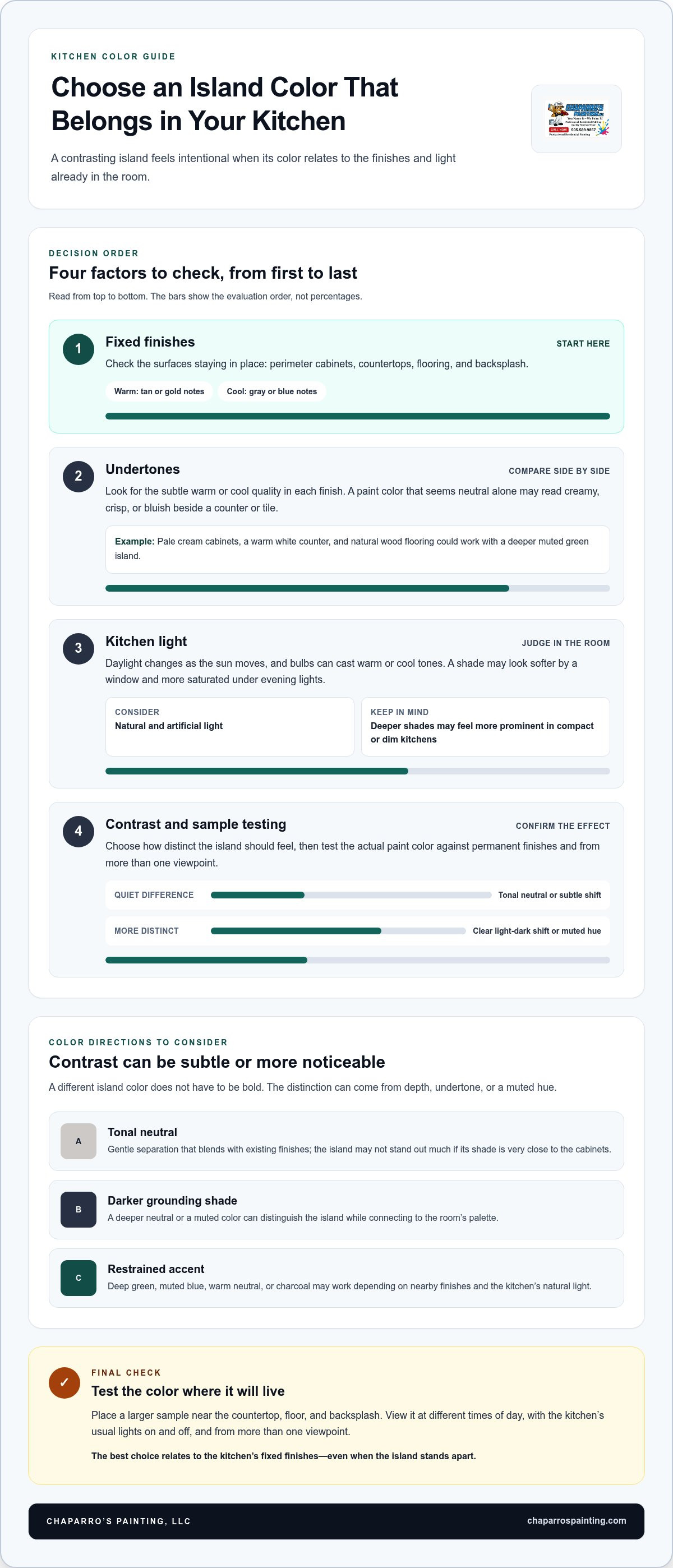
Choose the color in a clear order. First, identify the finishes that will stay. Then assess the kitchen’s light, decide how much contrast you want, and test samples in the room. This keeps the choice connected to the kitchen you have, rather than to a color that looked appealing on a small chip or in a different setting.
Undertones are the subtle warm or cool qualities beneath a color. Two shades of white can look quite different beside a countertop: one may read creamy, while another looks crisp or bluish. A sample that seems neutral on its own may appear noticeably warm or cool beside cabinets, flooring, or tile.
How do you coordinate island paint with countertops and cabinets?
Start with the finishes that will remain: perimeter cabinets, counters, flooring, and backsplash. Look at their overall cast in the room. Do the wood tones and stone lean warm, with hints of tan or gold, or cool, with gray or blue notes? Compare paint samples directly against these surfaces, not just against one another.
For example, pale cream cabinets, a warm white counter, and natural wood flooring could work with a deeper muted green island. The green adds contrast while its earthy quality relates to the room’s warmth. You don’t need to match every finish. Choose a shade that belongs with the palette even as it stands apart.
How do kitchen lighting and room size affect the color?
Daylight shifts as the sun moves, and bulbs can cast their own warm or cool tone. A sample may appear softer near a window in the morning and more saturated under evening lights. A deeper island color can also feel more prominent in a compact or dim kitchen, but there’s no one-size-fits-all rule. Judge the actual sample in the space and from different viewpoints.
Test a paint sample beside the island’s permanent finishes, because the same shade can look different next to a countertop, floor, or backsplash. Place samples close to those materials and view them at different times of day, with the kitchen’s usual lights on and off. A larger sample area can make it easier to judge the color’s overall effect than a small chip.
This side-by-side comparison is especially helpful when you’re considering painting kitchen island different color from the rest of the cabinetry. Take time to compare before settling on a shade. If you’d prefer a carefully prepared, consistent cabinet finish, professional cabinet painting is another option.
Which Kitchen Island Color Direction Should You Choose?
A different island color doesn’t have to be bold or saturated. Contrast can come from a small shift in depth, a change in undertone, or a distinct but muted hue. Use the options below as starting points, then compare each one with your kitchen’s finishes and the effect you want.
| Color direction | Visual effect | Could suit | Possible drawback |
|---|---|---|---|
| Tonal neutral | Creates gentle separation without a strong focal point. | Kitchens where you want a subtle change that blends with existing finishes. | The island may not stand out much if its shade is very close to the cabinets. |
| Darker grounding color | Adds visual weight and gives the island more definition. | Rooms with lighter cabinets or counters that can balance a deeper shade. | In a compact or dim kitchen, it may feel more prominent than expected. |
| Restrained accent | Introduces a distinct hue while keeping the overall look measured. | Neutral kitchens with a finish or detail that can relate to the accent. | A color that doesn’t connect to the rest of the room may look disconnected. |
Is a lighter or darker island the better choice?
A lighter island can blend into pale cabinets and keep the room feeling visually open. A darker shade creates more separation and draws the eye, especially beside light cabinetry. Counter color matters too: a light counter can soften the contrast of a dark island, while a dark counter may make the whole island read as one stronger block. Neither direction is automatically better. Test the exact shade in your kitchen before deciding.
Can a colored island work with neutral kitchen cabinets?
Yes. A muted accent can add definition without overwhelming neutral cabinets. For example, a soft green or blue may bring color to a room of warm white and wood tones, provided its undertone works with the surrounding finishes. Repeating a similar tone in a rug or decor can help the accent feel connected. Choose based on your kitchen and preferences, not on a claim that any shade is timeless.
When painting a kitchen island a different color, think about the balance you want: quiet variation, a grounded focal point, or a measured touch of color. A sample can show whether the contrast feels right at full scale and in your room’s lighting.
How to Prepare and Paint a Kitchen Island
A neat, durable result starts with the island’s condition, not the paint color. A surface with an intact coating may need different preparation from one with peeling paint, chips, grease buildup, or other damage. Before starting, decide whether the project is a straightforward cosmetic update or whether repairs are needed to create a sound base for the new finish.
What preparation does a kitchen island need before painting?
Clear the counters and nearby work area, then protect the floor and surrounding surfaces from dust and drips. Remove handles or other hardware where practical, and keep the pieces organized for reinstallation. Clean the island thoroughly to remove grease, food residue, and dirt. Paint applied over grime may not adhere well, and contamination can affect the finished appearance.
Once the surface is clean and dry, check for loose or damaged areas. Sanding can help prepare some existing finishes, while worn spots may need repair. Primer may be appropriate depending on the surface and the coating being applied. The existing finish and its condition determine which preparation steps are needed. Follow product directions for compatible surfaces and application.
- Protect: Cover floors and nearby surfaces, and clear the island.
- Clean: Remove grease and residue before sanding or priming.
- Prepare: Address surface flaws and determine whether sanding or primer is needed.
- Paint: Apply the coating carefully, following its directions.
- Allow it to cure: Keep the surface in suitable conditions as it finishes hardening.
What should homeowners expect during the painting process?
Careful application matters around corners, edges, panels, and other details, where uneven coverage or missed spots can be more noticeable. Frequently touched sections also deserve attention because hands and everyday kitchen activity put the finish to use. Work in an orderly sequence, and avoid rushing between coats or handling painted surfaces too soon.
Drying and curing are different stages. Paint may feel dry to the touch before it has fully hardened, so follow the coating manufacturer’s directions for recoat times, handling, and use. Plan for limited access to the island while work is underway and during curing. Move kitchen items elsewhere, and avoid using the surface until the directions say it’s ready.
Painting a kitchen island a different color is a focused cabinet-painting project, but preparation still takes care and time. Chaparro’s Painting, LLC provides residential cabinet painting for homeowners seeking a carefully prepared finish. Explore professional kitchen island painting.
When Professional Kitchen Island Painting Makes Sense
Painting the island yourself may suit a simple project if the existing finish is sound, you have time for careful preparation, and you’re comfortable working around detailed edges and panels. Professional cabinet painting can make more sense if the surface needs substantial preparation, the coating is worn or damaged, or you want a consistent finish without managing each step yourself.
An island gets regular use. Hands, spills, and everyday kitchen activity put the finish to the test, so rushed preparation can show up quickly. A methodical process matters: protect nearby surfaces, prepare the island according to its condition, and apply the coating with attention to details and high-touch areas. Plan for limited access while work is underway and while the finish cures.
What can professional cabinet painting help with?
Professional cabinet painting brings an organized approach to surface preparation and protection of the surrounding kitchen. Consider the selected island shade alongside the cabinets, counters, flooring, and backsplash before work begins. This keeps the color decision connected to the room and focuses the work on the result you want.
Chaparro’s Painting, LLC provides residential cabinet painting and brings more than 20 years of painting experience to the work. Each island’s existing coating and condition shape the preparation required. Careful work at every stage supports a clean, consistent appearance.
How can homeowners move from color idea to finished island?
Keep the decision manageable. Narrow your palette to a few shades, test them beside the kitchen’s permanent finishes, and compare them under the room’s usual lighting. Once you’ve chosen, plan how the project will fit household routines. The island may be unavailable for food preparation or storage during parts of the work and curing, so identify another place for those tasks.
If the preparation feels like more than you want to take on, professional help is a practical option. Chaparro’s Painting serves homeowners in Rio Rancho, Albuquerque, Bernalillo, and Santa Fe. If you’re considering a different island color, reach out to discuss residential cabinet painting for your kitchen.
Make Your Island Color Feel Right at Home
A successful contrast starts with what’s already in your kitchen. Compare samples with your cabinets, countertops, flooring, and backsplash, then view them in the room’s changing light. The right difference can be subtle: a shift in depth or undertone can set the island apart without making it feel disconnected.
Preparation matters just as much as color. Cleaning and preparing the surface according to its existing finish helps create a sound base, while careful application and proper curing give the project time to settle. If “painting kitchen island different color” is your next update, consider whether the work fits your time, preparation needs, and desired finish.
Chaparro’s Painting provides residential cabinet painting and interior painting, backed by more than 20 years of painting experience. Homeowners in Rio Rancho, Albuquerque, Bernalillo, and Santa Fe can explore residential cabinet painting with Chaparro’s Painting. Choose a color that works with your kitchen, then contact Chaparro’s Painting to discuss your cabinet painting project.
Frequently Asked Questions
Should a kitchen island be a different color from the cabinets?
It can be, but it doesn’t have to be. A contrasting island creates a focal point and can give the kitchen more depth, while a matching island keeps the cabinetry visually unified. Contrast can be subtle, such as choosing a slightly deeper neutral, or more noticeable with a different hue. Compare the island color with your countertops, flooring, and backsplash so the change feels connected to the whole room.
What color should I paint my kitchen island?
Choose a shade that works with the finishes you plan to keep and the way light moves through your kitchen. Warm white cabinets and wood flooring might pair well with an earthy neutral or muted green, while cooler gray finishes may suit a soft blue or charcoal. Test a few samples beside the countertops and backsplash. If you’re researching “painting kitchen island different color,” remember that a coordinated shade doesn’t need to be bold.
Can a kitchen island be darker than the cabinets?
Yes. A darker island can stand out against light perimeter cabinets and give the room a stronger focal point. Consider the counter too: a light countertop may soften the contrast, while a dark one can make the island feel more visually substantial. In a compact or dim kitchen, a deep shade may be especially noticeable. Test it in the actual room and check how it looks in daylight and under your usual lighting.
Can I paint my kitchen island without painting the cabinets?
Yes, painting only the island is a practical way to update the kitchen without changing every cabinet. The new color can add a focal point while leaving the perimeter cabinetry as it is. Before settling on a shade, compare it with the cabinets and other fixed finishes, including counters, flooring, and backsplash. A tonal shift or muted accent can create distinction without making the island feel unrelated to the room.
How do you prepare a kitchen island for painting?
Clear the island and protect nearby floors and surfaces. Remove hardware where appropriate, then clean away grease, dirt, and residue. Once the surface is dry, inspect its existing coating and condition. Sanding, repairs, and primer may be needed depending on what you find. Preparation helps create a suitable base for the new coating, so don’t assume every island needs exactly the same steps. Follow the coating manufacturer’s directions for surface preparation and application.
Is it difficult to paint a kitchen island yourself?
It depends on the island’s condition, the detail of its panels and edges, and your comfort with surface preparation and careful application. A straightforward project can be manageable if you have time to clean, prepare, paint, and allow the finish to cure. Worn coatings or repairs add work. Homeowners in Rio Rancho, Albuquerque, Bernalillo, and Santa Fe can also choose residential cabinet painting from Chaparro’s Painting, which brings more than 20 years of painting experience.
Does painting a kitchen island a different color make the kitchen look smaller?
Not necessarily. A deep or high-contrast island can draw the eye and feel more prominent, especially in a compact or dim kitchen. A lighter or more tonal color may blend in more with the surrounding cabinets. The result depends on the island’s size, countertop, nearby finishes, and room lighting. Test the color in place and view it from different parts of the kitchen before deciding how much contrast feels comfortable.


