

An empty home in Rio Rancho is often the easiest time to paint, though moving in first can help you see how colors work with your furnishings and natural light. If you’re moving into a new house, painting services are often simplest to arrange before furniture and boxes fill the rooms. An empty space gives painters clear access to walls, closets, trim, and floors.
The project scope depends on the areas to be painted, surface condition, and the preparation and detail involved. This guide explains what affects an empty-home painting estimate, when painting before move-in may not suit your plans, and how natural and artificial light can change a color’s appearance. You’ll also learn how to plan interior and exterior painting around your move.
Key Takeaways
- An empty home gives painters clearer access to walls, closets, and trim, which can make the work easier to schedule before move-in.
- Project estimates depend on the surfaces being painted, their condition, and the preparation and detail involved.
- Paint colors can look different in natural and artificial light; sampling them in the room can help you judge the effect throughout the day.
- Painting before moving in may be less practical if you want to choose colors around your furnishings or need to coordinate the work with other move-in plans.
- For homes built before 1978, lead-based paint rules can affect renovation work, so understand the relevant requirements before painting begins.
1. How Much Does It Cost to Paint an Empty Rio Rancho Home?
The cost of painting an empty home in Rio Rancho depends on the surfaces included, their condition, and the preparation required. The project price depends on the case and is provided after a quote request. A full interior repaint has a different scope from painting one bedroom or selected walls. Listing the rooms and surfaces helps define the work covered by an estimate.
An empty property gives painters access to walls without moving furniture. They can reach corners, baseboards, and areas that might otherwise sit behind a sofa or bed. In an occupied home, painters may need to work around belongings and keep pathways clear. That coordination can affect labor and the work sequence.
Room dimensions help describe a project, but they don’t define its full scope. For example, painting a bedroom may involve walls, a ceiling, trim, and a closet. Higher ceilings or detailed trim add surfaces that need careful work. An estimate should specify whether it covers walls only or also ceilings, trim, and closet interiors.
Surface condition is another important factor. Before painting, a professional assesses walls for peeling paint, stains, nail holes, and other damage. Repairs and extra preparation require work beyond applying paint. An empty room makes it easier to inspect the entire wall, including areas furniture might conceal in an occupied home.
Painting before moving in can also simplify floor protection and work planning. Painters have clearer access to corners and fixed surfaces, and cleanup is more direct without belongings in the room. Fresh paint needs time to dry before furniture is placed against walls. Coordinating painting with your move helps reduce the chance of smudges and fingerprints.
To get a useful estimate, list the rooms and surfaces to be painted, then note visible damage and detailed trim. Decide whether ceilings and closets are included. These details clarify the work area and preparation needed. Painting an empty home is most practical when it’s vacant and your color plan is ready. If you’d rather choose colors around your furnishings, waiting until they arrive may suit you better.
2. What Are the Real Benefits of Painting Before You Move In?
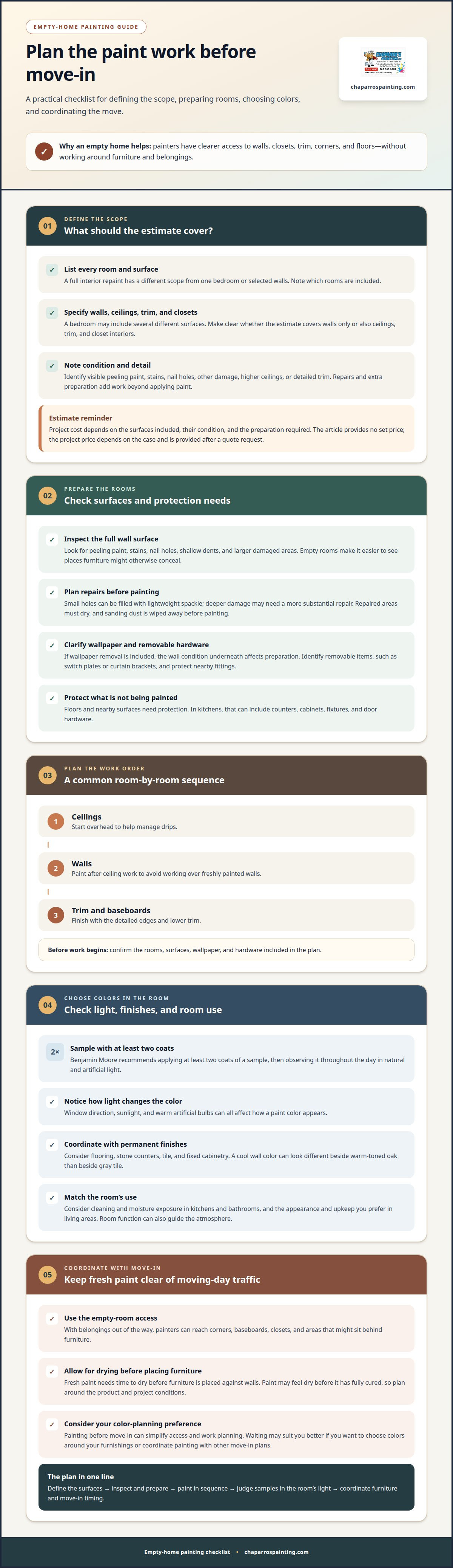
Before painting begins, the crew assesses each room and plans the work order. A common sequence is ceilings first, then walls, followed by trim and baseboards. This helps manage drips and prevents later work from disturbing finished surfaces. In a kitchen, for example, painting the ceiling before the walls avoids working over freshly painted walls.
Wall preparation starts with inspecting the surface. Painters look for peeling paint, stains, nail holes, shallow dents, and larger damaged areas. Small holes can be filled with lightweight spackle; deeper damage may need a more substantial repair. Repaired areas must dry before painting. Sanding dust is wiped away so it won’t interfere with paint adhesion.
Wallpaper and hardware also need a planned approach. If wallpaper removal is part of the project, the wall’s condition underneath will affect the preparation needed. Exposed surfaces may need further preparation before painting. The crew identifies removable items, such as switch plates or curtain brackets, and protects nearby fittings and surfaces. Clarify which rooms and features are included before work begins.
Protection matters even in an empty home. Painters cover floors and shield surfaces that aren’t being painted, such as counters, fixtures, and door hardware. They prepare edges around trim and openings to keep paint within the intended area. In a kitchen, this helps protect cabinets and countertops while the walls are painted. Clear rooms also make it easier to reach corners without moving furniture.
Empty closets are another practical advantage. With no clothes or storage boxes inside, painters can reach closet walls and corners directly. That makes it easier to include the closet in the room’s paint scope without relocating belongings. Unobstructed access also helps painters inspect the full wall surface, including areas that furniture might hide in an occupied home.
Moving furniture and unpacking after painting can damage fresh walls. Scheduling work before move-in reduces the chance of boxes scraping corners or furniture leaving marks. Paint may feel dry before it has fully cured, so allow for the product and project conditions when planning the move. This sequence helps protect finished surfaces during a busy transition.
For a smoother handoff, define the rooms, surfaces, wallpaper, and hardware included in the painting plan. A clear scope helps the crew prepare the right surfaces and protect nearby features. If you’re arranging interior painting work, set the sequence around repairs and move-in activity.
3. Choosing colors based on natural and artificial light
Choose paint type and finish according to each room’s use, surface, and moisture exposure. In a kitchen or bathroom, consider cleaning needs and moisture. In living areas, think about the appearance and upkeep you prefer.
Light changes how colors appear throughout the day. Window direction, sunlight, and warm artificial bulbs can all affect a paint color’s appearance. Benjamin Moore recommends applying at least two coats of a sample and observing it throughout the day in natural and artificial light. This helps you judge the color in the room’s actual conditions.
Permanent finishes help narrow your color choices. Consider elements that will remain, such as wood flooring, stone counters, tile, and fixed cabinetry. For example, a cool wall color may look different beside warm-toned oak than beside gray tile. Coordinating these surfaces helps the rooms feel connected.
Room function also helps shape the atmosphere. A bedroom may call for a quieter impression, while an entryway can carry a stronger color. In a home office, a restrained palette can influence how the room feels, though color alone doesn’t determine productivity. Lighting and permanent finishes also affect the result.
Commercial color planning follows a related principle: consider the space’s purpose and the atmosphere it should support. A reception area may need a different visual impression than a focused work area. These choices influence how a space feels, but don’t establish productivity on their own. In a home, start with each room’s function.
Finish affects appearance, too. A smooth wall reflects light differently from textured plaster, and a glossy surface can make small flaws more noticeable. Painters consider the existing surface and your preferred look when discussing finish. This helps ensure the selected color suits the wall itself.
If you’re moving into a new house, painting services can include choosing colors around permanent finishes and each room’s light. View samples in daylight and evening light, then compare them beside flooring or cabinetry. Consider each room’s use before settling on a palette. A color that feels balanced in a sunlit living room may look different under kitchen lighting.
For kitchens and bathrooms, choose paint and finishes with cleaning needs and moisture exposure in mind. In living areas, base the finish on the look and upkeep you prefer, while considering the wall’s surface and texture.
4. When Does Painting Before Moving In Not Make Sense?
Painting before move-in may not suit homeowners who want furniture, rugs, or artwork to guide the palette. Empty rooms reveal the walls clearly, but they don’t show how a color will look beside a specific sofa or wood table. If those furnishings are central to your decision, waiting until they arrive may make color selection easier.
Timing can also make an empty-home project impractical. A standard two-bedroom Chicago condo can typically be painted in 3 to 5 days when empty, while a three-bedroom Chicago home typically takes 5 to 7 days. A typical empty Chicago home needs at least 5 to 10 days for properly scheduled interior repainting services. These estimates illustrate why move-in dates, repair work, and the project scope need to fit together.
The work involved depends on the project scope. An estimate should define the rooms and surfaces, such as walls, ceilings, trim, closets, or kitchen walls, and account for preparation and visible damage. A room that needs repairs before painting involves different work from a sound wall receiving a color change.
When comparing residential painting contractors, compare estimates with the same room list and preparation scope. Check whether each one describes repairs, surfaces to be painted, and the expected schedule; different assumptions can make totals difficult to compare. The project price depends on the case and is provided after a quote request, based on its scope, surface condition, and preparation needs.
Before hiring, ask which rooms and surfaces the estimate covers, what preparation is included, and how the work sequence fits your move-in plans. Also discuss how wallpaper or damaged areas will be handled, and when rooms can be used after painting. Clear answers help you understand the work beyond a headline total.
Painting before moving in may not make sense if the home still needs major repairs or other work could affect the finished walls. Later work can mark fresh paint, while changes to trim or fixtures may alter the final palette. In those cases, plan painting after disruptive work is complete.
Choose the schedule around the home’s condition, not just the closing date. A home with sound walls and a firm move-in date calls for a different plan from one needing repairs and finish decisions. If there’s no time for preparation and painting, waiting can protect the work sequence and avoid moving belongings into active work areas.
5. Interior and exterior painting services
Interior and exterior painting involve different surfaces, preparation needs, and project conditions. Inside, painters work across rooms, ceilings, trim, and other agreed surfaces. Outside, the estimate should identify the exterior areas included and the preparation they need. A useful scope separates interior walls from exterior siding or stucco instead of treating the home as one undivided job.
For a move-in project, plan interior work room by room. The sequence may include ceilings, walls, and trim, with damaged areas prepared before painting. Consider exterior work separately, especially if getting bedrooms and living areas ready is the priority. Defining those priorities clarifies the project scope and helps coordinate work with your plans.
Lead-based paint deserves special attention in older homes. According to the U.S. Environmental Protection Agency, the EPA regulates disturbing lead-based paint in homes built before 1978. Under the EPA Renovation, Repair and Painting Rule, firms paid to disturb paint in pre-1978 housing generally must be EPA-certified, according to the U.S. Environmental Protection Agency. This matters when renovation or preparation work could disturb painted surfaces.
For residential painting in Rio Rancho or Albuquerque, choose a contractor whose work covers the surfaces in your project. Review applicable licensing and insurance documentation, then compare written estimates with the same room list, repairs, and preparation scope. One estimate may cover interior walls only, while another includes ceilings and trim. Written details make the differences easier to understand.
A clear estimate should describe the work areas, preparation, and project sequence. Ask which interior and exterior surfaces are included, how repairs are handled, and how the schedule fits move-in plans. If a home has older painted surfaces, ask how the proposed work addresses the applicable EPA requirements. Specific answers help you understand the work before belongings are settled inside.
Set the scope according to the property’s condition. A vacant house with sound interior walls may need a different plan from one with visible damage or exterior surfaces needing attention. Some homeowners prioritize interior rooms before moving furniture in, then plan exterior work separately. Others coordinate both scopes when the property and schedule allow. The right order depends on the work areas and move-in timing.
For a residential project that includes both inside and outside surfaces, keep the scope and sequence clear from the start. Discuss your interior and exterior painting project as part of your move-in plan.
Chaparro's Painting
Chaparro's Painting helps homeowners in Rio Rancho and Albuquerque plan residential painting around the home’s condition, chosen colors, and move-in schedule. Its services include interior and exterior painting, cabinet painting, and stucco painting. These can support a fresh interior palette, updated cabinets, or exterior improvements.
If you’re weighing which surfaces to paint before unpacking, define the rooms and project priorities first. A clear scope makes it easier to discuss the work and how it fits your plans. For help with your residential painting project, contact Chaparro's Painting.
Plan the First Brushstrokes Around Your Move
When moving into a new house, painting services can be part of a broader plan to make the space feel like home. Think beyond the first room you notice. A consistent approach to walls, cabinets, and exterior surfaces can help your choices work together as you settle in.
Chaparro's Painting offers interior painting, exterior painting, and cabinet painting for residential projects in Rio Rancho and Albuquerque. If you’re deciding what to paint first, start with the areas that matter most for your move and outline the scope you have in mind. That gives the conversation a practical starting point without requiring every color decision to be settled at once.
Bring your project plans to contact Chaparro's Painting and discuss the next step for your home. A clear plan can make the move feel more organized, one surface at a time.
Frequently Asked Questions
When Does Painting Before Moving In Not Make Sense?
Painting before move-in may not make sense if repairs, flooring work, or fixture changes could damage fresh paint. Choosing colors can also be harder before seeing how your rugs and furniture look in the rooms. For example, if a sofa will determine the living room palette, wait until it arrives before finalizing that color. Coordinate painting with other work so finished walls aren’t exposed to avoidable damage.
What Are the Real Benefits of Painting Before You Move In?
Painting before move-in gives painters access to surfaces that boxes and furniture might otherwise block. This can help with full-wall coverage and make it easier to include closets in the scope. It also avoids moving belongings between rooms during the work. If the home is empty, agree on which rooms and surfaces are included before painting starts, so the completed work matches your priorities.
Can I just paint one or two rooms now and the rest later?
Yes. A phased project lets you prioritize rooms you need first, such as bedrooms or a nursery, and plan other spaces for later. Discuss how the phases will meet at doorways and adjoining walls, especially if colors or finishes change between rooms. Keeping paint selections and scope details for each phase together can help maintain a consistent look as the remaining areas are completed.
Does a pre-1978 home require special preparation?
It may. According to the U.S. Environmental Protection Agency, the agency regulates disturbing lead-based paint in homes built before 1978. Under the EPA Renovation, Repair and Painting Rule, firms paid to disturb paint in pre-1978 housing generally must be EPA-certified, according to the U.S. Environmental Protection Agency. The home’s age matters when planned preparation could disturb painted surfaces, so include that detail when defining the work.
How Do Pros Prep an Empty House Differently?
In an empty house, painters can access walls and corners without working around furniture or packed belongings. They still protect floors and fixed surfaces, inspect walls, and prepare damaged areas before applying paint. An empty room also makes marks hidden behind a bookcase or bed easier to see. Include overlooked areas, such as closets, in the scope so painters know what to prepare and paint.
How Much Does It Cost to Paint an Empty Chicago Home?
The price depends on the project’s scope and is provided after a quote request. Key factors include the rooms and surfaces included, wall condition, repair needs, ceilings, trim, and the amount of preparation required. For a clearer estimate, define whether the work covers walls only or also closets and ceilings. A room-by-room scope helps distinguish a partial repaint from a full interior project.
How long should paint dry before furniture comes in?
Wait 24 to 48 hours after the last coat before moving furniture against painted walls. Latex and acrylic paints typically dry to the touch in one to two hours, but that doesn’t mean they’re fully cured. They may take two to three weeks to cure. Move furniture carefully and avoid pressing items against fresh paint during that period to reduce the chance of marks.
Should closets and areas behind appliances be painted?
Include closets if you want their walls to match the freshly painted room; an empty closet gives painters direct access. Areas behind appliances depend on access and project scope. For example, a refrigerator may conceal part of a kitchen wall. Decide which spaces matter before the estimate, and identify any areas where appliances or stored items need to be moved.


