

A fence finish covers only the surfaces included in the project. Both sides can be stained, but the estimate should clearly state whether the work includes one side or both. For homeowners considering wood fence painting services in Albuquerque, that scope matters as much as the finish itself.
It’s reasonable to expect an even result and clarity about what the crew will prepare and coat. A professional project typically starts with assessing the wood and preparing the surface so the finish can adhere properly. Paint and stain create different appearances, so the right choice depends on the look and coverage you want for the fence.
This guide explains how surface preparation and paint coats affect the finished work, what can shape an estimate, and what to expect from a professional service. You’ll also learn what to clarify about fence sides, access, and the work included before the project begins.
Key Takeaways
- Clarify whether the project covers one fence side or both, and what the estimate includes.
- Surface cleaning and preparation help create a sound base for paint or stain.
- The fence’s condition, access, and chosen finish shape the work involved and the estimate.
- Painting and staining are different finish options; the best fit depends on the look you want for the wood.
- Learn what professional fence service can include, from preparation to staining and related wood repairs.
Need a pro for your fence painting project in Albuquerque, NM?
Finding the right professional starts with matching the work to your fence. For homeowners comparing wood fence painting services in Albuquerque, the estimate should explain the finish, surfaces, and preparation involved. A fence-focused painter may handle different details than a general exterior painter, so compare the proposed work, not just the service label.
Before requesting an estimate, identify the fence material, existing finish, and areas needing attention. A gate, peeling boards, or limited access can affect the project scope. Sharing those details helps define the work clearly.
Local Fence Painting and Staining Professionals
Look for professionals whose project descriptions specifically include wood fences. Fence boards have edges, gaps, and faces that require careful coverage. Staining and painting also create different appearances, so the estimate should name the planned finish. For example, a transparent stain preserves more visible grain than an opaque paint finish.
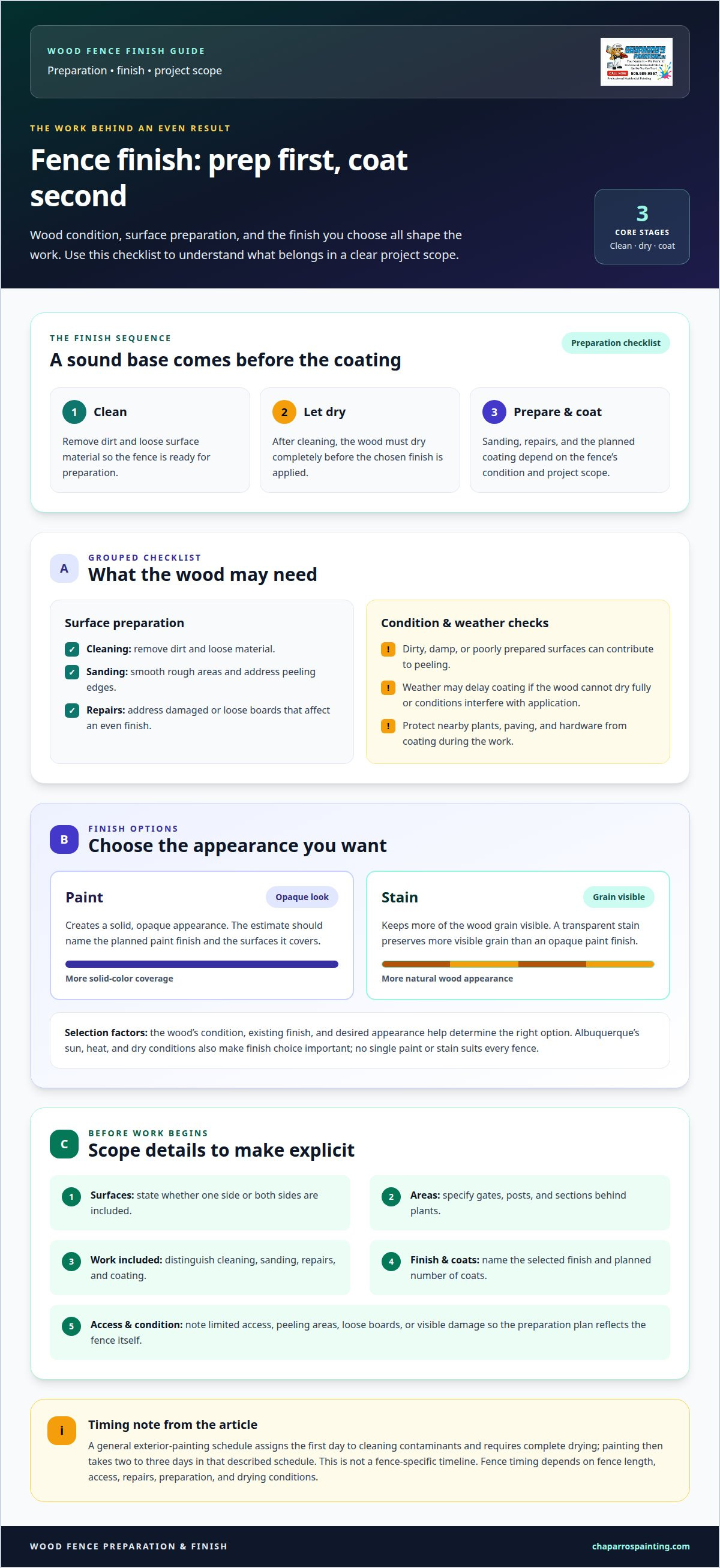
Define the work area before comparing proposals. Note whether the scope includes one side or both, gates, posts, and sections behind plants. These details clarify which surfaces will be coated and make it easier to compare estimates based on the same work.
Reviews and Ratings
Albuquerque homeowners gave fence painting services an average rating of 4.6 out of 5 on Angi. Treat that rating as one comparison point. Read individual reviews for details about communication, preparation, cleanup, and whether the completed work matched the agreed scope.
Prioritize reviews describing relevant work, such as staining a wood fence or painting a gate. A review about house siding may not explain how a painter handles fence boards or narrow access. Specific project details provide more useful context than a rating alone.
Albuquerque exterior-painter listings show four pros near the user. Some exterior painters may also handle fences, but the category alone doesn’t establish the project scope. Confirm that the proposal addresses fence surfaces, finish, access, and preparation. Choosing wood fence painting services in Albuquerque means comparing these practical details alongside relevant experience.
A written estimate should identify the included work. For example, it can distinguish cleaning, sanding, repairs, and coating, while stating whether gates and both fence sides are covered. Homeowners can then compare the described scope instead of relying on a brief service label or total alone.
Permit requirements and HOA rules depend on the property and planned changes. Review applicable local requirements and community governing documents before selecting a color or scheduling work. A finish change and a structural change to the fence may raise different considerations, so clarify which applies to your project.
When requesting an estimate, describe visible damage and access limits. Mention loose boards, peeling areas, nearby plants, or a gate that needs coating. These details help define the fence work for your Albuquerque home.
Exterior paint coats and surface preparation
A durable fence finish depends on the wood’s condition, preparation, and selected coating. The sequence matters: clean first, let the wood dry completely, then apply the chosen finish.
Cleaning, Sanding, Repairs, and Staining
Professional preparation starts by removing dirt and loose surface material. The wood must dry completely after cleaning before coating begins. Sanding can smooth rough areas and address peeling edges, while repairs focus on damaged or loose boards that affect an even finish.
Staining is a finish choice, not a substitute for sound preparation. A clear scope should distinguish cleaning, sanding, repairs, and stain application, so the estimate describes the work as well as the final appearance.
Paint and Stain for Local Conditions
Albuquerque’s sun, heat, and dry conditions make finish choice important, but no single paint or stain suits every fence. The wood’s current finish, condition, and desired appearance help determine the right option. Paint creates an opaque look; stain keeps more of the grain visible.
A professional assesses the boards and existing coating before recommending a finish. Homeowners can also clarify whether they want a consistent solid color or a more natural wood appearance. The written scope should name the selected finish and the surfaces it covers.
Peeling, Weather Delays, and Damage
Peeling can follow when a coating goes onto a dirty, damp, or poorly prepared surface. Weather can also delay work if the wood cannot dry fully after cleaning or conditions interfere with application. Allow for preparation and drying rather than assuming every day is suitable for coating.
Careless work may leave uneven coverage or coating on nearby plants, paving, and hardware. Protecting adjacent areas and addressing loose or damaged boards helps reduce these problems. Clarify how the wood’s condition affects the preparation plan before work starts.
For timing, a professional fence project depends on fence length, access, repairs, preparation, and drying conditions. A general exterior-painting schedule assigns the first day to cleaning contaminants and requires complete drying; painting then takes two to three days in the described schedule. A house exterior generally takes three to five days, but that is not a fence-specific timeline.
The number of coats also depends on the surface and finish. A house exterior schedule or coat count should not automatically be applied to a fence. The estimate should state the planned coats and preparation based on the fence itself.
For a wood finish project, review wood staining options as one way to discuss the desired appearance and scope.
Albuquerque project filters offer paint-area options of less than 500 square feet, 500 - 1,000, and 1,000 - 1,500.
Free estimates and same-day service
An estimate sets the project scope before work begins. For a wood fence, it should describe the finish, surfaces, and preparation involved. A free estimate and same-day service are separate claims, not automatic parts of every painting project. Read the written terms closely to understand what the estimate covers and whether any same-day claim refers to an assessment, a start, or completed work.
A useful estimate begins with a clear description of the fence. Include its approximate length, material, current finish, visible damage, gate locations, and access limits. Photos can show peeling areas or tight spaces, while an on-site assessment can clarify details that pictures miss. These specifics help shape a scope around the actual fence rather than a generic exterior-painting job.
The written scope should spell out the proposed work. Look for the selected finish, surfaces to be coated, preparation steps, repairs, and exclusions. A quote for one fence side differs from one covering both sides and a gate. A clear scope also explains how the work could change if damaged boards or a need for extra preparation are found.
A quote depends on the project, including fence size, access, wood condition, preparation needs, repairs, finish choice, and the number of surfaces. An estimate that explains these factors gives homeowners a clearer basis for understanding the proposed work and discussing any changes before the project starts.
Same-day service can refer to different stages. An estimate visit, project start, and completed fence are not the same commitment. Cleaning and drying take time before coating, so a same-day start does not mean the finish will be ready that day. The schedule also depends on the fence’s condition, preparation needs, and suitable working conditions.
One reviewer reported a week between receiving a fence estimate and the project start. That account is an example, not a set schedule for every Albuquerque project. Estimate and start dates can differ, while the project scope and preparation determine the actual sequence.
Before accepting an estimate, make sure it identifies the work area and finish in plain language. A written schedule should distinguish assessment, preparation, coating, and completion. These steps set practical expectations without treating “free” or “same-day” as a promise about every part of the job.
Expert advice for fence projects
Plan fence care around the finish, wood condition, and fence design. A properly applied coat of fence stain can last between 3 and 8 years, depending on climate. That range is not a fixed schedule for every Albuquerque yard. Sun exposure, weather, and the fence’s condition influence how quickly the finish needs attention.
Use the finish’s condition as a practical maintenance signal. Fence stain should be reapplied every 3 to 5 years to help keep the wood in good condition. A professional can assess fading, uneven color, and exposed areas before recommending maintenance. The goal is to address wear before neglected sections complicate preparation for the next finish.
Fence construction also affects care. Wood shadowbox fences typically need resealing or staining every two to three years. Their overlapping boards create a different surface pattern from flat, side-by-side pickets. An assessment should account for the fence style and surfaces included rather than treating every wood fence as identical.
Cleaning has its own role between finish projects. Wood shadowbox fences typically need annual cleaning to prevent mold growth. Regular attention can also make it easier to spot changes such as loose boards or areas where the finish has worn away. A professional can factor those visible conditions into a future preparation plan.
Before a maintenance visit, note which sections receive direct sun and which remain shaded. Compare a gate, a post, and a typical fence panel. Differences in exposure or wear can help explain why one section looks faded while another still appears sound. This context is useful when assessing the fence.
For a project with existing stain, share what you know about its previous care. A record of the last application, fence style, and sections that weather differently can help clarify the scope. If the finish history is unknown, a visual assessment can still identify worn areas and the preparation they may need.
Keep the agreed scope focused on the fence’s actual condition. A shadowbox fence, for example, may need more attention to overlapping surfaces than a simple picket layout. The estimate should describe the finish work and maintenance needs clearly, so homeowners can understand what care the fence needs instead of relying on a calendar alone.
After the work, use the finish type and fence design to guide future maintenance discussions. For stained wood, the 3 to 5 year reapplication interval is a useful planning reference, while shadowbox fencing has its own resealing or staining needs. Regular cleaning and timely assessment help keep care aligned with the fence’s condition.
Albuquerque Fence Painting: Cleaning, Repairs & Staining
A fence project may include cleaning, surface preparation, repairs, and a paint or stain finish. The exact scope depends on the wood’s condition and selected finish. A fence with loose boards needs a different plan from one with sound wood and an intact coating. A clear service description separates each task.
Cleaning removes dirt and surface contaminants before coating. Assess the boards after cleaning to see whether it has exposed loose paint, rough areas, or damaged wood. The surface must dry completely before the next step because applying a finish over damp or dirty wood can interfere with an even result.
Sanding addresses rough surfaces and remaining loose finish where needed. It can smooth a peeling edge or uneven patch before new paint or stain goes on. Sanding does not replace repairs: a cracked or loose board needs attention to the wood itself. The scope should distinguish surface preparation from repairing damaged sections.
- Cleaning: Remove contaminants and allow the wood to dry fully.
- Sanding: Smooth rough areas and prepare the surface for coating.
- Repairs: Address damaged boards or other wood issues included in the scope.
- Staining: Apply the chosen stain to the agreed fence surfaces.
- Painting: Coat prepared wood with the selected paint finish.
Repairs depend on what the assessment finds. A loose board, for example, may need attention before coating can proceed. The estimate should describe which repairs are included and how they relate to the finish work. This gives homeowners a clearer picture than a general promise to “prepare the fence.”
Staining and painting create different appearances. Stain keeps the wood’s grain more visible, while paint provides a more opaque finish. The professional considers the existing surface and desired look when defining the work. A written scope should name the finish, identify the surfaces covered, and explain the preparation needed for that choice.
Careful sequencing connects each task: assess the wood, clean it, complete required preparation and repairs, then apply the finish. If cleaning reveals damage, that finding may affect the planned scope. Clear communication about any change helps avoid confusion about what work will be completed and which areas will receive the finish.
For a fence that needs cleaning, repairs, or a new stain, discuss your fence painting and staining project and its preparation needs.
Chaparro's Painting: Wood Staining
Chaparro's Painting, LLC provides wood staining for homeowners who want a stained fence finish. Stain can preserve the visibility of the wood grain, unlike an opaque paint finish. It’s a practical option if you prefer a more natural look or want to refresh an existing stained surface.
Turn to Chaparro's Painting, LLC for a fence staining project when you want the scope to account for the wood’s condition and your desired appearance. Clear details about the fence and finish help define the work before it begins. The same care in setting expectations applies to gate painting or staining.
Contact Chaparro's Painting, LLC to discuss your wood staining project.
Set a Clear Plan for Your Fence
Your next step is to turn your preferred finish into a clear project scope. Decide which areas matter most and whether you want the wood grain visible. Those choices are a useful starting point when discussing wood fence painting services in Albuquerque.
Chaparro's Painting provides wood staining for homeowners considering a natural wood finish. Share your preferred look and fence priorities to discuss whether staining fits your plans. If you’re considering wood fence painting services in Albuquerque, describe the finish and surfaces you have in mind.
Discuss your fence project with Chaparro's Painting, and take the next step with a plan that suits your home.
Frequently Asked Questions
Do you stain both sides of a fence?
Staining both sides depends on the project scope. The estimate should identify which faces are included, along with gates, posts, and sections blocked by landscaping. For example, a homeowner may choose to stain the yard-facing side while leaving the neighbor-facing side untreated. Defining these boundaries before work starts helps avoid confusion about which surfaces receive the finish.
How long does stain last?
A properly applied coat of fence stain can last between 3 and 8 years, depending on climate. Exposure and the fence’s condition influence how the finish holds up. For example, a sun-exposed section may show wear differently from a sheltered run. Treat the interval as a planning range, then use visible fading or uneven color as reasons to arrange an assessment.
What should I expect from a painting contractor?
Expect a defined scope and clear communication about the work sequence. The painter should explain which fence surfaces are included, how gates will be handled, and what happens if the assessment reveals damaged boards. A gate may need its own finish treatment. Clarify how nearby paving, plants, and hardware will be protected during the project.
What companies offer wood fence painting in Albuquerque, NM?
Chaparro's Painting offers wood staining for homeowners in Albuquerque and Rio Rancho. For a fence project, wood staining is the relevant service if you want a stained finish rather than an opaque painted appearance. The project scope can identify the desired look and fence areas for treatment, keeping the discussion focused from the outset.
Do Albuquerque fence painters provide free estimates and warranties?
Estimate and warranty terms vary by service and business. Chaparro's Painting offers a free estimate for interior painting; this does not mean a fence estimate is free. A warranty is not a stated feature of its wood staining service. Review the written project terms for the agreed scope and applicable conditions before scheduling the work.
How often should a wood fence be repainted or restained in Albuquerque?
Fence stain should generally be reapplied every 3 to 5 years to help keep wood in good condition. Wood shadowbox fences typically need resealing or staining every two to three years. These intervals differ by fence style and exposure. For example, an owner of a shadowbox fence should plan maintenance around its shorter interval, while watching for visible finish wear between treatments.


