

The lowest quote isn’t always the lowest-cost choice over time. The cost of epoxy flooring for basements depends on the floor’s size, the concrete’s condition, the finish, and any moisture-related preparation. A clean, dry slab usually needs less work than one with cracks, uneven areas, or moisture concerns.
It’s reasonable to want a clear budget before choosing a floor. The total can include more than the coating: surface preparation and concrete repairs affect the scope, and moisture issues must be addressed before epoxy is applied. Epoxy resists moisture, but it does not waterproof a basement.
This article explains the main factors that shape an estimate, how moisture and concrete repairs can affect the work, and what to consider when weighing epoxy for a basement in Albuquerque. You’ll also see how floor size and finish choices affect the project, helping you understand what goes into a professional quote and whether this flooring suits your space.
Key Takeaways
- Understand how basement size, finish choices, and the condition of the concrete shape an epoxy flooring estimate.
- See why moisture assessment matters before installation, and why an epoxy coating is not a substitute for waterproofing.
- Learn how cracks, uneven areas, and other preparation needs can add work before the coating is applied.
- Weigh the practical benefits of epoxy against basement moisture concerns when deciding whether it suits a Phoenix home.
Moisture resistance and basement flooding
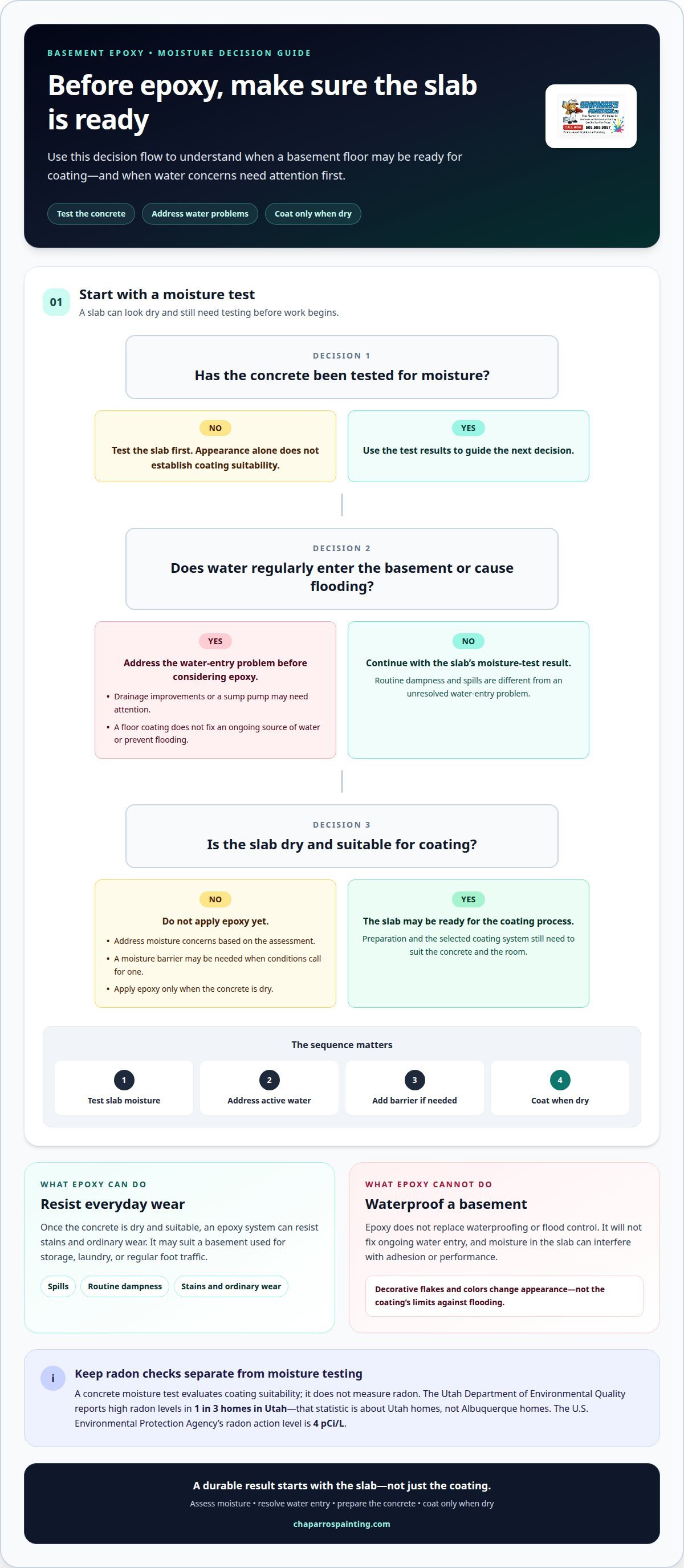
Epoxy may help resist moisture on the floor, but it should not be relied on to prevent basement water problems. This matters if water enters through the slab or after flooding. The coating may protect against spills and routine dampness, but it won’t fix an ongoing source of water. The floor should be dry before epoxy is applied. If moisture remains, the coating may not bond properly or perform as intended.
Start by testing moisture in the concrete slab. The results help determine whether the floor is suitable for coating and whether a moisture barrier is needed. A barrier can add preparation and materials, but applying epoxy over a slab with moisture problems can risk adhesion. The right response depends on the assessment, not just the floor’s appearance. Concrete that looks dry may still need testing before work begins.
Flooding requires more than a floor coating. If water regularly enters the basement, drainage improvements or a sump pump may need attention before epoxy is considered. Otherwise, water can remain a problem beneath or around the coated surface. For example, a basement that floods after heavy rain needs its water-entry problem addressed first. Epoxy resists moisture, but it does not replace flood control or make the room waterproof.
Radon is a separate concern from slab moisture. The Utah Department of Environmental Quality reports that 1 in 3 homes in Utah have high radon levels. That statistic describes Utah homes, not Albuquerque homes. The U.S. Environmental Protection Agency’s radon action level is 4 pCi/L. A moisture test evaluates the concrete for coating suitability; it does not measure radon. Keep these checks distinct when assessing a basement.
Once the concrete is dry and suitable, an epoxy system can provide a surface that resists stains and ordinary wear. That can help in a basement used for storage, laundry, or regular foot traffic. A garage may have different demands, but epoxy in either setting does not solve water intrusion. Decorative flakes and colors change the appearance, not the coating’s limits against flooding. The slab’s condition and moisture behavior remain central to a durable result.
The basic sequence is straightforward: assess slab moisture, address active water problems, add a moisture barrier if conditions call for one, and coat only when the concrete is dry. Skipping a step can undermine the finished floor. The decision is not simply whether epoxy resists moisture, but whether the slab can support the system. That distinction helps set realistic expectations for durability and project scope.
Conclusion: Is Epoxy Basement Flooring Worth It in Albuquerque?
Epoxy can suit an Albuquerque basement when the slab is sound and the finish fits the room’s use. Whether it’s worthwhile depends on the installation scope, expected durability, and preparation the floor needs.
Basement Epoxy Installation Costs
Installation cost reflects the coating system, floor area, concrete condition, and chosen finish. An estimate should account for preparation as well as the visible coating. A basic system and a decorative finish, such as metallic epoxy, require different materials and work. The project total depends on the slab, preparation, system, finish, and area, so a quote should be based on the specific basement rather than treated as a fixed amount.
Installed Costs by Floor Size
Installed cost estimates scale with the area being coated and the work each section needs. A larger basement uses more coating, while cracks or uneven concrete can add preparation regardless of floor size. This makes area a useful starting point, not a complete estimate. For example, estimates for 400-, 800-, and 1,000-square-foot basements should reflect each slab’s condition and chosen finish, rather than square footage alone.
Choosing between DIY and professional installation
DIY kits reduce professional labor costs, but homeowners take on surface preparation and application. Professional installation includes a planned assessment, preparation, and coating process. That difference matters when concrete has defects or the finish needs consistent coverage. A poor bond or uneven application can compromise durability, making initial material savings less valuable if repairs or recoating become necessary.
A professional process starts by examining the concrete and assessing whether it is ready for coating. The installer addresses cracks and surface irregularities, then prepares the slab for adhesion. Moisture testing is also important before application. The concrete must be dry, and a moisture barrier may be needed when conditions call for one.
After preparation, the coating system is applied in planned layers. The selected finish may include color or decorative effects, followed by a protective topcoat where the system calls for one. Each stage affects the final appearance and how the floor handles ordinary use. With proper care, a professionally installed epoxy basement floor can last 10 to 20 years.
Epoxy can give a basement a finished, easier-to-clean surface, but it won’t solve active flooding. In Albuquerque, weigh the coating’s durability against the slab’s condition and the room’s purpose. The right decision starts with a project scope that matches how you plan to use the space. If professional epoxy flooring fits your plans, contact Chaparro's Painting, LLC to discuss the project.
Concrete repair and surface preparation costs
Concrete repairs and preparation shape the project scope before coating begins. An assessment identifies what work the basement floor needs.
Basement Floor Preparation
Basement floor preparation creates a clean, sound surface for the coating. The concrete is evaluated, contaminants are removed, and the surface is prepared for adhesion. For example, a stained area may need more cleaning than clean, intact concrete. Grinding can expose sound concrete and help create a consistent surface for the next stage.
Cracks, chips, stains, and uneven sections each call for a different response. Repairs address the slab itself, not just its appearance. The defect needs to be assessed before deciding whether patching or more extensive work is necessary.
Preparation also affects the estimate because the coating needs a stable surface. That range reflects preparation needs, not a fixed charge for every floor. A sound slab may need less repair than one with several damaged sections.
Additional Preparation Expenses
Additional preparation costs cover work beyond basic cleaning and surface grinding. The specific tasks depend on the floor. For example, leveling addresses unevenness, while power washing removes surface dirt before coating.
A practical assessment distinguishes repairs from preparation. A crack may need filling, while a rough or uneven area may need grinding or leveling. These are different tasks, even when they affect the same section of concrete. The work should be sequenced so repairs are complete before coating. A sealer may also be part of the system, but it cannot replace repairs to damaged concrete.
For a clear estimate, the scope should identify visible defects and the work required for each. A basement with scattered chips may need localized patching, while a slab with widespread unevenness may require broader preparation. Concrete condition, the number of affected areas, and the selected coating system all shape the scope. Addressing these details before application helps prevent surface defects from being mistaken for coating problems later.
Factors affecting basement flooring costs
Installed prices vary across the United States because labor markets and project conditions differ. An Albuquerque estimate should reflect the local project scope, not examples from Phoenix or Utah.
DIY Kit Costs and Coverage: What Professionals Consider
DIY kit costs cover materials, while professional estimates also account for labor and preparation.
Coverage matters because one kit may not cover a whole basement. A professional assesses the floor area and coating system before estimating materials. A basement under 300 square feet may be considered for a DIY kit, but surface preparation still affects the result. For a prospective client hiring a professional, kit coverage is a comparison point, not a complete measure of installed scope.
Epoxy Types and Material Costs
Epoxy types and finishes affect the materials selected for a floor. These figures can help explain material components, but they don’t represent a professional installation estimate.
Decorative choices are another consideration. Solid color, flakes, and metallic effects create different looks and require different materials. A professional estimate should name the intended system and finish rather than treating every square foot as identical. The slab’s condition and finish specification guide the coating system.
Costs by Basement Size
Basement size affects the total quantity of material and the area requiring preparation. A 200-square-foot room needs less coating than a 1,000-square-foot basement, but area alone doesn’t determine the full scope. Doorways, corners, and separate sections can also affect how the work is organized.
Published estimates illustrate why floor size is only a starting point. These Phoenix examples are not Albuquerque quotes. Differences in slab condition, finish, and preparation explain why similar floor areas can still produce different estimates.
Labor Costs per Square Foot
Labor costs per square foot reflect the work involved in preparing and coating the floor. This can include surface preparation, repairs, coating application, and finishing. A decorative system or uneven slab may require more work than a clean, straightforward surface.
This is distinct from labor alone because it reflects an additional floor-preparation task. For a clear estimate, the written scope should separate coating, labor, and any leveling or repair work. That breakdown shows which project conditions affect the total.
Average basement epoxy flooring cost
There isn’t one fixed installed price for every basement in Albuquerque. For homeowners comparing epoxy flooring for basements, cost depends on floor area, concrete condition, coating system, and finish. A broad range can help with early planning, but the specific project scope matters more than a general average.
Those figures provide a market-wide reference, not a set price for Albuquerque. A local estimate needs to account for the actual slab and work involved.
Square footage sets the scale, but it doesn’t determine the entire scope. A larger basement needs coating across more floor area, while a smaller room may still require substantial preparation. For example, an open basement and one with several damaged sections can need different work even when they are similar in size. Cracks, stains, and uneven areas may require repairs or additional preparation before coating.
The chosen finish also affects materials and application. Solid color, decorative flakes, and metallic finishes have different specifications. For homeowners weighing epoxy flooring for basements, cost estimates are easier to compare when each names the coating system and finish. The intended appearance should be described in the scope, rather than treated as an unspecified upgrade.
Location matters because labor markets and project conditions vary. A Phoenix estimate does not establish the price for an Albuquerque basement. A local estimate should account for measured floor area, concrete condition, repairs, leveling, and chosen finish. These details explain why two similarly sized basements may receive different estimates.
Look for a clear scope that separates preparation from coating and finishing. It should describe whether cracks or stains need attention, whether leveling is included, and which finish is covered. If proposals include different preparation or coating systems, their totals aren’t directly comparable. Compare matching scopes to assess value and understand what each estimate covers.
Chaparro's Painting: Epoxy Flooring
Chaparro's Painting, LLC provides epoxy flooring for homeowners considering a basement floor coating. It can be a practical option when the concrete is suitable and you want a finished, easier-to-clean surface. The project scope should account for floor condition, preparation needs, and your preferred finish. These details explain what the estimate covers, rather than treating a general cost range as a quote for your home.
If you're considering epoxy for your basement, share the floor's condition and your goals for the space. Chaparro's Painting, LLC can discuss your epoxy flooring project and its scope. Contact Chaparro's Painting, LLC to talk about your basement floor.
Plan the Next Step for Your Basement
Before choosing a finish, decide how you want the basement to function. A space used for storage has different priorities from one used as a family room or hobby area. That choice can guide the finish, appearance, and preparation worth considering. A useful estimate should reflect those priorities rather than treating every basement as the same project.
The cost of epoxy flooring for basements is a planning point, not a final decision. The next step is to discuss the floor’s condition, intended use, and preferred look so the project scope reflects your home. Chaparro’s Painting also offers interior painting, exterior painting, and cabinet painting for homeowners planning other updates. Each project can be considered separately, with clear expectations about the work involved.
If epoxy flooring is the right direction for your basement, contact Chaparro's Painting to discuss the project. A straightforward conversation can help you decide what to do next, at a pace that works for you.
Frequently Asked Questions
Quick Answer: What Does An Epoxy Floor Cost?
The installed cost depends on floor area, the selected coating system and finish, and the preparation required. A useful estimate identifies these elements so you can see what drives the total. For example, a basement with an existing coating may need different preparation from bare concrete. Treat a broad market figure as a planning reference, not a project price for your home.
How do you handle moisture and vapor under a basement slab?
A professional assesses slab moisture before choosing a coating system. Testing helps identify whether moisture is moving through the concrete and whether a moisture barrier is appropriate. The slab must be dry before coating. If moisture intrusion continues, a barrier alone may not solve the underlying problem. The right sequence is to assess the source, address active water issues, and prepare the concrete for the chosen system.
How much is epoxy flooring per square foot?
The per-square-foot estimate varies with the coating system, finish, and concrete condition. Multiplying the floor area by a rate gives only a starting point; repairs, leveling, and moisture-related preparation can change the scope. For example, a basement with several damaged areas may need additional work beyond coating. An estimate should describe the selected system and preparation rather than rely on area alone.
Is epoxy safe for basements prone to flooding?
Epoxy is not a flood-control solution. If a basement regularly takes on water, address the source before planning a coating. Drainage work or a sump pump may be needed, depending on the cause. After flooding, the concrete needs to dry and be assessed before coating. A floor finish cannot resolve a recurring water problem.
What Changes The Price Of An Epoxy Floor?
The estimate changes with the chosen finish, floor layout, and preparation scope. A decorative finish requires different materials and application work than a plain, solid-color coating. Edges, door thresholds, and separate floor sections can also affect the application plan. A clear scope should describe the intended appearance and areas covered, so the estimate reflects the actual basement rather than a generic floor.
What changes the cost of a basement floor coating?
Existing coatings can affect the work because the concrete may need additional preparation before a new system is applied. Repairs, leveling, and moisture barriers can also change the scope. For example, a basement with old coating in one area and exposed concrete in another may need different preparation for each surface. The estimate should distinguish these tasks from the coating itself, making the planned work easier to understand.
What is the cheapest way to cover a basement concrete floor?
If the concrete is sound and you’re comfortable with its existing appearance, leaving it exposed avoids adding a separate flooring system. That may not suit a basement where you want a decorative finish or a more finished look. Carpet and tile are other options, but they involve different materials and installation needs. The right fit depends on how the room is used and the condition of its slab.
What’s Included in the Price?
The estimate should spell out the work included for that specific floor. It may identify surface preparation, concrete repairs, primer, coating layers, decorative finish, or a moisture barrier when needed. Not every project requires every item. For example, a sound slab may not need the same repairs as cracked concrete. Review the written scope to understand which tasks are included and which conditions could change the work.


