
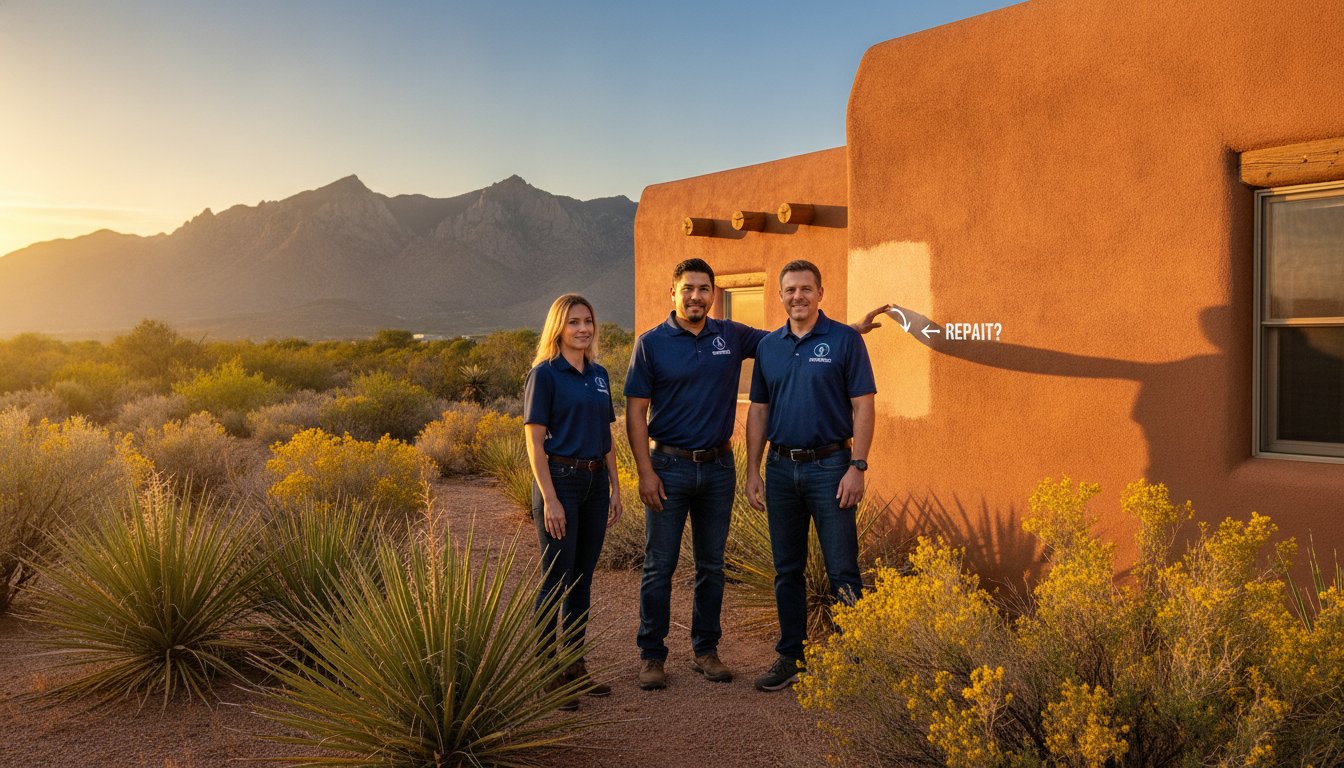
In the high deserts of New Mexico, your home's paint is actually a sacrificial shield against some of the most intense UV radiation in the country. By the time you notice a significant change in color, the protective barrier might already be failing. Most local homeowners take great pride in their property, yet it's common to feel uncertain about whether a few faded spots or small cracks require immediate action or can wait another year.
We understand the anxiety of watching the desert sun bake your investment. It's frustrating to worry about stucco damage or water intrusion every time a monsoon rolls through. This 2026 guide will show you the five clear signs you need to repaint your house exterior in New Mexico to protect your home's structural integrity. You'll learn how to distinguish between simple cosmetic wear and the critical failure points that lead to costly repairs. We will also cover the specific repainting cycle for our unique climate and what to look for in a trusted local professional who understands the value of meticulous prep work.
Key Takeaways
- High-altitude UV rays act as a solvent on paint binders, making regular inspections essential for New Mexico homes.
- Perform the "white powder" test to identify chalking, one of the primary signs you need to repaint your house exterior in New Mexico.
- Spotting early indicators like stucco spalling and wood gate fading can prevent moisture from causing structural damage.
- Use the "pencil test" on window sills and door frames to determine if you need a simple repaint or more extensive wood repairs.
- Professional prep work and local craftsmanship are the most effective ways to ensure your home survives the harsh desert climate.
Understanding the New Mexico Climate’s Toll on Exterior Paint
Living in New Mexico means your home faces a daily assault from the sky. At altitudes of 5,000 feet and above, the atmosphere is thin. There's less air to filter out the sun's most damaging rays. This environment creates a unique set of challenges for any exterior finish. Understanding how our weather interacts with your property is the first step in identifying the signs you need to repaint your house exterior in New Mexico.
Why High Altitude UV is Different
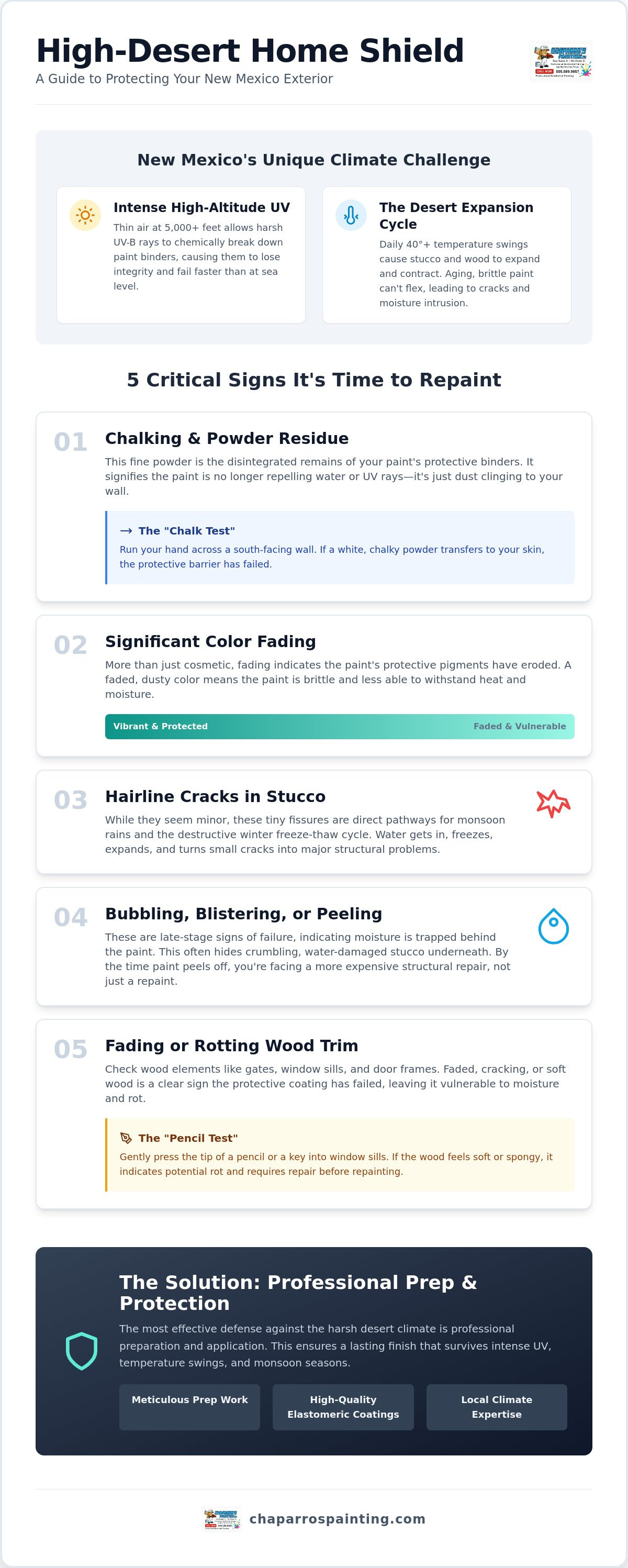
The thinner air at our elevation allows significantly more UV-B radiation to reach your home compared to sea-level locations. These rays act like a slow-motion solvent on your paint. They trigger a process called photo-oxidation. This is a chemical reaction where the sun breaks down the resins and binders that keep the paint attached to your stucco. It's one of the most common reasons for paint failure in high-desert climates. When these binders fail, the paint loses its structural integrity and begins to degrade. UV damage is the leading cause of exterior coating failure across the state.
The Desert Expansion Cycle
Our climate is defined by volatility. In areas like Rio Rancho and Albuquerque, it's common to experience 40-degree temperature swings within a single 24-hour period. Your home is a dynamic structure that reacts to these changes. Stucco, wood, and metal all expand in the afternoon heat and contract during the cool desert nights.
Fresh, high-quality paint is designed to be flexible. It moves with your home. However, as paint ages and the sun bakes out its moisture, it becomes brittle. It can no longer bridge the gaps created by thermal expansion. This leads to hairline cracks. These small openings are particularly dangerous during the monsoon season. Wind-driven rain exploits these micro-cracks, allowing water to seep behind the paint and into the stucco substrate. This trapped moisture often results in bubbling, peeling, or even structural damage if left unaddressed.
The monsoon season adds another layer of stress. When heavy rains hit a surface already weakened by UV rays, the degradation accelerates. Water that enters through small cracks doesn't just sit there; it expands and contracts with the temperature, widening the cracks further. This cycle eventually leads to spalling, where the outer layer of the stucco begins to flake off entirely. Recognizing these signs you need to repaint your house exterior in New Mexico early allows you to intervene with a fresh coat before you're forced to pay for expensive stucco repairs. We often recommend high-quality elastomeric coatings for our neighbors, as these products are engineered to stretch and contract with the desert cycle.
Identifying the early signs you need to repaint your house exterior in New Mexico can save you thousands in stucco remediation. While some damage is obvious, other indicators are subtle. We recommend walking the perimeter of your home during the bright morning light to spot these five critical issues. Catching them now prevents the desert sun from turning a simple maintenance task into a major renovation.
How to Perform the "Chalk Test"
Chalking is the most frequent indicator of paint failure in Albuquerque and Rio Rancho. Run your hand across a south-facing wall. If a fine, white powder transfers to your skin, the paint's chemical binders have disintegrated. This residue means the paint has become porous. It no longer repels water or reflects UV rays. It's essentially just dust clinging to your home. This is a clear signal that your protective barrier is gone.
Identifying Moisture Traps
Bubbling and peeling are late-stage failure signs. Look closely at the areas near your foundation or where the wall meets the patio. This is where "wicking" occurs. Paint that looks like it's stretching or filled with air often hides crumbling stucco underneath. If you wait until the paint falls off, you're no longer looking at a painting project; you're looking at a structural repair. Recognizing these signs you need to repaint your house exterior in New Mexico helps you stay ahead of the desert's harsh cycle.
Significant fading is more than a cosmetic problem. In New Mexico, pigments provide the physical barrier against the sun. When your vibrant terracotta or sage green turns into a dusty pastel, the protective layer has thinned. This makes the surface more susceptible to heat absorption and eventual cracking. Faded paint is brittle paint. It lacks the oils and resins needed to withstand our intense climate.
Hairline cracks in your stucco are another major red flag. These tiny fissures might seem insignificant, but they are entry points for the winter freeze-thaw cycle. Following guidelines for historic stucco repair is vital when these cracks appear. If you see cracks wider than a credit card, the underlying mesh or lath may be at risk. A fresh, flexible coating can seal smaller cracks before they expand.
Finally, check the caulking around your windows and doors. If the sealant is brittle, shrinking, or pulling away, your home's envelope is compromised. High-quality prep work involves more than just a new coat of color. It requires sealing these gaps to prevent air and water leaks. If you've noticed these changes on your property, it's time to act. Our team at Chaparro's Painting can help you assess the damage before it spreads. We focus on thorough inspections and honest advice to help you protect your investment.
Beyond the Surface: Stucco and Wood Damage Indicators in Rio Rancho
Stucco is more than just a decorative finish in the Southwest; it is a vital structural layer. In our high-desert environment, this material takes a heavy beating from wind, grit, and extreme heat. One of the most serious red flags is "spalling." This occurs when the outer layer of your stucco begins to flake, chip, or fall away in large chunks. It is a sign that moisture has bypassed your paint barrier and is now attacking the substrate. If you see stucco debris on your patio or near your foundation, your home has already lost its primary defense. This is one of the most urgent signs you need to repaint your house exterior in New Mexico and schedule professional stucco repair Rio Rancho NM.
The Hairline Crack Warning
Not all cracks in your walls are the same. It is important to differentiate between natural settling cracks and paint-failure cracks. Settling cracks usually appear at the corners of windows or doors as your home's foundation shifts. Paint-failure cracks, however, often look like a fine spiderweb across the surface of the stucco. These fissures are entry points for wind-driven rain. During a winter storm, that water enters the crack and freezes. The expansion forces the crack wider, eventually leading to the spalling mentioned above. Performing early stucco repair during the preparation phase of a paint job can save you thousands of dollars in future remediation costs. It ensures the new coating has a solid, waterproof surface to bond with.
Gate and Wood Staining Signs
Wood elements like gates and fascia boards face an even harsher reality than your stucco walls. If your wood looks gray or "ashy," the sun has literally burnt the top layer of wood fibers. This UV damage leads to splintering or "checking," where the grain opens up like a dry riverbed. To maintain the performance of wood siding and gates, you must keep them properly sealed. We generally recommend gate staining Rio Rancho every 2 to 3 years. This frequency is necessary because our high-altitude sun breaks down stain much faster than in other parts of the country.
Don't forget to inspect your fascia boards and trim. These areas are often the first to rot because they sit directly under the roofline where water runoff is most intense. Check the spots where your gutters might overflow. Use a screwdriver to gently poke at the wood in these areas. If the wood feels soft or spongy, you have rot. Replacing trim is a significant expense that can often be avoided with timely maintenance. Catching these signs you need to repaint your house exterior in New Mexico early keeps your home's "bones" healthy and your curb appeal high.
When to Repaint vs. When to Repair Your Exterior Surfaces
Not every home just needs a fresh coat of color. Sometimes, the signs you need to repaint your house exterior in New Mexico are actually warnings of underlying structural decay. You must determine the threshold where simple surface preparation ends and real repair begins. If your stucco is crumbling or your wood trim feels soft, a layer of paint won't fix the problem. It will only hide it until the damage becomes significantly more expensive to address. Painting over compromised stucco is a temporary fix that often leads to moisture being trapped against your home's frame.
One reliable way to check your wood surfaces is the "pencil test." Take a standard pencil and press the tip into your window sills, door frames, or the bottom of your wooden gates. If the wood is firm, you're ready for paint. If the pencil sinks into the wood easily, you have rot. Painting over rotted wood is a waste of resources. The moisture trapped inside will cause the new paint to bubble and peel within months. In our dry climate, wood rot often happens from the inside out, making this physical test essential for every homeowner.
The Role of Professional Prep Work
In our dusty New Mexico environment, powerwashing is a non-negotiable first step. Without it, you're just painting over a layer of fine desert grit. This prevents proper adhesion and leads to early failure. After washing, we focus on scraping and sanding sun-baked surfaces to create a smooth, bondable area. At Chaparro’s Painting, we take pride in this meticulous prep work. Jaime Chaparro has spent over 20 years refining this process specifically for Rio Rancho homes. We know that the longevity of a home's finish depends entirely on what happens before the brush ever touches the wall.
Cost Implications of Waiting
Delaying maintenance is a gamble with your home's structural integrity. A standard repaint is a manageable investment in your property's future. However, if you wait until the protective barrier fails completely, you risk damaging the "lath" and "paper" behind your stucco. These layers are the final defense against water. Once they are compromised, you face full stucco remediation. This process is vastly more expensive than a maintenance coat. When planning your project, review our guide on exterior painting cost Rio Rancho to understand how surface condition impacts your total budget.
Timing also matters for desert durability. We recommend scheduling exterior projects during the Spring or Fall. The moderate temperatures allow the paint to cure properly without the blistering heat of mid-July or the freezing nights of January. If you've spotted the signs you need to repaint your house exterior in New Mexico, don't wait for the next monsoon to test your home's defenses. Schedule your professional assessment with our team today to ensure your home stays protected for years to come.
Protecting Your Investment with Professional New Mexico Exterior Painting
Choosing the right contractor is just as important as choosing the right paint. National chains often use generalized methods designed for more temperate climates, but New Mexico requires a specialized approach. A seasoned craftsman who lives in Rio Rancho or Albuquerque understands that our high-altitude sun demands specific materials and application techniques. When you recognize the signs you need to repaint your house exterior in New Mexico, you need a partner who values long-term durability over a quick, flashy finish.
We focus exclusively on residential painting. This specialization allows us to provide a personal touch that commercial-focused firms often miss. With over 20 years of industry experience, owner Jaime Chaparro has seen every type of stucco failure and wood degradation our desert climate can produce. This deep local knowledge translates into a more resilient home. We don't believe in cutting corners because we know that a job done right provides the peace of mind every homeowner deserves.
The Chaparro’s Process
Our workflow is built on transparency and clear expectations. The process begins with a thorough estimate where we identify the specific failure points on your property, such as chalking or hairline cracks. Jaime Chaparro personally oversees every project to ensure our high standards of cleanliness and punctuality are met. We don't just "paint over" problems. Our team handles specialized stucco patching to seal out moisture and meticulous gate staining to restore UV-damaged wood. We guide you through the entire journey, from the initial powerwash to the final walkthrough, ensuring your home is fully protected against the elements.
Ready for a Fresh Start?
If you've noticed your paint is chalking, your stucco is flaking, or your gates have turned gray, your home is telling you it's time for intervention. These signs you need to repaint your house exterior in New Mexico are your early warning system. Waiting only increases the risk of expensive structural damage to your stucco and trim. We are your local neighbors, and we take quiet pride in helping families protect their most valuable investment with honest, straightforward service.
A fresh, professional coating does more than just restore your curb appeal. It creates a renewed barrier against the harsh Southwest environment. You can face the next summer heatwave or monsoon season knowing your home's exterior is secure. If you're ready for a professional evaluation of your property, we're here to provide an expert's perspective. Contact Chaparro’s Painting for an Exterior Estimate and let us help you secure your home's future with the quality it deserves.
Secure Your Home’s Future Against the High Desert Sun
Your home is one of your most significant investments. In New Mexico, that investment is under constant pressure from high-altitude UV rays and volatile temperature swings. We've discussed how identifying early indicators like chalking and hairline cracks can prevent the need for costly structural repairs later. By maintaining your stucco and staining your wooden gates every few years, you ensure your property remains a resilient shield against the elements.
Recognizing the signs you need to repaint your house exterior in New Mexico is the first step toward long-term protection. At Chaparro’s Painting, we bring over 20 years of local experience to every residential project. As an owner-operated business, Jaime Chaparro provides the personalized attention and specialized expertise in stucco repairs and wood staining that national chains often lack. We focus on meticulous prep work because we know it's the secret to desert durability.
Ready to give your home the professional care it needs? Get Your Free Exterior Painting Quote from Jaime Chaparro today. We look forward to helping you restore your home's beauty and structural integrity with the honest craftsmanship you deserve.
Frequently Asked Questions
How often should I repaint my house in New Mexico?
A professionally painted home in New Mexico typically lasts 8 to 12 years, while a DIY project might only last 2 to 3 years. The exact timing depends on your property's exposure to the southern sun. If you notice chalking or significant fading, these are clear signs you need to repaint your house exterior in New Mexico regardless of the last service date.
Does the high UV in Albuquerque affect what kind of paint I should use?
Yes, Albuquerque’s high UV radiation requires paints with high resin content and UV-resistant pigments. Standard paints break down quickly at 5,000 feet of elevation. We recommend high-quality elastomeric coatings that can stretch and contract with the desert’s extreme temperature swings. These products provide a thicker, more durable barrier than traditional latex paints used in more humid climates.
Can I just paint over hairline cracks in my stucco?
No, you should never simply paint over cracks. Hairline fissures are entry points for moisture and must be patched with a compatible stucco repair compound before the finish coat is applied. Painting over them only hides the problem temporarily. Proper prep work ensures the new coating seals the surface effectively and prevents cracks from widening during the winter freeze-thaw cycle.
What is the best time of year to paint a house exterior in Rio Rancho?
Spring and Fall are the ideal seasons for exterior painting in Rio Rancho. During these months, temperatures stay within the optimal range for paint to cure properly. We avoid the extreme heat of mid-summer, which can cause paint to dry too quickly and blister. Similarly, winter nights are often too cold for the chemical binders in the paint to bond correctly to your stucco.
How do I know if my stucco needs a full repair or just a new coat of paint?
If your stucco is spalling or has cracks wider than a credit card, you likely need structural repairs. These issues indicate that moisture has already compromised the substrate. However, if the surface is mostly intact but shows fading or chalking, a new coat of paint is usually sufficient. A professional assessment helps determine if you are seeing signs you need to repaint your house exterior in New Mexico or if deeper intervention is required.
Is powerwashing necessary before every exterior paint job in NM?
Yes, powerwashing is a critical step in the New Mexico environment. Our desert air is filled with fine grit and dust that settles into the texture of your stucco. If you skip this step, the new paint will bond to the dust rather than the wall, leading to early peeling. Thorough powerwashing ensures a clean surface for maximum adhesion and a longer-lasting finish.
How long does a professional exterior paint job typically last in Santa Fe?
In Santa Fe, a professional exterior paint job typically lasts between 8 and 12 years. The high elevation and intense sun mean that even the best coatings will eventually chalk as the binders break down. Regular maintenance and choosing high-performance materials are the best ways to reach the upper end of this timeframe. Homes with significant wood trim or gates may require more frequent attention.
Does painting my house exterior actually increase its resale value in NM?
Yes, a fresh exterior paint job is one of the most effective ways to increase your home's resale value. In a market where the median home price is approximately $345,000, curb appeal is a major factor for buyers. Beyond aesthetics, a new coat of paint proves the home has been well-maintained. It provides reassurance that the stucco is protected from moisture intrusion and the UV damage common in our region.


