

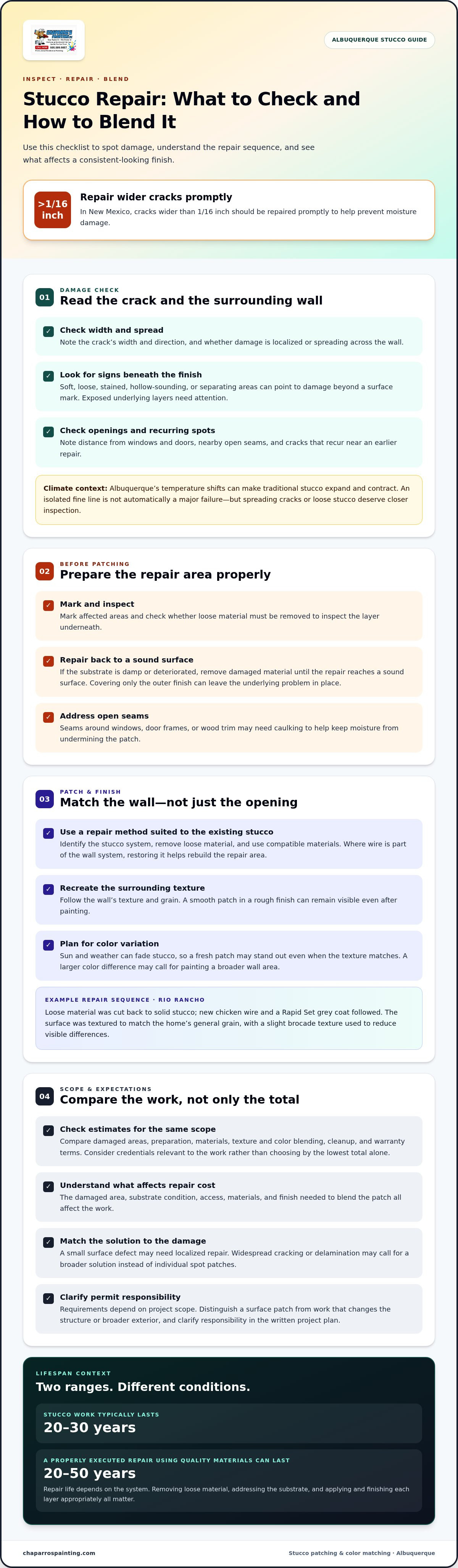
Cracks wider than 1/16 inch should be repaired promptly to help prevent moisture damage. In Albuquerque, thermal expansion can also cause traditional stucco to crack over time, so not every crack signals a major failure. Stucco patching and color matching in Albuquerque can address localized damage and help restore a consistent exterior finish.
It’s understandable to wonder whether a crack is a normal result of New Mexico’s high-desert climate or a sign that water may get behind the stucco. Stucco work typically lasts 20-30 years, but the right response depends on the condition and spread of the damage.
This guide to stucco patching and color matching in Albuquerque explains which cracks need attention, how repairs work, and why texture and paint both matter when blending a patch with the surrounding wall. You’ll learn when exterior painting can refresh faded stucco and when widespread cracking or delamination may require a broader repair. Not every hairline crack is an emergency, but damage beneath the finish should not be overlooked.
Key Takeaways
- Look at a crack’s width and whether damage is localized or spreading to judge how quickly the stucco needs attention.
- Albuquerque’s temperature shifts can contribute to cracking, so matching repair materials and methods to the existing stucco system matters.
- A lasting-looking patch depends on more than filling a crack: the surface texture, seams, primer, and finish coat all affect the result.
- When stucco is widely cracked or delaminating, repairing individual spots may not be the most practical approach.
- Exterior painting can refresh faded stucco and help create a more consistent appearance after repairs.
When should you repair your stucco exterior?
Repair stucco when a crack is wider than 1/16 inch, or when damage exposes the layers beneath the finish. In New Mexico, cracks wider than 1/16 inch should be repaired promptly to help prevent moisture damage. A small surface defect may need localized stucco repair, while soft, loose, or stained areas can signal water reaching the substrate.
Before estimating a repair, inspect the visible damage. Note the crack’s width and direction, its distance from windows and doors, and whether the stucco feels loose. Mark the affected areas and check whether loose material needs to be removed to inspect the underlying layer. A crack beside a window, for example, may require attention to both the stucco and the open seam.
How do you compare stucco repair quotes, warranties, and contractor credentials in Albuquerque? Compare the written scope, preparation, materials, texture and color blending, cleanup, and warranty terms. Make sure each estimate covers the same damaged areas, and assess credentials relevant to the work rather than choosing by the lowest total alone.
Water damage changes the repair plan. If inspection reveals damp or deteriorated substrate, patching only the outer finish can leave the underlying problem in place. Remove damaged material until the repair reaches a sound surface. Open seams around door frames, windows, or wood trim may also need caulking to help keep moisture from undermining the patch.
Blending takes careful work. A patch should follow the surrounding wall’s texture and grain, not simply cover the opening. The repair may need texturing before painting, and a larger color difference may call for painting a broader wall area. Sun and weather can fade stucco, so a fresh patch may stand out even when its texture matches.
Stucco work in New Mexico typically lasts 20-30 years. A properly executed stucco repair using quality materials can last 20-50 years, depending on the system. Localized repair can extend the life of a home’s exterior. Workmanship matters: loose material must be removed, the substrate addressed, and each repair layer applied and finished appropriately—a standard emphasized across exterior trades by masonry and restoration specialists like Progressive Contracting NY Corp.
Repair costs depend on the damaged area, substrate condition, access, materials, and the finish needed to blend the patch. Request an estimate that explains how these factors shape the work. Do Albuquerque homeowners need permits for stucco repairs? Requirements depend on the project’s scope. Distinguish a surface patch from work that changes the structure or broader exterior, and clarify permit responsibility in the written project plan before work starts.
Are cracks in my stucco normal in New Mexico?
Some cracking is a normal response to movement, but the pattern and condition matter. In Albuquerque’s high-desert climate, thermal expansion can cause traditional stucco to crack over time. Sunlight warms the exterior, and changing conditions cool it, putting repeated movement through the finish. An isolated fine line differs from cracks that spread across a wall or appear with loose, separating stucco.
New Mexico’s changeable weather can also affect exterior stucco. Temperature shifts and exposure to the elements contribute to cracking and fading. Note whether a crack is straight, branching, or recurring near an earlier repair. Look for nearby open seams, staining, or areas that sound hollow. These clues help distinguish a surface mark from damage beneath the finish.
Climate-aware repair starts by identifying the existing stucco system and removing loose material. A patch needs to bond to a stable surface, then receive a texture that follows the surrounding wall’s grain. Texture matching is practical, not merely cosmetic: a smooth patch in a rough finish remains visible after painting. Sun and weather also change color, so the repair may need a broader paint blend.
A Rio Rancho repair illustrates the steps involved. Loose material was removed, and the stucco was cut back to solid material. New chicken wire and a Rapid Set grey coat followed. Rapid Set was used to address large cracks before the surface was textured to match the home’s general grain. A slight brocade texture helped reduce visible differences between the patch and surrounding stucco.
This example shows why the repair method should suit both the damage and the existing finish. Loose edges must be cut back to sound material, not simply covered. Where wire is part of the wall system, restoring it helps rebuild the repair area. Open seams where stucco meets windows, doors, or wood trim also need attention because they can admit moisture.
For homeowners comparing stucco patching and color matching in Albuquerque, focus on the repair sequence: sound substrate, compatible patch materials, and a closely matched texture. A wall with widespread cracking or delamination may need a larger solution than isolated patching. For a localized crack, careful stucco repair work can address the damaged area before finish color is restored.
Maintaining exterior color and preventing cracks
Albuquerque weather affects stucco condition and the appearance of repairs. Before choosing a patch or finish, inspect the wall for cracks, loose areas, and fading.
Weather-Related Stucco Cracking
Albuquerque’s high-desert climate brings temperature shifts that expand and contract traditional stucco. Sun can fade the finish, while wind and changeable weather expose weak areas. Look for cracks that recur in the same place, especially near openings or seams. Compare the sunny and shaded sides of the house, where differences in exposure can make color variation and surface wear more noticeable.
Sun, wind, and monsoon weather can affect repairs and color matching by making fresh patches look different from older walls. A new repair may stand out against faded stucco, even if its initial color seems close. Texture, exposure, and the size of the painted area all shape the final appearance. Matching the surrounding finish helps reduce contrast.
Crack Width and Moisture Risks
Measure visible cracks rather than judging them by appearance alone. In New Mexico, cracks wider than 1/16 inch should be repaired promptly to help prevent moisture damage. Check whether the crack is widening, branching, or accompanied by staining, soft material, or an open seam. Those signs help distinguish a surface mark from a possible path for water behind the exterior finish.
Even small cracks deserve attention when they sit beside a window, door, or trim joint. Water can enter through weak seams and affect material beneath the stucco. Note the location and watch for changes after weather exposure. Timely repair can address the opening before moisture reaches a larger section of the wall.
Delamination and Widespread Cracking
Delamination means stucco has separated from the layer beneath it. Look for bulging, loose edges, or areas that sound hollow when gently tapped. Widespread cracking across several parts of a wall can also indicate more than an isolated surface defect. Spot patching may be less effective if the surrounding finish cannot provide a stable edge.
When stucco has delaminated or cracked widely, full replacement may be more cost-effective than repair. The decision depends on how much material has separated and whether the underlying surface remains sound. Assess affected areas across the exterior, not just the most visible crack. The repair plan should address the extent of the damage before color restoration begins.
Patching, Sealing, and Curing
For cracks, holes, or water damage, remove loose stucco until reaching solid material, then address damaged substrate before applying a compatible patch. Rebuild the surface in suitable layers, match the existing texture, and caulk open seams where stucco meets windows, doors, or trim. Painting or sealing over loose material can hide damage without fixing it.
How long does a stucco patch take to cure before painting or sealing? Cure time depends on the patch material, wall conditions, and product instructions. Let the patch cure as directed before applying paint or sealer, since coating it too soon can affect adhesion and finish. Before coating, check that the texture is consistent and the patch is firmly bonded.
Exterior stucco patching and painting
A sound exterior finish starts with a stable repair, followed by texture and coating. In a Rio Rancho stucco project, loose material was removed and the stucco cut back to solid material. Paint cannot secure detached stucco or correct damage underneath, so surface preparation is the foundation of the visible finish.
After damaged material was removed in the Rio Rancho example, new chicken wire and a Rapid Set grey coat were used. Rapid Set also addressed large cracks before the wall received texture matching its general grain. The material allowed work to proceed in days rather than months without sacrificing quality. The key is to match each repair step to the damage and existing wall system.
Texture affects how a patch looks across the wall. The Rio Rancho home received a slight brocade texture to reduce visible differences. A close match considers the surrounding grain and the transition between old and new surfaces. Paint alone will not make a visibly different texture look uniform.
Before coating, caulk open seams where stucco meets door frames, windows, and wood trim. The Rio Rancho project used masonry primer, spot elastomeric primer in specific areas, and a full elastomeric coating. Primer and finish layers can vary by location; the substrate and repair condition guide preparation, not color choice alone.
That project also used a partial elastomeric coat at wall bases and parapet tops, followed by a full elastomeric coat over the house. For a repair, decide whether the finish should cover only the patch or extend across a larger wall area. Sun exposure can fade existing color, making a small fresh patch contrast with the surrounding exterior.
Color matching involves more than choosing a similar paint chip. Compare the repaired texture, existing finish, and degree of fading across the wall. A patch may blend more naturally if the coating extends to a clear wall boundary instead of stopping abruptly around the repair. The right coverage depends on the affected surface and how much its color has changed.
A clear sequence helps prevent finish problems: remove loose material, repair to a sound base, restore texture, caulk open seams, prime, and apply the selected coating. Throughout the arid Southwest, high-end finishing professionals such as Crandall Painting & Stucco utilize these comprehensive preparation steps to ensure seamless blending. As shown in the Rio Rancho project, repair addresses damaged stucco while the proper coating restores a consistent appearance across the exterior.
Who offers stucco patching and color matching in Albuquerque, NM?
Choose a residential exterior painting contractor whose work covers both stucco repairs and the finish coat. Plan the repair and painting stages together. A crack, for example, may need damaged material removed, a stable patch, texture work, primer, and a coating that blends with the existing wall. Paint alone will not correct loose or damaged stucco beneath the surface.
Evaluate the whole affected area, not just the most visible crack. The scope should identify loose stucco, seams that need caulking, and any damage reaching the substrate. It should also explain how the patch will meet the surrounding texture. These details clarify why an isolated small crack and a broadly damaged wall require different work.
Color matching starts with the wall’s existing condition. Albuquerque’s sun and weather can fade exterior stucco, so a new patch may look brighter than the surrounding finish. Texture, exposure, and the size of the painted area all affect how well the repair blends. A clear plan distinguishes spot painting from coating a larger section for a more even appearance.
Review the written estimate for a defined scope, preparation, repair materials, texture work, primer, finish coating, and cleanup. It should say whether the work covers only damaged spots or extends to adjoining surfaces. A patch beside faded stucco, for example, may need a broader paint area than the repair itself. Clear scope details make estimates easier to compare beyond the total.
Workmanship shows in the transitions between steps. Remove loose material before patching, and make sure the repair has a stable base. Texture should follow the existing wall rather than leave a smooth island. Open seams at windows, doors, or trim need attention before the finish coat. These details help homeowners understand what the work includes.
Widespread cracking or delamination requires a different discussion from an isolated defect. If large areas have separated, the repair plan must account for the full affected surface before painting. Localized repairs make sense when the surrounding stucco is sound. A broad coating can refresh color, but it cannot replace repairing unstable stucco first.
For a home with both damaged stucco and faded color, coordinate repair and coating as one exterior project. Request help planning stucco repair around the wall’s condition, texture, and finish needs.
Chaparro's Painting: Interior Painting
Chaparro's Painting, LLC provides stucco repairs and painting for homeowners addressing damaged or faded exterior walls. Repairing the stucco before applying a finish prepares the surface for a consistent appearance. Stucco Painting and Exterior Painting can also refresh color across a broader area when a small patch would stand out against weathered walls.
For interior projects, Chaparro's Painting, LLC also offers Interior Painting and Cabinet Painting. Whether you’re planning an exterior stucco repair, updating interior walls, or refreshing cabinets, start with the area you want to improve and the finish it needs.
Contact Chaparro's Painting, LLC to discuss your painting or stucco repair project.
Plan the finish that feels right for your home
A stucco project is also an opportunity to plan how the rest of your home should look and feel. Before work begins, decide whether your priority is a repaired exterior, refreshed color, or a broader update connecting indoor and outdoor spaces. A clear goal helps define the finish and the areas that matter most.
Chaparro's Painting, LLC offers Exterior Painting, Interior Painting, and Cabinet Painting. For homeowners considering stucco patching and color matching in Albuquerque, coordinating the repair with the exterior finish can help the completed work feel cohesive. Interior walls or cabinets can be planned separately for a future painting project.
Choose the next step that fits your home and your priorities. Contact Chaparro's Painting, LLC about your project to start a straightforward conversation. With a clear plan, you can move toward a home finish that feels cared for and cohesive.
Frequently Asked Questions
How do you match my existing stucco texture?
Match the patch’s surface profile to the surrounding stucco before painting. Compare the grain, depth, and direction of the existing texture, then reproduce those qualities across the repair. A rough, irregular finish, for example, needs a different application from a shallow, even pattern. Test the texture on the patch and view it from several angles, since shadows can make small differences more noticeable.
What is the typical cost to patch stucco in Albuquerque?
Stucco repair costs depend on the damaged area’s size and condition, the substrate, access, materials, and finish work. Request an estimate for a project-specific price. For a useful assessment, describe where the damage appears and whether it includes holes, staining, loose material, or related interior marks. These details help define whether the work involves a localized patch or a wider repair.
How much does stucco color matching cost in Albuquerque?
Color matching costs depend on the area to be painted, existing color variation, surface preparation, and whether the finish can stop at a natural boundary. The estimate is based on the project scope. A patch on a faded wall may require painting beyond the repair to blend well. Describe whether you want only the repaired section coated or a larger wall area refreshed.
How do Albuquerque stucco contractors match the color and texture of existing stucco?
A repair plan should account for the wall’s texture and color, then match the patch and coating to the existing finish. Texture work recreates the wall’s grain, while paint selection accounts for fading and differences between shaded and sunny areas. The same paint can look different on exposed and protected sections. Assessing the full wall helps determine where the coating should end for a balanced appearance.
What factors affect stucco patching and color-match prices?
Price depends on the repair area, damage beneath the finish, access, materials, texture work, and the amount of painting required. Sealing open joints or addressing deteriorated substrate can change the scope compared with filling a surface defect. Color work also depends on fading and the area to be coated. A written estimate should distinguish repair preparation from painting so you can see what each part involves.
Can stucco be color matched exactly, or will a repaired patch remain visible?
A close color match is possible, but an invisible patch cannot be guaranteed because existing stucco may have faded unevenly. Texture, sunlight, and the boundary of the painted area also affect how the repair looks. A new patch, for example, can appear brighter beside an older wall even with a similar paint color. Extending the finish across a broader, natural section can reduce contrast between repaired and existing surfaces.


