

A patio coating estimate depends on the concrete’s condition, preparation needs, patio size, and coating system. For patio epoxy coating in Santa Fe, the schedule also depends on the work involved and how long the coating must cure before the patio is ready to use.
It’s reasonable to want clear expectations before committing, especially when heat, spills, and household chemicals can affect an outdoor surface. Warranty terms matter, too: their value depends on what they cover and the conditions they set.
This guide explains what shapes an estimate, how to compare warranty terms, and what affects the installation schedule. It also covers how patio coatings handle Santa Fe’s temperature swings and everyday exposure, helping you understand the trade-offs and plan the work.
Key Takeaways
- Compare coating systems by how they suit outdoor concrete and local temperature swings, not by appearance alone.
- Understand how patio size, surface condition, repairs, preparation, and coating choice shape an estimate.
- Read warranty terms for coverage limits and care requirements so you know what the protection covers.
- Plan installation around the preparation and curing stages, and confirm when the surface can handle regular use.
- Consider how heat, spills, and chemicals may affect the patio, then choose a coating and maintenance approach that fits how you use the space.
Santa Fe residential and commercial concrete coatings
Santa Fe properties use concrete coatings for patios, garage floors, walkways, and indoor floors. Residential and commercial projects can share materials, but their traffic, exposure, and operating needs differ. A patio faces sun, rain, and temperature changes; a commercial floor may need to handle frequent foot traffic or cleaning routines. The intended use should guide the coating system, surface preparation, and final protective layer.
Do Santa Fe building codes, permits, or HOA rules affect patio coatings? Requirements depend on the project scope, property location, and applicable community documents. A surface treatment may raise different questions from work that changes drainage, grading, or the structure. Define the project scope and review relevant requirements before scheduling.
Which Santa Fe contractors install outdoor epoxy patio coatings, and what are their reviews? Santa Fe-area concrete coating contractors serve outdoor and indoor projects, and Angi reports an average homeowner rating of 4.4 for epoxy flooring services in Santa Fe. Treat that as a market benchmark, then compare reviews for comments about preparation, communication, cleanup, and results on similar concrete.
Coatings, sealers, and topcoats each serve a different purpose. A coating forms the main finished layer, a sealer can protect a compatible surface, and a topcoat adds a finishing layer to a system. These terms aren’t interchangeable. Ask what each layer does, especially outdoors, where a patio faces different exposure from a covered garage floor.
Decorative concrete can change a floor’s color, texture, or overall appearance. Training courses teach application methods and system handling, but a course is not a finished patio or a warranty. Supplies also vary by project. Concrete and epoxy flooring supplies may include surface-preparation materials, coating components, and tools selected for the system. Compatibility matters more than choosing items by label alone.
Concrete floor coating work typically starts with an assessment of the slab. A practical sequence is:
- Identify whether the concrete is outdoors, indoors, residential, or commercial.
- Review its condition, including cracks, old coatings, and uneven areas.
- Plan preparation and repairs before selecting the coating layers.
- Match the finish and care plan to traffic, weather, and cleaning needs.
That sequence helps separate a decorative goal from a performance requirement. For example, a patio used for outdoor dining needs a finish suited to regular foot traffic and spills, while a commercial floor may need a different maintenance plan. Clear project scope makes estimates easier to compare and helps prevent confusion about which layers and preparation steps are included.
Contractor estimates, warranties, and response times
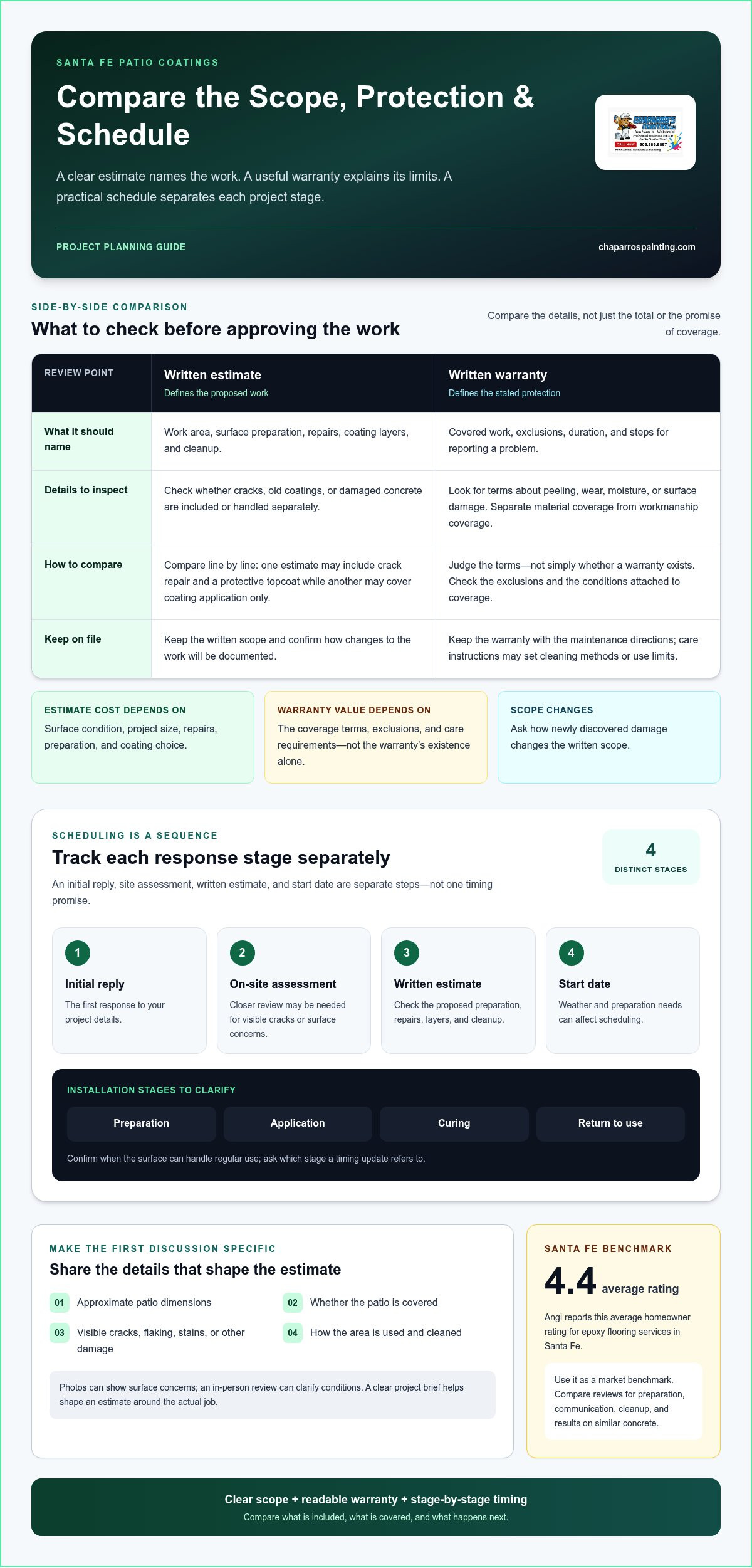
A useful estimate connects the patio’s condition to the proposed work. Compare the scope, warranty language, and scheduling details, not just the total.
Estimate Details
A written estimate should identify the work area, surface preparation, repairs, coating layers, and cleanup. Check whether cracks, old coatings, or damaged concrete are included or treated separately. A garage floor with peeling material, for example, may need different preparation from a clean patio slab. Cost depends on the surface condition, project size, repairs, preparation, and coating choice.
Compare estimates line by line. One may include crack repair and a protective topcoat, while another may cover only coating application. Ask for each stage, including concrete preparation, to be named in the scope. This makes differences clear without assuming similar totals include identical work.
Warranty Coverage
Read the written warranty for the work covered, exclusions, duration, and steps for reporting a problem. Separate material coverage from workmanship coverage, since they apply to different parts of the project. Look for terms addressing peeling, wear, moisture, or surface damage. A warranty’s value depends on its terms, not simply on its existence.
Care instructions matter, too. A warranty may specify cleaning methods or limits on how to use the coated surface. Keep the estimate, warranty, and maintenance directions together after installation. If a concern arises, these documents help you understand how it relates to the work and stated coverage.
Response time is best understood as a sequence, not a single promise. An initial reply, an on-site assessment, a written estimate, and a start date are separate steps. A patio with visible cracks may need closer assessment than a clear, accessible slab. Weather and preparation needs can also affect scheduling, so clarify which stage a timing update refers to.
Use a short project brief to make the first conversation productive. Include the patio’s approximate dimensions, whether it is covered, visible surface damage, and how you use the area. Photos can show flaking or stains, while an in-person review can clarify surface conditions. Clear details help shape an estimate around the actual job, not a generic coating application.
Before approving the scope, compare these items:
- Preparation, repairs, coating layers, and cleanup.
- Warranty coverage, exclusions, and care instructions.
- Assessment, estimate, scheduling, and expected work sequence.
- How changes to the scope are documented.
For example, if an estimate excludes concrete repairs, ask how newly discovered damage changes the written scope. If the schedule gives only a start date, clarify what work follows and how updates are handled. These details make estimates easier to compare and help set practical expectations for a patio or garage project.
Installation timelines
A patio coating schedule has separate stages: preparation, application, curing, and return to use. Published Santa Fe concrete-coating timelines describe walk-on readiness in 4 - 6 hours and full return to service in 24 hours. Those milestones are different, so plan around the stated use, not simply when the finish looks dry.
Preparation comes first. The crew clears the patio, checks the concrete, and addresses surface problems before coating begins. Existing material, cracks, or repairs can add work because the coating needs a properly prepared base. Keep furniture, planters, and vehicles away from the work area so they don’t interrupt access or expose the fresh finish to damage.
Application follows the preparation plan. The number of layers and the system’s instructions shape the work sequence, while outdoor conditions can affect when each stage proceeds. A shaded patio and a sun-exposed slab won’t necessarily have the same surface conditions. Scheduling should account for the actual site and coating system, not rely on a generic calendar estimate.
Curing determines when the patio can handle different activities. Walk-on readiness means limited foot access, not automatic clearance for furniture, heavy objects, or regular use. Full return to service is a separate milestone. Ask for both points in the schedule and follow the written care instructions during curing. Moving a table back too soon, for example, can put pressure on the finish before it is ready for use.
A customer review described a coating scheduled before movers arrived 48 hours later. That example shows how a project can be planned around a household deadline, but it isn’t a standard installation duration. Build in room for surface preparation and curing, especially if patio access is needed for a gathering or move. A firm event date should be shared early in the scheduling conversation.
Use this sequence to organize the work:
- Clear the patio and identify repairs or old coating.
- Schedule preparation and application around site conditions.
- Keep the area unused during the stated curing period.
- Resume each activity only at its stated readiness milestone.
Before work starts, note the expected preparation and application dates, walk-on time, and full-service time. Confirm how weather or additional repairs could affect the sequence. A clear timeline helps you plan patio access without mistaking a dry-looking finish for a surface ready for every use.
Resistance to hot tires, spills, and chemicals
A patio system described as staying flexible across New Mexico temperatures from 110°F to 20°F addresses temperature swings. Flexibility alone doesn’t establish resistance to UV exposure, freeze-thaw conditions, spills, or chemicals; each depends on the coating system and its protective layers.
Hot tires matter most on garage floors and driveways, where a parked vehicle can leave warm tires against the finish. Patios face different demands, such as foot traffic, outdoor furniture, and food or drink spills. Match the coating to the surface’s actual use instead of assuming one system suits every exposure equally well.
For spills, consider which substances the coating resists and how quickly they should be cleaned. A patio used for outdoor dining may encounter oil, acidic drinks, or food residue. Follow the coating’s care instructions for each type of spill. Prompt cleanup limits contact time and makes routine maintenance more manageable.
Chemical resistance varies by product and exposure. Pool chemicals, cleaners, automotive fluids, and household products aren’t interchangeable tests. A coating suited to occasional household spills may not be intended for repeated contact with stronger chemicals. Identify what the patio will encounter, then compare the system’s stated resistance and cleaning guidance for those substances.
Santa Fe’s sun and temperature changes make the topcoat an important part of the system. UV exposure can affect a finish differently from a brief spill, while temperature movement places demands on both the coating and the concrete beneath it. A topcoat selected for outdoor exposure helps address those conditions. The coating layers and surface preparation must also work together.
Freeze-thaw exposure makes concrete condition important. Water can enter existing cracks, then place stress on the slab as temperatures change. A coating doesn’t replace needed concrete repairs or correct drainage problems. Before application, identify cracks, low spots, and areas where water collects. Addressing these conditions helps prepare the surface for the coating system.
Use these checks to compare performance claims:
- Match the system to patio, garage, or driveway use.
- Identify exposure to sunlight, temperature changes, and standing water.
- Name the likely spills and chemicals, such as food oils or cleaners.
- Review cleaning directions and the topcoat’s intended exposure.
- Inspect concrete cracks and drainage before coating work begins.
A rancho-style outdoor entertaining area, for example, may need a different care routine from a garage used for vehicles. Choose based on exposure, not the word “epoxy” alone. Clear system details help set realistic expectations for the finish and its upkeep.
Epoxy coatings for patios
For patio epoxy coating in Santa Fe, compare outdoor suitability, finish, and traction. Performance depends on preparation, the selected system, and the patio’s exposure. Wet surfaces can be slippery, so consider a compatible textured finish or anti-slip aggregate.
Concrete Patio Preparation and Application
Preparation starts by removing dirt, grease, loose material, and failing coatings. The concrete is repaired where needed, then mechanically prepared to support adhesion. Moisture and surface condition matter. Applying over contamination or unsound concrete can compromise the bond.
Next, the installer applies the selected layers in the system’s required order. The patio must meet the product’s application and curing conditions. Follow instructions for each layer, including any primer, decorative elements, and protective topcoat. Keep furniture and foot traffic off the surface during the stated cure period.
For patio epoxy coating in Santa Fe, choose traction to suit how you use the space. Added texture can improve grip but may hold more dirt. A smoother finish can be easier to clean but may feel slick when wet. Balance those trade-offs for activities such as outdoor dining or frequent walking.
Outdoor Lifespan and Maintenance
Outdoor service life depends on sunlight, moisture, foot traffic, installation quality, and coating choice. A covered patio with light use faces different conditions from an exposed slab with frequent furniture movement. No single lifespan applies to every concrete surface and coating system.
Sweep away grit regularly and clean spills with products compatible with the finish. Use protective pads under chair and table legs, and avoid dragging metal furniture. Inspect the patio for worn areas, peeling, or concrete cracks. Addressing damage early can help keep a small surface concern from spreading.
The coating and topcoat should suit the patio’s exposure, and the concrete must be sound and properly prepared. A coating won’t repair structural problems or correct poor drainage. Include those conditions in the project plan before application.
Consider these practical trade-offs:
- Added texture can support traction but may need more brushing during cleaning.
- A smoother finish may simplify washing but feel slick when wet.
- Furniture pads and prompt spill cleanup help limit avoidable wear.
To discuss a concrete coating project, contact Chaparro's Painting, LLC and describe how you use the patio.
Chaparro's Painting: Interior Painting
Chaparro's Painting helps homeowners with interior painting and other residential improvements. If patio work has you planning a broader home refresh, interior painting can renew living spaces, while cabinet painting can update kitchen surfaces. Exterior painting and stucco painting can refresh other parts of the home. Define the areas you want to update and the finish you’re aiming for, since each project has different surfaces and preparation needs.
Choose the service that fits the work in front of you. Interior painting refreshes worn walls, while cabinet painting focuses on dated cabinetry. A clear project scope helps set expectations before work begins.
Contact Chaparro's Painting to discuss your home painting project.
Plan a patio that fits your home
A patio project is easier to plan once you decide how you’ll use the space. Consider whether it needs to support outdoor dining, frequent foot traffic, or simply a cleaner-looking concrete surface. Those choices can guide the finish, traction, and care routine for patio epoxy coating in Santa Fe.
Chaparro's Painting offers epoxy flooring for coating projects, along with interior painting, exterior painting, and cabinet painting for other home updates. If your plans extend beyond the patio, consider whether these separate surfaces belong in the same improvement plan. A defined scope keeps the next steps clear without treating every surface as the same job.
Gather your project priorities, note how the patio is used, and outline any other surfaces you’d like to refresh. Then contact Chaparro's Painting to discuss your project. A clear conversation is a practical place to start shaping a well-planned home improvement.
Frequently Asked Questions
What patio epoxy coating options are available in Santa Fe, NM?
Santa Fe patio coating options can differ in finish, texture, and the protective layers used on the concrete. You might prioritize a decorative appearance, added traction, or easier routine cleaning. Match those priorities to the patio’s exposure and use, such as outdoor dining or frequent foot traffic. Ask for a clear description of the proposed coating system and finish so you can compare what each is intended to do.
How much does patio epoxy coating cost per square foot in Santa Fe?
There isn’t one useful per-square-foot figure for every Santa Fe patio. The estimate depends on the area’s size, concrete condition, repairs, surface preparation, and coating system. A slab with damaged concrete or an old coating may need different work from a clean, sound surface. Share the patio’s dimensions and visible issues when requesting an estimate, then compare the written scope as well as the total.
What alternatives to epoxy, such as polyaspartic or concrete stains, work best for outdoor patios in Santa Fe?
The best option for your project depends on the patio’s appearance, exposure, and intended use. Concrete stain changes the slab’s look, while a coating system creates a finished surface with specified layers. Polyaspartic is another coating category to compare with epoxy. Evaluate each proposed system for outdoor suitability, finish, traction, care instructions, and compatibility with the concrete. These details matter more than choosing by material name alone.
How long does outdoor patio epoxy take to cure, and when can the patio be used?
Santa Fe concrete-coating guidance describes walk-on readiness in 4 - 6 hours and full return to service in 24 hours. These are distinct milestones: limited foot access doesn’t mean the patio is ready for furniture or normal activity. For example, keep chairs and planters off the surface until the stated return-to-service point. Follow the coating system’s directions for the installed conditions and planned use.
What warranties and guarantees do Santa Fe patio coating contractors offer?
Warranty terms vary by contractor and project, so review the written coverage before approving work. Look for what the warranty covers, exclusions, care requirements, and how to report a concern. For example, determine whether the document addresses workmanship, coating materials, peeling, or surface damage. Keep the warranty with the estimate and maintenance instructions. Clear written terms help you understand the coverage without relying on a general verbal assurance.
Which Santa Fe contractors install outdoor epoxy patio coatings, and what are their reviews?
Santa Fe-area concrete coating contractors handle outdoor and indoor projects. Angi reports an average homeowner rating of 4.4 for epoxy flooring services in Santa Fe; compare reviews for comments about preparation, communication, cleanup, and results on similar concrete.


