

A solid-color stain can suit an older deck, but it won’t make surface preparation less important. If you’re comparing solid color deck stain Santa Fe options, opacity and color are only part of the decision. The wood’s condition, existing finish, and product compatibility matter too.
Product labels use different terms for coverage and intended use. A solid stain generally gives a deck a more uniform, opaque appearance than a semi-transparent finish, which lets more wood grain show. The right fit depends on whether you want to cover uneven color or preserve more of the wood’s natural character.
This guide explains how to assess your deck, compare finishes, and narrow down colors and products suited to the wood. You’ll also learn what preparation can involve and what to expect from residential wood staining in Santa Fe. Chaparro's Painting, LLC brings over 20 years of hands-on experience to residential wood staining, with an emphasis on clean work and clear project communication.
Key Takeaways
- Compare transparent, semi-transparent, and solid finishes by how much wood grain each one shows.
- Choose a solid color deck stain Santa Fe homeowners can coordinate with the home, hardscape, and deck’s visual role.
- Assess the wood and existing coating before selecting a product, because surface condition affects preparation.
- Follow a practical sequence: identify the finish, clean and prepare the surface, test the color, then follow the product label.
- Chaparro’s Painting provides residential wood staining with careful preparation and clear communication.
What Does Solid Color Deck Stain Mean for a Santa Fe Deck?
“Solid color” describes how much of the wood’s original color and grain a stain obscures. It doesn’t mean the deck will look exactly like a painted surface, and it doesn’t establish whether a product suits your boards. For a solid color deck stain Santa Fe project, separate the finish’s appearance from the product’s intended use. Check the label for approved surfaces, preparation requirements, and application directions before choosing a stain.
Opacity is useful to compare, but it’s only one part of the decision. A board can retain visible texture, such as grooves and raised grain, even when the stain hides much of its natural color pattern. A finish may look more uniform without making the wood appear perfectly smooth.
How solid stain differs from transparent and semi-transparent stain
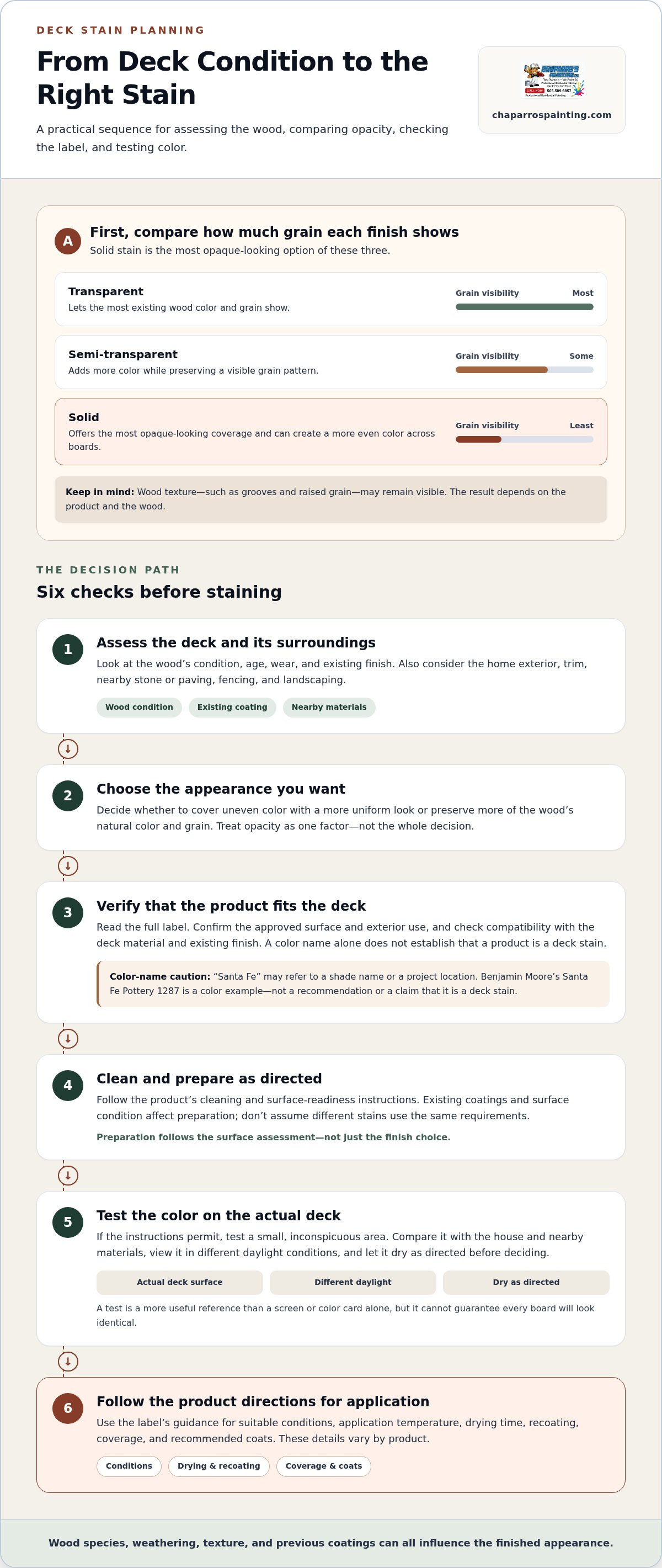
Transparent stain generally lets the most existing wood color and grain show. Semi-transparent stain adds more color while preserving a visible grain pattern. Solid stain offers the most opaque-looking coverage of the three, so it can create a more even color across boards with varied tones. How much grain or texture remains visible depends on the product and the wood.
Solid stain remains a wood finish, not simply another name for paint. Stains vary in how they color and interact with wood. This overview of types of wood stain explains some of those differences. Avoid assuming every solid stain behaves alike. Formulation, surface condition, and prior coatings all affect appearance and preparation.
Does Santa Fe refer to a stain color or a local project?
The phrase “Santa Fe” can refer to a named shade, a project in the Santa Fe area, or both. For example, Benjamin Moore uses Santa Fe Pottery 1287 as a color name. That’s a color example, not a recommendation or a claim that it is a deck stain. Distinguish a paint color reference from a product specifically labeled for decks.
Color names aren’t reliable previews of a finished deck. Wood species, weathering, surface texture, existing coatings, and product opacity can all influence how a chosen color looks on the boards. A warm shade on a sample card may look different across sun-faded or uneven wood. If the label allows, test the product on the actual deck and assess it after it has dried as directed.
Before settling on a finish, read the full product label. Confirm that the stain is intended for the deck’s material and existing surface, then follow its preparation, testing, and application instructions. Labels differ, so don’t assume one stain’s coverage, application method, or compatibility applies to another. This turns “solid color” from a broad appearance description into a more informed choice for your deck.
How to Match a Solid Deck Stain Color to Your Santa Fe Home
Start with the setting, not just a color card. Look at the home’s exterior, trim, nearby paving or stone, and any fencing or landscaping close to the deck. Then decide what role the deck should play. A close match can make it feel integrated with the house, while a contrasting shade can give the outdoor space more definition. Aim for a color that works with the materials already in place.
The same stain can look different from one deck to another. Wood species, age, wear, and surface condition all affect its appearance. A weathered board may show a stain differently from a newer one, and residue from an existing finish can alter the result. A product’s color name or online image is a starting point, not a guarantee of an exact match. For a solid color deck stain Santa Fe project, judge the color on the deck before committing.
How to compare deck stain samples before choosing
Use manufacturer color tools or physical samples to narrow your options, then test a small, inconspicuous area if the product instructions permit. Compare the test with the home exterior and nearby materials. View it in different daylight conditions, and let it dry as directed before deciding. A small test won’t guarantee every board looks identical, but it gives you a more useful reference than a screen or color card alone.
Consider how much direct light reaches the deck and whether the house or nearby trees provide shade. These details help you assess the setting where you’ll see the color. Santa Fe sun exposure and outdoor conditions are practical planning factors, but don’t rely on a general seasonal rule for application. Follow the product’s directions for suitable conditions.
What to check on a solid stain product label
Before buying, confirm that the product is intended for your deck’s material and exterior use. Read the directions for surface preparation, application temperature, drying time, and recoating. Coverage and recommended coats vary by product, so use the manufacturer’s documentation rather than a general rule. The EPA website is a starting point for federal environmental information. This EPA regulations on deck stains link leads to its general site, so consult relevant current guidance for specific regulatory questions.
- Substrate: Check that the label names the material you plan to stain.
- Preparation: Follow the stated cleaning and surface-readiness instructions.
- Application: Use the product’s temperature, drying, and recoat directions.
- Coverage: Base quantity and coat planning on manufacturer guidance.
Thoughtful color selection and preparation go together. Chaparro's Painting, LLC provides residential wood staining with clear communication and attention to clean work. Explore residential wood staining services as you decide on an appropriate finish.
Solid Deck Stain Options: Compare Opacity, Appearance, and Product Claims
Opacity helps you predict how much of the deck’s existing color and grain may remain visible. It doesn’t tell you everything about a product’s performance or whether it suits your boards. Use the comparison below to narrow down the appearance you want, then read the product label for details specific to that stain. For a solid color deck stain Santa Fe project, match the finish to both the deck’s current condition and your preferred look.
| Opacity | General appearance | Wood color and grain visibility |
|---|---|---|
| Transparent | Subtle color with a more natural, varied look | Shows the most existing wood color and grain |
| Semi-transparent | More noticeable color while retaining wood character | Shows some grain and underlying color |
| Solid | More uniform-looking color across the surface | Hides more of the existing color and grain, though texture may remain |
Which opacity works with the deck’s current appearance?
Choose based on what you want to see after staining. Transparent options suit a homeowner who wants more of the wood’s natural variation to remain visible. Solid opacity can make mixed or uneven board colors look more consistent, but it won’t necessarily conceal every mark or surface difference. Consider the deck’s condition alongside your preferred appearance, and don’t treat opacity as a substitute for proper preparation.
Opacity is only one product category. Water-based formulas, coverage rates, coat counts, drying times, and application methods vary. Don’t assume two solid stains share the same instructions just because they offer a similar level of color coverage. Compare manufacturer documentation for each product and use it to plan materials and application.
How to interpret stain-and-sealer wording
“Stain and sealer” describes a product claim, not proof that all products have identical properties. Read the manufacturer’s explanation to understand what the combination means for that formula. Confirm that the label lists your deck’s substrate and exterior use, then follow its surface preparation and application directions. The label is the practical reference, not the product title alone.
Keep general category descriptions separate from verified product details as you compare listings. A stain may be described as solid, water-based, or a sealer combination, but those terms don’t establish suitability for every deck. Check each current label and manufacturer documentation for:
- Intended exterior surfaces and compatible substrate
- Required cleaning and preparation steps
- Recommended coverage and number of coats
- Application conditions, drying time, and recoat directions
This approach keeps the comparison practical. First decide how much wood character you want to retain. Then assess each product using its own instructions and claims, rather than ranking options by a label phrase or assuming greater opacity guarantees complete concealment.
Prepare for a Solid Color Deck Stain Project in Santa Fe
A neat stain job starts with understanding the deck you have, not simply choosing a new color. Surface wear, peeling finish, damaged boards, or an unknown coating can change the preparation required and affect whether a new product is suitable. Before buying stain, assess the wood and read the current product label. That groundwork makes the project plan more reliable.
What to assess before staining a deck
Walk the deck and look for loose or peeling finish, faded or worn areas, and boards that appear damaged. Note areas that look different, such as railings or steps that may have another coating. Try to identify what’s already on the wood, whether it’s a prior stain or another finish. If you can’t tell, don’t assume a new stain can go straight over it. The existing coating may affect product compatibility and preparation.
Use this sequence to organize the work:
- Assess the wood. Record visible wear and any areas that may need repair before staining.
- Identify the existing coating. Look for product records or other reliable information about the prior finish. If it remains unknown, account for that uncertainty in the plan.
- Clean and prepare. Follow the chosen product’s directions for cleaning and surface readiness. Peeling or damaged areas may need different preparation from sound, evenly finished wood.
- Test the stain. If the label permits, try it in a small, inconspicuous spot and assess the appearance as directed.
- Apply according to the label. Use the product’s specific instructions for application, drying, and any additional coats.
Why preparation and application conditions matter
Stain needs a properly prepared surface, and product directions vary. Follow the label for cleaning, drying, and application conditions, including any stated temperature or weather limits. Santa Fe sun exposure and changing outdoor conditions are practical factors to consider, but don’t substitute a general seasonal rule for the manufacturer’s instructions. If conditions fall outside the label’s limits, wait for suitable conditions rather than guessing.
Keep the deck clear while the work is underway, and allow the product-specific drying time before returning furniture or regular foot traffic. Drying directions aren’t interchangeable between products. Check the label for the time required and any instructions for recoating or resuming use. These steps matter for both a small landing and a larger deck.
For solid color deck stain Santa Fe homeowners should treat preparation as part of the finish decision. A careful surface assessment can clarify what the deck needs before a new stain is applied. Chaparro's Painting, LLC provides residential wood staining with attention to preparation and clear communication. Plan your deck staining project with a team focused on clean, dependable work.
Get Professional Deck Staining in Santa Fe with Chaparro's Painting, LLC
Once you’ve considered the deck’s condition and the look you want, professional residential wood staining can help turn your ideas into a project plan. Chaparro's Painting, LLC provides residential wood staining, including deck-related staining. You can discuss your preferred opacity and color alongside the existing surface and preparation needs. Product choice and final appearance depend on the project, so no particular shade or finish suits every deck.
What homeowners can expect from a wood-staining project
Clear communication helps set expectations before work begins. The project discussion can cover the deck’s current condition, any existing finish, and the appearance you’re considering. Preparation is planned around the wood surface and project needs, rather than treated as one fixed process for every deck. Chaparro's Painting, LLC emphasizes clean work and dependable service, keeping the process clear.
Chaparro's Painting, LLC is licensed and insured and brings over 20 years of hands-on experience. The company has a rating of 4.9 stars from 130+ homeowners. These details offer context as you consider professional help, while product compatibility and preparation still depend on the deck itself. Your preferred opacity and color can guide the conversation, but they don’t guarantee a specific shade, finish, lifespan, or result.
Related information is available in the Professional Wood Staining in Rio Rancho article and the exterior preparation guide. These resources can help you think through the project and your deck’s condition. From there, discuss the wood surface, existing coating, and look you have in mind.
How to take the next step on a Santa Fe deck
Call Chaparro's Painting, LLC at 505-589-9857 to discuss your deck and request a free estimate. Share the material, describe any worn or peeling areas, and explain whether you’re considering a solid or more transparent appearance. Those details provide a useful starting point for a clear conversation about the project and its preparation.
Chaparro's Painting, LLC emphasizes fair, honest pricing and clear communication. An estimate gives you a chance to understand the proposed work before deciding how to proceed. If you’re planning a solid color deck stain Santa Fe project, bring your questions about the deck’s condition, product choice, and color to the conversation. The team can discuss residential wood staining with you without pressure to commit.
Take the Next Step Toward a Deck That Fits Your Home
Your deck’s finish should make sense for the wood you have and the way you want the space to feel. If you’re weighing solid color deck stain Santa Fe options, turn your preferred color and opacity into a practical project plan. A conversation about the deck’s current surface can help clarify the next steps before work begins.
Chaparro’s Painting provides residential wood staining, with fair, honest pricing and a focus on clear communication. Call 505-589-9857 to discuss your deck and request a free estimate. You can also request a deck-staining estimate and share what you’re considering for the finish.
For homeowners in Santa Fe, Rio Rancho, Albuquerque, and Bernalillo, a clear starting point makes it easier to move forward. Bring your questions and preferred look to the conversation, then take the next step at a pace that feels right for your home.
Frequently Asked Questions
Is solid color deck stain the same as deck paint?
No. Deck paint and solid stain are different coating categories, so don’t assume they behave identically or follow the same application approach. Solid stain generally gives wood a more opaque-looking color, while the board’s physical texture may still show. Before choosing a product, check its label for approved surfaces, preparation requirements, and application directions. A label may specify exterior wood rather than every surface around a deck.
Can solid deck stain go over an existing stain?
It depends on the existing coating, its condition, and the new product’s instructions. A sound, identified finish differs from peeling stain or a coating you can’t identify. Don’t assume the new layer can go directly over the old one. Check the manufacturer’s surface-preparation directions for the selected product, and assess problem areas before planning the work. Color alone can’t establish compatibility or preparation needs.
Will solid color deck stain completely hide the wood grain?
Not necessarily. Solid stains generally look more opaque than transparent or semi-transparent finishes, but the amount of visible grain varies by product and surface. Grain refers to the wood’s pattern; texture refers to physical features such as grooves or raised areas. Those features aren’t the same, and texture may remain visible even when the color looks more uniform. Check the product’s opacity guidance and test a small area if its instructions allow.
Can solid color deck stain be used on a composite deck?
Only if the product is intended for that specific surface. Deck materials differ, and a stain labeled for wood shouldn’t be assumed suitable for composite decking. Identify the deck material first, then check the product label for approved substrates and follow the manufacturer’s directions. If you’re unsure whether a board is wood or composite, confirm the material before buying a finish. Don’t rely on the product’s color or opacity description to establish compatibility.
How can I check whether a Santa Fe stain color will look right on my deck?
A color name doesn’t guarantee the finished shade. The deck material, existing finish, surrounding colors, and daylight can all affect how a color appears. “Santa Fe” might refer to a named color or to a project’s location, so use the product context to tell which meaning applies. Review manufacturer samples or color tools, then test a small, inconspicuous area if the product directions permit. Assess the sample in the setting where it will be seen.
How long should I wait before using a newly stained deck?
Follow the selected product’s label because return-to-use timing varies by formula and conditions. Check for separate directions about walking on the surface, replacing furniture, and allowing the stain to dry or cure. A surface that feels dry may still need more time according to the manufacturer’s instructions. Don’t assume a railing and deck boards share the same readiness if the label gives different directions for coated surfaces.
Does Chaparro’s Painting provide deck staining in the Santa Fe area?
Yes. Chaparro’s Painting provides residential wood-staining services, including deck-related staining, for homeowners in Santa Fe and nearby communities, including Rio Rancho, Albuquerque, and Bernalillo. The company is licensed and insured and brings over 20 years of hands-on experience. Call 505-589-9857 to discuss your deck and request a free estimate. Sharing the wood material, existing finish, and look you’re considering can help start a clear conversation about the project without promising a particular shade or result.


