

The best painting plan before a sale may start with repairs, not color. Painting before selling a house in Albuquerque has no single set cost. The price depends on the areas being painted, the condition of each surface, and the preparation required, with a project-specific price provided after a quote request.
It’s reasonable to want a clear budget before listing. But painting over dents, cracks, or peeling paint without preparing the surface can affect the finish. A focused plan can prioritize visible wear and repairs instead of automatically repainting every room.
This article explains what affects a pre-sale painting estimate, which repairs and preparation may be needed, and how paint choices can help rooms feel consistent and ready for buyers. It also covers exterior painting and stucco condition, so you can understand the work before deciding what to paint.
Key Takeaways
- Build a focused painting plan around visible wear, bold or dated colors, and the areas buyers are most likely to notice.
- Address drywall damage and other visible surface issues before painting so the finish looks even and intentional.
- Exterior coat needs depend on the surface condition and preparation required, including the condition of stucco and wood.
- Compare project estimates by the surfaces included, repair and prep work, paint choice, and finish details, not just the number of rooms.
- Neutral colors and a consistent palette can help interiors feel brighter, cleaner, and more cohesive to prospective buyers.
How many coats of paint will a professional recommend for the exterior of a house?
There isn’t one coat count that fits every Albuquerque home. A residential painting contractor evaluates the existing finish, surface condition, repairs, and color change before recommending an exterior scope. Peeling or uneven areas need attention before fresh paint can create a consistent finish.
For an Albuquerque home, an estimate should identify which exterior surfaces need painting and the preparation each requires. Stucco, wood trim, doors, and gates can have different conditions and preparation needs. Include gray-looking beams or vigas in the assessment of the exterior work plan. Address that condition in the work plan rather than hiding it under a new coat.
A pre-sale plan doesn’t always require repainting the entire home. If the exterior finish remains sound, the contractor can focus on visibly worn sections and surfaces that affect the overall presentation. A homeowner who has lived in the house for over a decade may not need a full repaint. The estimate should make clear which areas are included, how repairs affect preparation, and how many coats are proposed for each surface.
Inside, prioritize high-traffic areas and rooms with bold or dated colors. An entry, a heavily used living space, or a room with a strong wall color can shape buyers’ first impressions. A targeted plan can refresh those areas without repainting every room.
Compare residential painting estimates by their written scope, surface preparation, repair details, paint coverage, and proposed coats. Painting services can vary in what they include, so compare the work described, not just the final total. For a contractor’s qualifications, review relevant licensing and insurance documentation alongside the estimate. Clear descriptions help distinguish an exterior repaint from a plan that includes only limited touch-ups.
Lead-paint disclosure is separate from deciding how many exterior coats a home needs. A fresh coat doesn’t resolve whether disclosure is required for an older home. Treat that as a separate sale-related requirement.
Complete painting before staging and photography. This gives the finish time to dry and lets staging and listing photos show the home after the work is done. Coordinate painting with those steps so furniture and photography don’t interrupt preparation or painting.
Drywall repair before painting
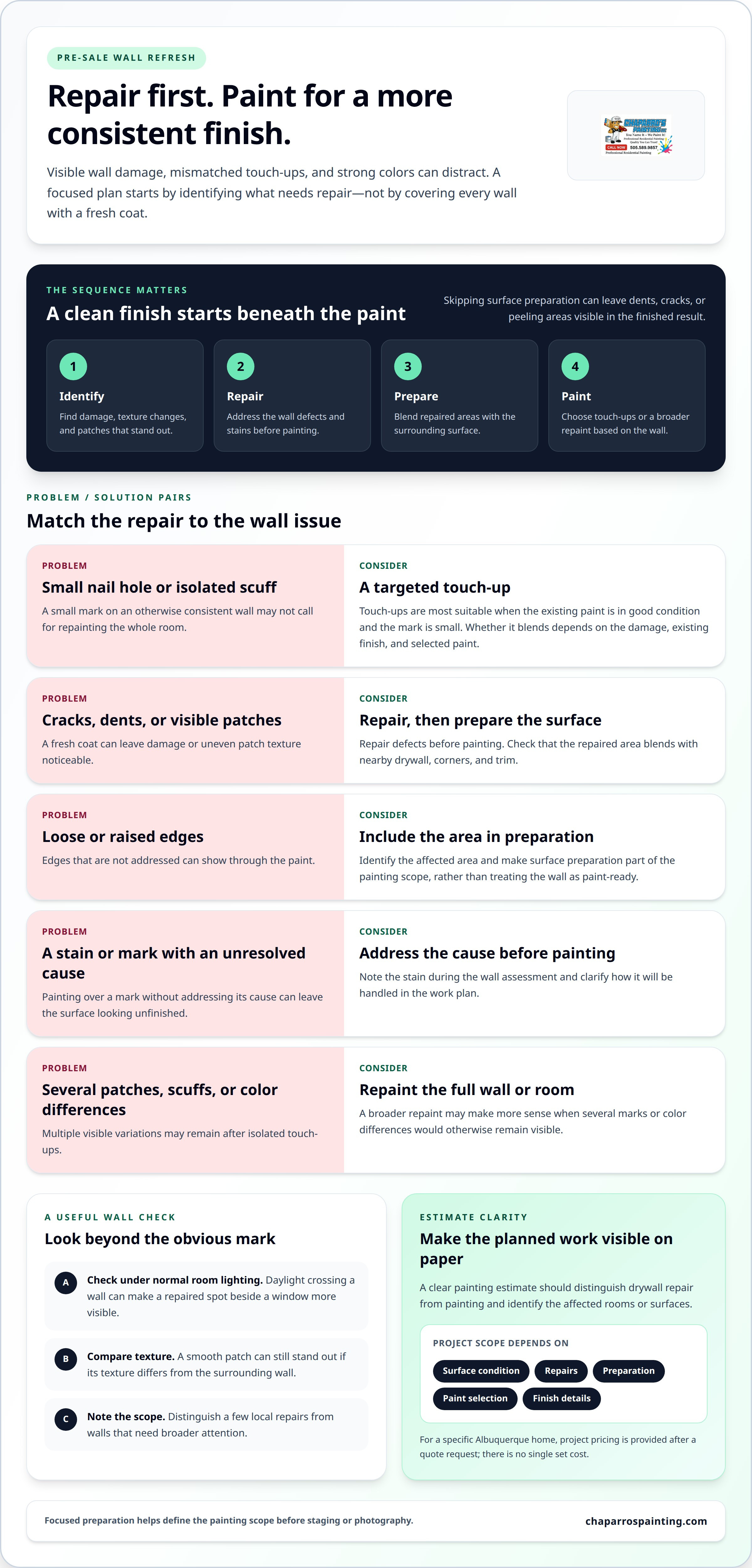
Before selling, consider repainting when wall damage, mismatched touch-ups, or strong colors distract from a room. Touch-ups can work for isolated scuffs on an otherwise consistent wall. Repair dents, cracks, and visible patches before painting rather than covering them with a fresh coat.
Drywall damage varies, so start by identifying each problem area. A small nail hole needs a different repair from a long seam crack or a dent near a doorway. Loose or raised edges can show through paint if preparation skips them. Stains also need attention: painting over a mark without addressing its cause can leave the surface looking unfinished.
For a pre-listing refresh, assess the walls under normal room lighting. Note where drywall is damaged, the existing texture changes, or earlier patches stand out. This helps distinguish a few local repairs from walls that need broader attention. It also gives the painting scope a clear sequence: repair, prepare the surface, then paint.
After repairs, the surface should blend with the surrounding wall. A smooth patch with a different texture can remain obvious after painting. Prepare the repaired area and check how it meets nearby drywall, corners, and trim. In a living room, for example, daylight crossing a wall can make a repaired spot beside a window more visible. Those details affect how much preparation each room needs.
Touch-ups are most suitable when the existing paint is in good condition and the mark is small. Repainting a full wall or room may make more sense when several patches, scuffs, or color differences would otherwise remain visible. The right choice depends on the damage, existing finish, and whether the selected paint will blend. A painting professional can explain which areas need repair and whether a targeted refresh will look consistent.
A clear painting estimate should distinguish drywall repair from painting and identify the affected rooms or surfaces. That detail helps you understand what work is planned before staging or photography. If walls have several visible defects, professional surface preparation can create a cleaner base for the final paint finish. Discussing surface preparation can help clarify how repairs fit into a pre-sale painting plan.
Paint and project cost factors
For a specific Albuquerque home, the price depends on the project scope and is provided after a quote request. The main cost drivers are the surfaces included, their condition, preparation, paint selection, and finish details. A plan covering an entry and living room differs from one covering every interior wall and the exterior. The estimate should describe that scope clearly, so you can see what the proposed work includes.
Surface condition affects the work needed before painting. Peeling exterior paint, for example, may require more preparation than a sound, evenly coated surface. Cracks, damaged drywall, and worn trim can also add repair steps. The estimate should distinguish preparation and repairs from painting, rather than treating every wall as ready for paint. That makes it easier to understand why homes with similar room layouts may need different scopes.
The area being painted matters, but so do its shape and access. A room with tall ceilings, multiple doorways, and extensive trim takes different work than a simple rectangular room. Outside, the estimate may account for stucco, wood details, or gates as separate surfaces. Each material can need its own preparation and coating plan. Ask for the estimate to identify included areas, excluded surfaces, and any repairs that affect the proposed work.
Paint choice also shapes the project. Changing colors can call for a different approach than refreshing a similar shade, especially when replacing a bold color with a light neutral. The proposed coats should suit the surface and color plan. Finish selection matters too: walls, doors, and trim may use different finishes, affecting the materials and labor in the estimate.
For a pre-sale project, targeted work can keep the scope focused. An estimate might cover a scuffed hallway and a dated living-room color while leaving sound rooms untouched. Compare this with a whole-home plan by reviewing the exact surfaces and tasks, not relying on a broad label such as “interior painting.” The same applies outside: a quote should name the elevations and details included.
Before approving the plan, check that the written estimate accounts for paint, preparation, repairs, and cleanup. Confirm that rooms or exterior areas are described consistently, and that optional work is separated from the main scope. Those specifics help you compare project plans fairly and decide which work best supports your listing timeline. A clear scope is more useful than an unexplained total because it connects the price to the actual work.
Preparation and surface-specific paint products
A consistent finish starts with matching preparation and paint to each surface. In Albuquerque, sun exposure, existing coatings, and stucco condition all shape the exterior plan.
Surface Preparation
Start by identifying the surfaces in scope, such as stucco walls, wood trim, doors, and interior drywall. Assess each surface before selecting paint. Look for peeling coatings, cracks, loose material, stains, and damaged areas that could affect the finish. The work plan should show which areas need repair and how preparation differs by material.
Stucco needs attention where cracks or damaged sections interrupt the wall surface. A professional can include stucco repairs before painting, so the coating follows a sound, prepared surface. Wood beams and vigas need a separate visual check. Gray-looking beams and vigas can be a reason to inspect the wood and assess whether it needs attention. Painting over that condition without addressing it can leave an important part of the project unresolved.
Interior preparation also depends on the surface and location. A repaired drywall patch beside a window, for example, may look different from the surrounding wall if its texture or finish is uneven. The professional prepares repaired spots and checks transitions near trim, corners, and doors. In the estimate, look for clear descriptions of repairs and preparation, rather than a general statement that all surfaces are ready for paint.
Paint Choices for Climate and Sun Exposure
Albuquerque’s sun exposure is part of choosing exterior paint and scheduling the work. A professional assesses which walls receive direct sun and whether the existing coating shows visible wear. Those observations help guide product selection and project timing. The scope should identify the exterior surfaces being painted and the preparation each requires, rather than treating every elevation as identical.
Paint should suit the surface. Stucco, wood trim, doors, and gates are distinct parts of an exterior project, so consider each material and existing finish. Product choice should follow the surface and the manufacturer’s directions. Sun exposure can inform the selection, but one paint or coat count won’t necessarily suit every wall. The estimate should clarify the proposed product and application plan.
For interiors, one agent recommended eggshell paint on walls and semi-gloss paint on trim and doors. The same agent advised painting walls, trim, and ceilings where needed, so the finish looks intentional rather than patched. A professional can apply that approach selectively, based on each room’s condition. For example, a freshly painted wall beside visibly worn trim may still look incomplete unless the transition is addressed.
Before work begins, the written plan should connect surface preparation, product selection, and timing. This gives you a clear view of how stucco, wood, and sun-exposed walls will be handled.
Which interior paint colors are most appealing to Albuquerque homebuyers?
Neutral interior paint can help a home feel cleaner, brighter, and more move-in ready to prospective buyers. For a sale, aim for a cohesive backdrop that lets rooms and finishes stand out without competing with personal belongings.
Consider muted neutrals such as soft white, warm beige, or restrained gray. These are practical options, not a guarantee of buyer preference. The right shade depends on the room’s floors, cabinetry, trim, and natural light. For example, a cool gray wall beside warm wood floors may feel less unified than a neutral with a warmer undertone.
Consistency matters across connected rooms. One agent recommended using the same color throughout the areas being painted, which can create visual continuity from an entry into a living or dining area. A single palette doesn’t require every surface to match. Trim and doors can provide contrast while the main wall color stays consistent across adjoining spaces.
Before selecting a shade, assess the room alongside its fixed features. A kitchen with wood cabinets, a living room with tile floors, and a bedroom with carpet may each affect how the same paint color appears. A professional can review those surfaces and the existing finish, then help keep the chosen palette coordinated. This avoids selecting a wall color in isolation from the rest of the home.
Strong or highly personal colors can draw attention away from a room’s size and layout. If a bedroom has a bold accent wall, repainting it may make the space feel more neutral to visitors. Focus on rooms where color dominates rather than assuming every wall needs a new shade. Consider the paint’s condition and how each room connects to nearby spaces.
Color is only one part of a finished presentation. A neutral wall beside scuffed trim or a visibly different patch may still look unfinished. Coordinate wall color with trim, doors, and the areas being refreshed so the result looks deliberate. View a sample in the actual room before applying it across the surface, where daylight and existing finishes can affect its appearance.
For a sale-focused palette, choose a neutral direction, coordinate connected spaces, and prioritize colors that currently dominate. Plan interior painting for your listing with a consistent, buyer-friendly finish in mind.
Chaparro's Painting
Chaparro's Painting, LLC can help turn your pre-sale painting plan into a clearly scoped project. Its interior and exterior painting services address worn finishes, dated colors, and exterior surfaces that need attention. Stucco painting and cabinet painting can also be part of the home’s refresh.
Reach out when you’ve identified the rooms or exterior areas that need work, or want help defining the painting scope. Sharing the surfaces, visible repairs, and listing schedule gives the conversation a practical starting point. The plan can focus on the work your home needs before it goes on the market.
Contact Chaparro's Painting, LLC to discuss painting your home before its sale.
Set a Clear Scope for Your Sale
Before arranging the work, decide what you want buyers to notice first. A calm, consistent finish can support a home’s presentation, but the painting plan should fit the property rather than follow a blanket rule. For painting before selling a house in Albuquerque, the useful next step is turning your priorities into a defined scope, with surfaces and preparation clearly described.
Chaparro's Painting, LLC offers interior painting, exterior painting, and cabinet painting. The project price depends on the home’s surfaces, condition, and preparation needs, and is provided after a quote request. A clear scope helps you understand what work is planned and coordinate it with your listing schedule.
You don’t need to decide that every surface requires paint. Start with the rooms and exterior areas that matter most to your presentation, then discuss how the work can fit your plans. Contact Chaparro's Painting, LLC to discuss your home and next steps. A thoughtful plan can help you move toward listing with confidence.
Frequently Asked Questions
How much do painters cost?
Painting prices depend on the work included, not simply the home’s room count. A project may cover one room, multiple surfaces, or an entire exterior. Repairs, trim, doors, and preparation also affect the scope. For a useful comparison, review the work descriptions side by side and note whether each estimate covers the same rooms, surfaces, and preparation tasks.
What should I expect from a painting contractor?
Expect a discussion of the surfaces, finish condition, repairs, paint choices, and areas included in the project. A clear written estimate should distinguish preparation from painting and specify which rooms or exterior sections are covered. For example, a living-room repaint and hallway touch-up should not be left as an undefined “interior” scope. Clear communication helps align the agreed work with your listing plans.
Does painting before selling a house in Albuquerque increase its sale price or help it sell faster?
Painting may improve a home’s presentation, but it can’t guarantee a higher sale price or a faster sale. A clean, cohesive appearance can help buyers focus on the property rather than distracting marks or highly personal colors. The value of painting depends on the home’s condition and the work selected. Refreshing a visibly worn entry, for instance, may be more useful than repainting a room already in good shape.
Should I repaint the exterior of my Albuquerque home before listing it?
Consider exterior painting if peeling, faded, or damaged areas make the home look poorly maintained. If the existing finish appears sound, a full repaint may not be necessary before listing. Consider what buyers see from the street, including the main walls, trim, and entry. A professional assessment can identify surfaces needing attention and help define a practical exterior scope.
How much does professional interior or exterior painting cost in Albuquerque?
There isn’t one set cost for professional interior or exterior painting in Albuquerque. The project price depends on the surfaces, their condition, preparation, and the scope selected, and is provided after a quote request. For example, an estimate for several interior rooms differs from one covering both a home’s interior and exterior. Chaparro's Painting, LLC provides project pricing after receiving a quote request.
How much does it cost to paint a typical Albuquerque house before selling?
A typical-house price isn’t useful without knowing which areas need painting and what condition they’re in. A focused plan for a few worn spaces differs from a whole-home project that includes exterior surfaces. Chaparro's Painting, LLC determines project pricing based on the individual scope and provides it after a quote request. A detailed description of the rooms and surfaces helps establish what the proposed work covers.


