

A per-square-foot figure alone won’t tell you what an epoxy floor will cost. In New Mexico, the cost of epoxy flooring per square foot depends on the concrete’s size and condition, as well as the coating system and finish. A one-car garage may need less material than a larger floor, but repairs and preparation also affect the project scope and price.
It’s reasonable to want a clear estimate before committing to the work. The project price depends on the specific floor and is provided after a quote request, with concrete condition, preparation, and finish among the factors that affect it.
This guide explains what drives one-car garage pricing, what homeowners in Rio Rancho can expect from different coating systems, and how professional installation compares with DIY costs. You’ll also see which project details matter most when you’re planning residential epoxy flooring in New Mexico.
Key Takeaways
- Garage size gives you a starting point for estimating the project, but concrete condition and preparation can change the total.
- In Rio Rancho, the coating system and finish influence the installed cost, so compare what each system includes.
- Professional installation can make sense when surface preparation, repairs, or a decorative finish call for experienced application.
- For a more useful quote, consider the floor’s condition, the desired finish, and any repairs needed before coating.
- Residential epoxy can suit more than garages; the room’s use and the existing floor help determine the right approach.
How Much Does It Cost to Epoxy a 1-Car Garage?
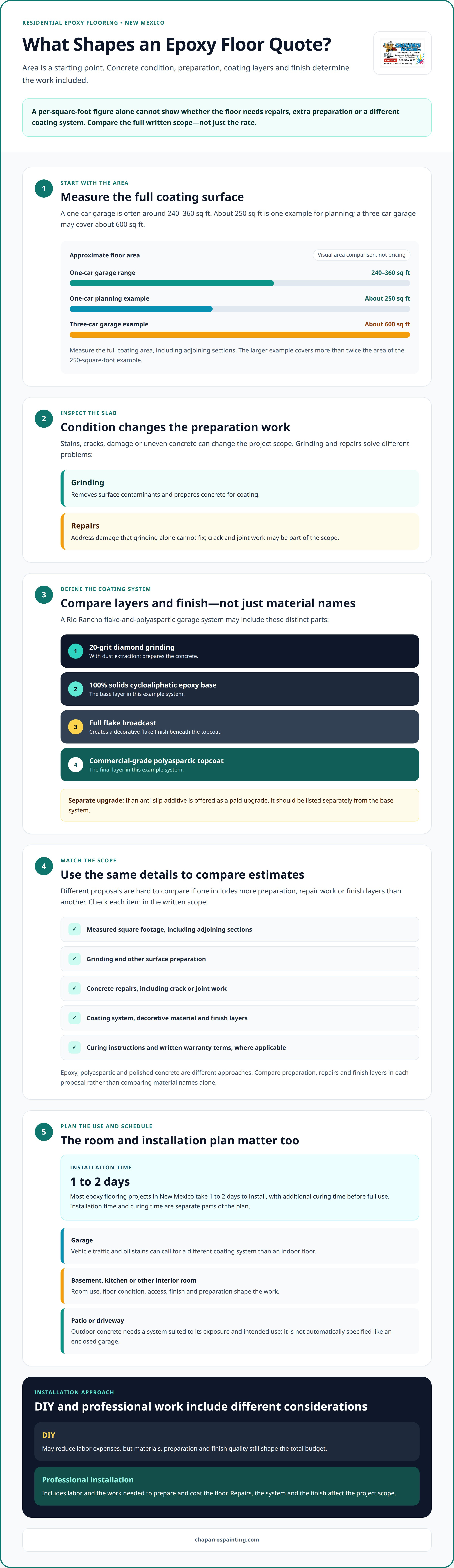
A one-car garage is often around 240 to 360 square feet, while a smaller example of about 250 square feet gives a useful starting point for planning. The final project price depends on the floor’s area, concrete condition, preparation, and coating system, and is provided after a quote request. A per-square-foot figure helps compare project scopes, but it cannot show whether stains, cracks, or uneven concrete require extra work.
National garage-floor comparisons vary by coating system and slab condition. A national average is only a broad reference, not a local quote for a New Mexico home. Grinding removes surface contaminants and prepares concrete for coating, while repairs address damage that grinding alone cannot fix. These steps affect the work required and the finished floor.
Size changes the total area to coat. A three-car garage may cover about 600 square feet, more than twice the area of a 250-square-foot one-car garage. Larger floors can spread setup work across more square footage, but the total project still grows with the surface area and any repair needs. Measure the full coating area, including adjoining sections, before comparing estimates.
Other rooms have different requirements. A basement may have a larger continuous area than a kitchen, while a patio or driveway involves outdoor concrete. For each surface, condition, access, finish, and preparation shape the work. A garage floor also faces vehicle traffic and oil stains, so its coating system may differ from one used indoors.
Installation time is another planning factor. Most epoxy flooring projects in New Mexico take 1 to 2 days to install, with additional curing time before full use. The application schedule depends on the coating system and preparation steps. A stained or damaged slab may need more preparation before coating begins, so installation time and the time before using the floor are separate parts of the plan.
When reviewing a quote, compare the same details: measured square footage, grinding and other preparation, concrete repairs, coating system, finish, and curing instructions. A retail kit and professional installation may cover different work, so compare inclusions rather than just the per-square-foot figure. For a one-car garage, the floor’s condition and chosen finish help explain differences between estimates.
Installed garage floor coating prices in Rio Rancho
In Rio Rancho, garage flooring costs depend on the concrete, measured area, repairs, and finish. Compare the preparation and coating layers included, not just the quoted rate.
Concrete Preparation and Coating Systems
A full flake-and-polyaspartic garage system in Rio Rancho can include 20-grit diamond grinding with dust extraction, a 100% solids cycloaliphatic epoxy base, a full flake broadcast, and a commercial-grade polyaspartic topcoat. Each layer has a distinct role in the system. Grinding prepares the concrete, while the broadcast creates a decorative flake finish beneath the topcoat.
For a fair comparison, review the full written scope. Surface preparation, crack and joint work, base coats, decorative material, and topcoat all affect what the installation includes. If an anti-slip additive is offered as a paid upgrade, it should be listed separately from the base system.
Epoxy and Alternative Coating Prices
Epoxy, polyaspartic, and polished concrete are different approaches, so their costs cannot be compared by material name alone. A flake system in Rio Rancho might combine epoxy beneath a polyaspartic topcoat, while polished concrete uses a different finishing process. Compare preparation, finish layers, and repairs in each proposal.
There is no single Albuquerque residential garage price that applies to every floor. The measured area, concrete condition, repairs, coating system, and finish determine the scope; the price depends on the case and is given after a quote request.
In Rio Rancho, Albuquerque, Bernalillo, and Santa Fe, a location name alone does not determine the per-square-foot price. The same project details shape an estimate: garage dimensions, slab condition, desired finish, and included preparation. Compare matching scopes so a different coating system or repair allowance does not skew the comparison.
Outdoor concrete needs a coating system suited to its exposure and intended use. A driveway or patio is not automatically priced or specified like an enclosed garage. Review the surface and preparation covered, along with written warranty terms for materials, workmanship, and exclusions. These details clarify coverage without assuming every coating offers the same protection.
Industrial and heavy-traffic floors require a different scope from a home garage. Commercial epoxy projects may involve different traffic demands, floor areas, and system specifications. A residential garage estimate is not a useful benchmark for an industrial floor, nor is an industrial coating rate a residential comparison.
In Rio Rancho, an estimate is easier to understand when it clearly identifies the coating layers, preparation, repairs, and finish. A full flake-and-polyaspartic system is one example of a defined scope; compare it with another proposal that includes the same work.
DIY versus professional installation
DIY may reduce labor expenses, but materials, preparation, and finish quality still shape the total budget. Professional installation involves more than applying epoxy, particularly when preparing the surface and applying a consistent coating system.
Professional Installation Costs
Professional installation covers labor and the steps needed to prepare and coat the floor. The final price depends on the slab, repairs, system, and finish; it is given after a quote request. As a broad market reference, an aggregate of four offers from three sources puts epoxy flooring installation between 7.3 and 9.6 USD per m², with a median of about 8.5.
A market range is not a New Mexico per-square-foot average or a quote for a particular home. For a useful comparison, separate coating layers from concrete preparation and repairs. A basic finish and a decorative epoxy system may require different materials and work, so matching the scope matters more than comparing headline rates.
DIY and Professional Savings for Homeowners
DIY may avoid professional labor, but savings depend on what the kit includes and what the concrete needs. The kit price may not cover grinding equipment, repair materials, or other project expenses. Weigh those costs against professional preparation and a consistently applied finish.
Professional installation can suit floors with damage, stains, or uneven surfaces because preparation affects coating adhesion. DIY may seem simpler on a sound, straightforward slab, but application errors can affect the finished appearance. Consider the floor’s condition, the selected epoxy system, and the time you can commit before choosing an approach.
Materials and Professional Labor Costs
Materials and labor are separate parts of an installed epoxy floor. Material costs reflect the coating system and finish; labor covers preparation, application, and other project work. Their proportions vary by scope, so no single average per-square-foot price fits every New Mexico home.
For a clear budget, compare the same area and finish, then review the preparation and repairs included. A quote should distinguish materials from labor and identify additional work. This breakdown explains why a retail kit and a professionally installed floor may have different totals, even when both use epoxy.
Choosing DIY or professional installation in New Mexico involves more than the initial outlay. Account for the kit, equipment, preparation, and desired finish when considering DIY. Professional installation includes preparation and application within a defined project scope. The cost of epoxy flooring per square foot depends on the floor and chosen system, so use a project-specific estimate to plan.
Factors that affect epoxy flooring quotes
Epoxy flooring pricing reflects the floor’s size, concrete condition, preparation needs, and selected system. The scope of work determines the price. For example, a basement with a smooth slab may need different work from a garage with visible damage.
Area is the first measurement. A larger basement or garage needs coating across more concrete, while separate rooms can add edges, transitions, and work around fixed features. Floor shape matters, too. A clear rectangular space is simpler to measure and coat than one divided by posts, steps, or built-in equipment.
Concrete condition can change the preparation scope. An assessment looks for cracks, chips, stains, old coatings, and uneven areas. Small surface marks differ from a badly cracked section that needs repair before coating. If repairs are skipped, the new finish may show defects that remain underneath.
Preparation is a distinct part of the work, not just a preliminary detail. It can include cleaning, grinding, removing loose material, and addressing cracks or joints. The tasks depend on the concrete’s condition. For example, an existing coating may need to be removed before a new system can bond to the slab.
The selected system and finish also affect the project scope. A solid-color surface and a decorative finish require different materials and application steps. When choosing a garage floor, consider vehicle use and stains; a basement may have different traffic and appearance priorities. The coating should suit the room’s use rather than treating every concrete floor alike.
Access and layout can affect how the work is planned. A narrow entry, storage cabinets, or several connected spaces may require extra care during preparation and application. The estimate should distinguish the coated area from spaces excluded from the work and identify whether repairs, preparation, coating layers, and the final finish are included.
- Floor area: Measure the actual surface, including separate sections and transitions.
- Concrete condition: Record where cracks, stains, old coatings, or uneven patches appear.
- Preparation: Identify cleaning, grinding, coating removal, and repair work in the scope.
- Use and finish: Match the selected system to the room and desired appearance.
These details make estimates easier to compare. For example, two quotes for the same basement may cover different repairs or preparation steps. A clear scope names those differences, describes the finish, and specifies which floor areas receive coating. That helps homeowners understand what drives the project total instead of relying on a per-square-foot figure alone.
Residential epoxy flooring
Residential epoxy flooring can suit more than a garage. In a New Mexico home, a basement, kitchen, or bathroom may have different traffic, appearance, and cleaning needs. Start with the room’s use and the concrete underneath, then choose a finish suited to those conditions.
A garage floor typically faces vehicle traffic, tire marks, and occasional chemical spills. A kitchen or bathroom has different daily demands, so the coating and finish should suit the space. “Chemical resistant” is not a universal specification. The expected exposure and selected system determine the resistance the finished floor provides.
Finish affects both appearance and project scope. Solid-color epoxy creates a uniform look, while metallic finishes produce a more decorative surface. A custom finish can suit a particular room, but the slab still needs proper preparation. Cracks, chips, old coatings, and stains must be addressed as part of the work, not hidden beneath a new surface.
Concrete age matters, too. Fresh concrete in Rio Rancho typically needs about 28 days to cure before it can be coated. For an existing basement slab, the preparation plan depends on its condition and any previous coating. A clear assessment helps identify whether grinding, cleaning, or crack repair belongs in the project scope.
Time to install and time before use are separate considerations. Most epoxy flooring projects in New Mexico take 1-2 days to install, with additional curing time before full use. That distinction matters for a kitchen or garage that homeowners need to use regularly. The coating system and project conditions shape the schedule, so the use plan should account for the curing period.
With proper preparation and installation, residential epoxy flooring in New Mexico can last 10-20 years, depending on use and maintenance. That range makes the preparation step important: the coating’s service life depends not only on its appearance, but also on how the concrete is prepared and how the floor is used afterward.
- Garage: Match the finish to vehicle traffic, stains, and the desired appearance.
- Basement: Account for the existing slab’s condition and any previous coating.
- Kitchen or bathroom: Choose a system suited to the room’s everyday use.
- Custom appearance: Decide whether a solid color or metallic finish fits the space.
Before installation, define the room, concrete preparation, repairs, coating system, finish, and curing plan. These details explain what the work covers and help homeowners weigh appearance against practical use. For a residential floor, a useful next step is an assessment of the concrete and the finish you want.
Chaparro's Painting: Epoxy Flooring
Chaparro's Painting, LLC provides residential epoxy flooring for homeowners planning a garage or other concrete floor coating. Turn to this service when you want professional installation and a project scope shaped around the floor’s condition, preparation needs, and preferred finish.
A useful next step is to share which room you’re considering, the approximate floor area, visible cracks or stains, and the finish you have in mind. These details help define the work involved and clarify what the coating project needs to address. The price depends on the project and is provided after a quote request.
If you’re ready to discuss a residential epoxy floor, contact Chaparro's Painting, LLC to talk through your project.
Plan the Next Step for Your Floor
Use the cost of epoxy flooring per square foot in New Mexico as a starting point, then focus on the details that shape your project. Bring the floor’s size, condition, and intended use into one clear conversation. That makes it easier to discuss your preferred finish and the work the concrete needs.
Chaparro's Painting, LLC provides residential epoxy flooring, along with interior painting, exterior painting, and cabinet painting. If you’re planning a garage or another concrete floor, share the area you want coated and any visible damage or stains. A project-specific estimate can clarify the work involved without relying on a broad market figure.
Contact Chaparro's Painting, LLC for an estimate and take the next step toward a floor planned for your home.
Frequently Asked Questions
Is epoxy flooring cheaper than tile?
It depends on the room, materials, and installation scope, so epoxy isn’t automatically cheaper than tile. A straightforward concrete floor may need less work than a surface requiring tile removal or extensive repairs. Tile estimates also depend on tile selection, layout, and substrate preparation. Compare complete proposals for the same room, including preparation, finish, and any removal, rather than comparing coating material with tile alone.
What Changes The Price Of An Epoxy Floor?
The total depends on floor area, slab condition, preparation, and the selected coating system. A garage with an old coating, oil stains, or cracks needs a different scope from a clean, open slab. Finish choices can also change the materials and application steps. In Rio Rancho, Albuquerque, Bernalillo, and Santa Fe, compare estimates that describe the same work and floor area.
What factors affect epoxy floor installation costs, such as floor condition, coating type, and project size?
Floor condition, coating type, and project size all shape installation costs. A larger room requires coating across more area, while cracks or uneven concrete may call for additional preparation. The selected system matters, too: a solid-color coating has a different scope from a decorative flake or metallic finish. A clear estimate should identify the surface area and distinguish included preparation from optional finish upgrades.
What preparation and repair work can increase the cost of epoxy flooring?
Concrete grinding, crack repair, joint filling, coating removal, and leveling can add work before application. Market estimates do not establish a price for a specific project. The amount of repair depends on the damage and how much of the floor needs treatment.
How long does epoxy flooring installation take, and how long before the floor can be used?
Installation commonly takes 1-2 days in New Mexico, but curing adds time before normal use. A new epoxy floor may be walked on after 24-36 hours, while vehicles should wait five to seven days after application. The coating system and project conditions affect timing. Plan around the longer vehicle restriction for a garage, rather than treating application completion as the date the space is ready.
What warranties and maintenance costs should homeowners consider when hiring an epoxy flooring contractor in New Mexico?
Review written warranty coverage, exclusions, and duration, and distinguish workmanship coverage from material coverage. Terms vary, so don’t assume every epoxy installation includes the same protection. Maintenance needs depend on floor use and care over time; regular cleaning and prompt attention to damage can help limit avoidable repairs. Chaparro's Painting, LLC provides residential epoxy flooring in Rio Rancho and Albuquerque.
How do epoxy flooring costs compare with polyaspartic and polished concrete in New Mexico?
No separate price ranges are given for polyaspartic or polished concrete. Compare the full scope, including preparation, repairs, coating or finish layers, and included work. A Rio Rancho system may use epoxy beneath a polyaspartic topcoat, while polished concrete uses a different finishing process.


