

Did you know that 89% of homeowners start their search for stucco paint colors for New Mexico homes by looking at whites and off-whites? It's a natural choice for a clean, classic look. However, the high-desert sun is notoriously unforgiving. You've likely seen homes where a once-vibrant tan has turned into a chalky, faded mess in just a few seasons. It's a common frustration for neighbors who want a beautiful exterior that doesn't lose its character under the heat.
Choosing the right palette is about more than just picking a pretty swatch at the store. You need to balance local HOA requirements with technical needs like UV resistance and heat absorption. This 2026 guide helps you discover the perfect stucco palettes that blend desert beauty with high-UV durability for your New Mexico home. We'll walk through the latest trends in warm earth tones, explain why Light Reflectance Value (LRV) matters for your energy bills, and help you select a finish that stays bold against the intense Southwest sky.
Key Takeaways
- Learn how to achieve "High-Desert Harmony" by blending your home into the natural landscape with palettes like Classic Adobe and High Desert Sage.
- Choose stucco paint colors for New Mexico homes with high Light Reflectance Values (LRV) to reflect intense sun and help lower your summer cooling bills.
- Identify which pigments fade fastest in high-altitude environments and how to select UV-resistant coatings that maintain their look for years.
- Explore modern "greige" neutrals that provide a fresh, updated aesthetic while still respecting the traditional character of New Mexico architecture.
- Navigate HOA requirements and neighboring color choices with a clear step-by-step process to ensure your project stays on track and looks professional.
The New Mexico Aesthetic: Why Stucco Color Choice Matters
The high altitude and low humidity of New Mexico create a visual environment unlike anywhere else in the country. Because the air is thin and clear, sunlight hits surfaces with intense, direct energy. This affects how we perceive color. A shade that looks like a subtle beige in a paint catalog can easily look like a bright, glowing white once it's on your walls. Understanding this interaction is the first step in selecting the right stucco paint colors for New Mexico homes. The clear atmosphere lacks the moisture that normally diffuses light; colors simply pop differently here.
Achieving what we call "High-Desert Harmony" means choosing a palette that respects the natural surroundings. When you look toward the Sandia Mountains at sunset or across the mesas, you see a specific range of ochres, deep pinks, and dusty tans. A home that utilizes these tones feels grounded and permanent. It doesn't fight the landscape. Instead, it becomes a part of the scenery. This connection to the environment is a hallmark of local design and a major factor in maintaining long-term curb appeal.
The materials we use have evolved significantly over the decades. We've moved away from traditional adobe mud finishes that required annual patching and toward modern elastomeric coatings. These advanced paints provide a flexible, waterproof barrier that can bridge small hairline cracks. However, even the best coating will fail if the surface isn't ready. Professional prep work is a non-negotiable part of the process. We always start with thorough powerwashing to remove the fine desert dust and the "chalky" residue that develops when old paint breaks down under the sun. This ensures the new color bonds deeply with the stucco surface.
The Role of Architecture in Color Selection
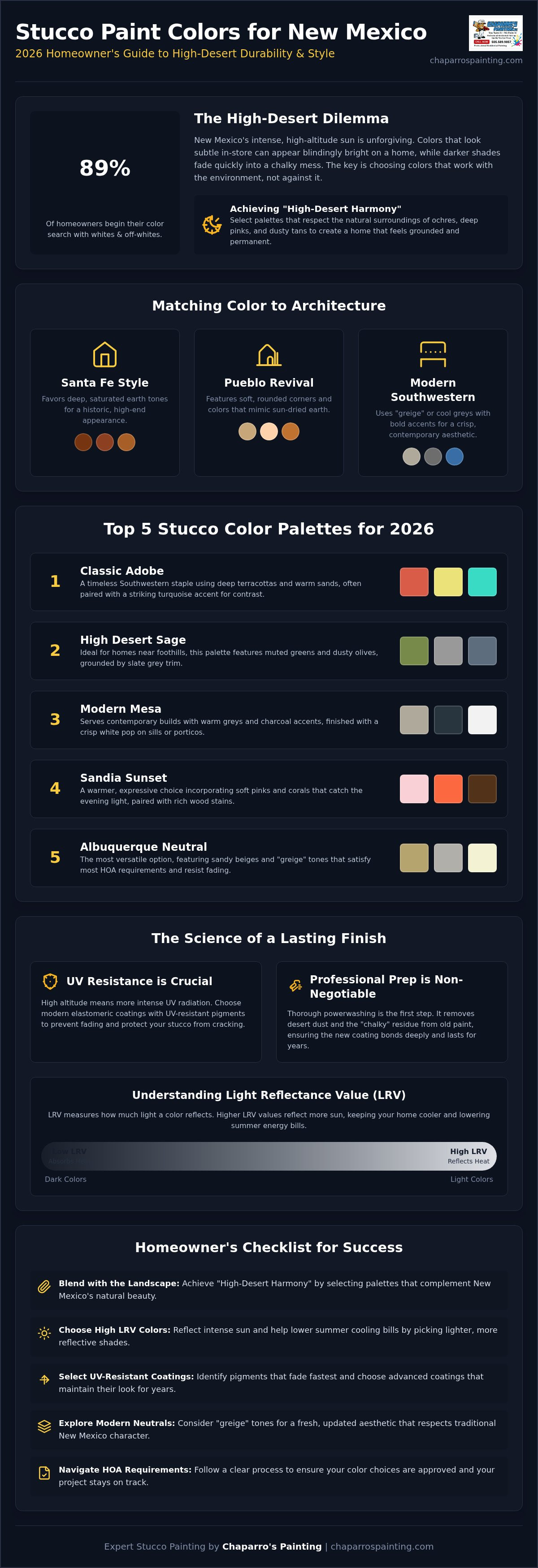
Santa Fe Style: This architectural tradition favors deep, saturated earth tones. You'll often see rich ochres, earthy reds, and dark browns that provide a sense of history and weight. These colors absorb more heat, which is a trade-off for their classic, high-end appearance.
Pueblo Revival: The Pueblo Revival style is perhaps our most iconic look. It features soft, rounded corners and flat roofs. The best colors for these homes are usually soft tans, warm peaches, and muted terracottas that mimic the appearance of sun-dried earth.
Modern Southwestern: Many newer builds are moving away from traditional browns. Modern Southwestern homes often use "greige" or cool greys to create a contemporary aesthetic. These neutral bodies are frequently paired with bold accents on gates or trim to create a crisp, clean contrast against the bright blue sky.
Top 5 Stucco Color Palettes for NM Homes in 2026
Selecting a cohesive palette is the difference between a house that stands out and one that simply fits in. In 2026, the most successful stucco paint colors for New Mexico homes are grouped into five distinct palettes. These combinations help homeowners navigate the balance between local tradition and modern design trends. A well-planned palette ensures that your body color, trim, and accents work together to enhance your home's architectural lines.
- Classic Adobe: This remains a staple of Southwestern design. It uses deep terracottas and warm sands to mimic the appearance of historic stucco found in original settlements. We often pair this with vibrant turquoise accents to provide a striking contrast against the earthy base.
- High Desert Sage: This palette is ideal for homes near the foothills or areas with heavy desert vegetation. It features muted greens and dusty olives. We recommend using slate grey trim to ground these lighter body colors.
- Modern Mesa: This palette serves the growing number of contemporary builds in the region. It relies on warm greys and charcoal accents. A crisp white pop on window sills or porticos adds a sharp, clean finish that looks excellent under the bright sun.
- Sandia Sunset: This is a warmer, more expressive choice. It incorporates soft pinks and corals that catch the evening light. This palette works best when paired with professional wood staining by Chaparro's Painting, LLC on cedar gates to add organic texture and depth.
- Albuquerque Neutral: This is the most versatile option for any neighborhood. It features sandy beiges and "Greige" tones. These colors satisfy almost every HOA requirement while providing a fresh, updated look that resists the "chalky" appearance of older paints.
Accent Colors: Bringing Life to Gates and Trim
Turquoise, often called "Santa Fe Blue," is the classic choice for front doors and gates in our region. It provides a historical connection and a splash of cool color. In modern builds, we see a shift toward black or dark bronze window frames. These dark lines create a clean frame for desert views. Pairing these dark accents with earthy stucco tones creates a sophisticated, high-end look that improves curb appeal instantly.
Visualizing Your Palette in the NM Sun
You cannot trust a small paint swatch inside a store. The high-altitude sun is too strong and changes color perception throughout the day. We always suggest testing large samples on different sides of the house. Morning light in Albuquerque is cool and blue; it can make tans look grey. By the "golden hour" in Rio Rancho, that same neutral tan can look like a bright, glowing orange. Watch your samples from sunrise to sunset to ensure the color works in every condition.
Beyond the Beige: Exploring Modern Desert Neutrals
Many neighborhoods in Rio Rancho and Albuquerque have spent decades wrapped in various shades of chocolate and tan. While these tones are traditional, a sense of "Beige Fatigue" has set in for many homeowners. They want something that feels current without clashing with the desert environment. Moving away from standard browns doesn't mean you have to choose a color that looks out of place. It simply means exploring a more sophisticated range of neutrals that reflect modern tastes.
The most effective bridge between the old and the new is "Greige." This specific blend of grey and beige has become one of the most popular stucco paint colors for New Mexico homes. It retains enough warmth to harmonize with our local soil and rock formations, but it introduces a cool, refined undertone that looks crisp under the sun. Greige is a versatile choice. It hides dust well, which is a practical necessity in our windy climate, and it provides a neutral backdrop that allows your landscaping to stand out.
We are also seeing a rise in the "Mediterranean-Southwest" hybrid look. This style uses off-whites, creams, and very light sands. These colors make a home feel airy and expansive. Because New Mexico has such large, flat stucco surfaces, a single light color can sometimes feel overwhelming. We recommend breaking up these large planes with natural stone veneers or dark wood accents. Incorporating a stone wainscot or a heavy timber header over a garage door adds the visual weight needed to ground a light-colored home.
The Shift to Cooler Tones
Albuquerque's modern developments are leaning heavily into cool greys. It's a bold departure from the terracotta past. To keep these homes from feeling cold or sterile, we focus on balance. If you choose a cool charcoal or slate for your stucco, you should pair it with warm wood staining on your pergolas, gates, or front doors. This contrast creates a professional, high-end aesthetic. The warmth of the wood prevents the grey from looking industrial, keeping the home feeling like a residence rather than a commercial building.
Using Texture to Enhance Color
Texture plays a massive role in how we see color on a house. A heavy dash or pebble texture creates thousands of tiny shadows across the surface. This makes the paint look slightly darker and more muted than it does on a flat swatch. Smooth finishes reflect light more uniformly. If you have a smooth stucco home, your color selection must be very precise. Every undertone—whether it's a hidden green or a subtle pink—will be amplified by the flat surface. We always spend extra time testing samples on smooth walls to ensure the final result is exactly what the homeowner envisioned.
The Science of Stucco Paint: UV Resistance and LRV
Choosing stucco paint colors for New Mexico homes requires an understanding of Light Reflectance Value (LRV). This numerical scale, ranging from 0 to 100, measures how much visible light a color reflects versus how much it absorbs. In our high-desert climate, the LRV of your home’s exterior directly impacts your energy efficiency. We typically recommend a body color with an LRV between 50 and 70. If you select a dark shade with a low LRV, your walls will act as a thermal battery, soaking up solar radiation and transferring that heat into your living space, which forces your air conditioning to work much harder.
The intense UV radiation at our high altitude also triggers a chemical breakdown known as the "Fading Factor." Vibrant reds, deep blues, and rich purples often rely on organic pigments that are highly susceptible to photon damage. These colors can lose their saturation in as little as three years if not formulated correctly. To combat this, we utilize advanced elastomeric coatings. These are not standard paints; they are high-build, flexible membranes designed to stretch and contract. This flexibility is vital for New Mexico’s massive temperature swings, preventing the coating from becoming brittle and allowing it to bridge small hairline cracks that would otherwise invite moisture intrusion.
Heat Absorption and Energy Efficiency
Thermal loading varies significantly depending on your home's specific microclimate. Properties in the Albuquerque valley benefit from slightly higher humidity and more mature tree cover, which can mitigate some heat gain. However, homes in the exposed, high-elevation neighborhoods of Rio Rancho face unfiltered, direct sun for the majority of the day. In these areas, choosing a lighter stucco color is a functional necessity. A high-reflectance finish can keep your exterior walls significantly cooler to the touch, protecting the structural integrity of the stucco while keeping your monthly utility costs more predictable.
Preventing the "Chalky" Look
That white, powdery residue often found on older desert homes is the result of "chalking." This occurs when the paint’s resin binder is destroyed by solar radiation, leaving the pigment particles unsupported on the surface. Preventing this requires more than just a fresh coat of paint; it requires a stable foundation. We prioritize meticulous surface preparation to ensure the new coating bonds deeply with the substrate. Before we apply any finish, we perform professional stucco repairs by Chaparro's Painting, LLC to address surface degradation and ensure the wall is clean and sound. This thorough approach prevents premature chalking and ensures your home maintains its professional, freshly painted look for a decade or more.
Choosing Your Color: From HOA Approval to Professional Application
Moving from a design concept to a finished project requires a clear, step-by-step plan. While selecting stucco paint colors for New Mexico homes is an exciting creative process, the logistical execution is what ensures your home looks professional and stays within local regulations. A disciplined approach prevents common mistakes, such as choosing a shade that clashes with your permanent fixtures or failing to meet neighborhood standards. We recommend a structured timeline to move your project from the swatch book to the final coat.
- Step 1: Consult the HOA. Most planned developments have specific "Approved Color Palettes." Check your CC&Rs before finalizing any choice to ensure your selection is permitted.
- Step 2: Evaluate the Streetscape. Look at the homes on either side of yours. Your goal is a color that provides enough contrast to stand out while remaining harmonious with the overall look of the block.
- Step 3: Test Large-Scale Samples. Paint two-foot squares on both the sun-drenched and shaded sides of your home. This allows you to see how the specific texture of your stucco alters the color's appearance.
- Step 4: Coordinate with the Roof. Your roof is a permanent color element. If you have traditional red clay tiles, ensure your stucco choice has the right warm undertones to complement them.
- Step 5: Select an Expert Applicator. The best paint in the world won't perform without a professional hand. Hiring a specialist like Chaparro's Painting, LLC ensures your investment is protected by expert technique.
Navigating New Mexico HOAs
Homeowners Associations in Rio Rancho and Santa Fe are often strict about maintaining a specific regional aesthetic. They may have limits on how light or dark your home can be, often citing specific Light Reflectance Value (LRV) ranges. When you prepare to submit your color change request, you'll typically need the paint brand name, the color code, and physical samples for the architectural review committee. We assist homeowners in this process by providing the exact technical data required for a smooth approval.
The Chaparro's Painting, LLC Difference: 20 Years of NM Expertise
Jaime Chaparro has spent two decades mastering the unique challenges of Southwestern exteriors. As an owner-operated business, Chaparro's Painting, LLC prioritizes the long-term health of your home over a quick turnaround. Our local experience means we understand which products actually hold up against our high-altitude exposure. We don't cut corners on preparation; we provide thorough powerwashing and expert stucco repairs to create a sound foundation for your new color. Ready to transform your home? Get a professional stucco painting estimate from Chaparro's Painting, LLC today.
Transform Your Home with High-Desert Harmony
Choosing the right stucco paint colors for New Mexico homes is the first step toward a lasting transformation. You now understand how the high-altitude sun affects color perception and why Light Reflectance Value is critical for your energy bills. Whether you prefer the timeless warmth of Classic Adobe or the refined look of modern greige, the key is balancing beauty with high-UV durability. A successful project depends on more than just the color in the can. It requires meticulous prep work and specialized elastomeric coatings that can withstand our intense climate swings.
Jaime Chaparro brings over 20 years of local New Mexico experience to every project. As an owner-operated business, we specialize in the specific demands of stucco repair and painting. We take pride in delivering a clean, professional finish that stands up to the desert elements and enhances your curb appeal. Don't leave your home's exterior to chance. Get a Free Exterior Painting Estimate from Chaparro’s Painting today. We look forward to helping you protect and beautify your New Mexico home for years to come.
Frequently Asked Questions
Is it better to paint or re-stucco my New Mexico home?
Painting is often the more practical choice for homeowners who want to update their aesthetic without the high cost and mess of a full re-stucco. Modern elastomeric coatings bridge small cracks and provide a waterproof barrier that traditional stucco lacks. If your stucco is structurally sound but looks faded, a professional paint job is the most efficient way to restore its beauty and protection.
What are the most popular stucco colors in Albuquerque right now?
Warm earth tones and sophisticated neutrals are the top choices in Albuquerque this year. Many residents selecting stucco paint colors for New Mexico homes are opting for Sherwin-Williams' Universal Khaki or various "greige" tones that bridge the gap between traditional and modern styles. Muted desert greens like sage and olive are also becoming popular for homes near the Sandia foothills.
Does painting stucco cause it to crack or trap moisture?
Professional painting doesn't trap moisture if you use breathable, high-quality masonry coatings. We use products specifically designed to allow water vapor to escape while keeping liquid rainwater out. These flexible coatings actually help prevent future cracking because they can stretch and contract during our extreme daily temperature swings, unlike rigid traditional stucco finishes.
How long does a professional stucco paint job last in the New Mexico sun?
A professional paint job in our climate typically lasts between 7 and 10 years. Longevity depends heavily on the quality of the stucco paint colors for New Mexico homes and the thoroughness of the prep work. Using paints with high UV resistance and high-quality pigments ensures the color stays vibrant despite the intense high-altitude sun exposure we experience in the Southwest.
What color stucco stays the coolest in the summer?
Colors with a high Light Reflectance Value (LRV) stay the coolest by reflecting solar energy away from your walls. Off-whites, light creams, and pale sandy tans are the most effective at reducing heat absorption. These lighter shades can help lower your internal home temperature and reduce the strain on your air conditioning system during the peak of July and August.
Can I change my stucco color if I live in an HOA-controlled neighborhood?
You can change your color, but you'll need to follow your neighborhood's specific approval process. Most HOAs require you to choose from a pre-approved palette or submit a physical sample for board review. We recommend getting approval in writing before any work begins. Our team can often help by providing the exact color specifications needed for your submission.
How much does it cost to paint a stucco house in Rio Rancho?
The cost to paint a home depends on several specific factors, including the square footage, the height of the walls, and the amount of prep work required. Every project has unique needs for repairs and cleaning. We provide detailed, custom estimates after a physical inspection to ensure you get an accurate price that reflects the actual work involved for your specific property.
Do I need to repair cracks in my stucco before painting?
You must repair all cracks before applying any paint to ensure a uniform finish and long-term durability. If you skip this step, the cracks will remain visible and can allow moisture to seep behind the new coating, eventually causing it to peel. Our process includes meticulous stucco repairs and powerwashing to ensure the surface is stable and clean before the first coat is applied.


