
Choosing the wrong sheen can turn a high-end renovation into a frustrating reminder of every drywall patch and surface imperfection in your home. It's a mistake that becomes painfully obvious once that intense New Mexico sunlight hits your living room walls. You want a home that looks professional and handles the daily wear of kids or pets. However, the variety of options often makes the decision feel like a gamble. Finding the best interior paint finish for walls isn't just about picking a level of shine. It's a strategic choice between light absorption, wall texture, and your family's lifestyle.
We know you want a finish that looks great and stays that way. This guide will help you master the science of paint sheens so you can find a balance between durability and style. You'll gain the confidence to choose a product that masks minor repairs while standing up to heavy traffic. We will break down how different finishes perform in high-use areas and which sheens truly allow for scrubbing without ruining the look of your paint. By the time you pick up your first brush, you'll know exactly how your walls will look and perform for years to come.
Key Takeaways
- Understand how the ratio of resins to pigments determines the durability of your paint and how light reflectance changes the "glow" of your rooms.
- Identify the best interior paint finish for walls in high-traffic areas to balance easy cleaning with a professional, smooth appearance.
- Learn why New Mexico textures like orange peel and skip-trowel require specific sheens to avoid highlighting wall imperfections under bright sunlight.
- Discover the strategic way to transition paint sheens between rooms in open-concept homes for a cohesive look.
- See how professional prep work and priming prevent "flashing" to ensure your finish looks uniform across every drywall repair.
Understanding Paint Sheen: Why the Finish Matters
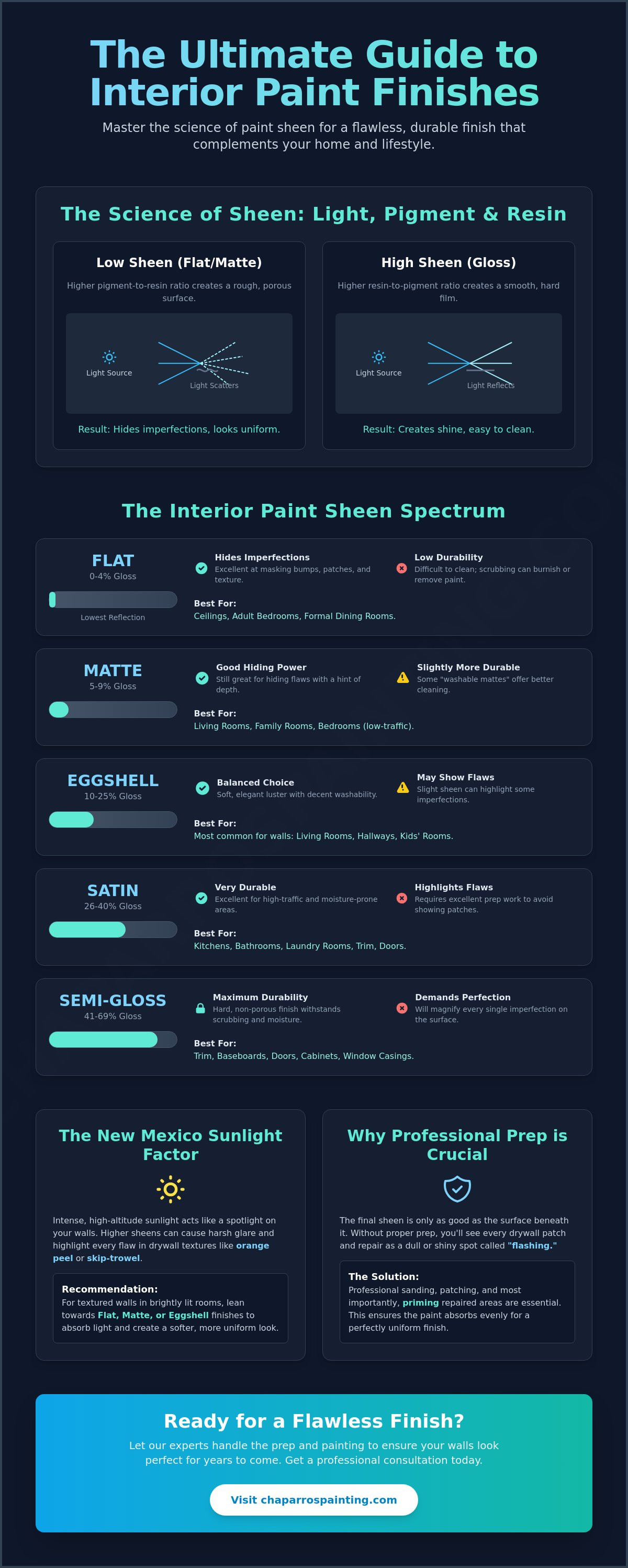
Paint isn't just a liquid color in a bucket; it's a chemical balance designed for specific tasks. To find the best interior paint finish for walls, you must understand what happens after the moisture evaporates. Every gallon of paint consists of pigments for color and resins for binding. Paint Sheen is the technical term for how much light reflects off that dried resin. When a paint has a high resin-to-pigment ratio, the surface dries into a smooth, hard film. This film allows light to bounce off directly, creating a visible glow. Conversely, paints with more pigment and less resin have a microscopically rough surface. This texture scatters light in various directions, which results in a flat or matte appearance.
This light behavior creates a fundamental trade-off between hiding power and light bouncing. Flat finishes are excellent at hiding wall imperfections because they don't create highlights on top of bumps or dents. However, they lack the protective "film" that makes a surface easy to clean. Higher shine levels offer better washability but act as a spotlight for every drywall patch. Choosing the best interior paint finish for walls requires you to decide which of these factors matters most for your specific space.
The Science of Light Reflectance Value (LRV)
Light Reflectance Value, or LRV, is a numerical scale from 0 to 100 that represents the percentage of light a color reflects. It's a vital metric for predicting how a room will feel at different times of the day. A high LRV means the paint reflects most of the light that hits it; a low LRV means the color absorbs light. The finish you select will change how this value performs in your home. A flat finish absorbs light into the pigment, which makes colors look richer and more accurate to the original swatch. A gloss finish reflects light so efficiently that the color can appear much lighter or even washed out under bright New Mexico sun.
Durability vs. Aesthetics: The Great Trade-Off
The durability of a paint job is directly tied to its resin content. High-resin finishes like semi-gloss or high-gloss create a non-porous, hard surface. This film is scrubbable and resistant to moisture, which is why it's the standard for baseboards and trim. Low-resin finishes like flat or matte are porous. If you try to scrub a traditional flat paint, you'll often burnish the surface or wipe the paint away entirely. This used to mean that high-traffic areas always had to be shiny. Modern "washable mattes" have changed these rules. These premium products use advanced resins to provide the sophisticated look of a flat finish with the durability of a satin, giving homeowners more flexibility than ever before.
The Interior Paint Sheen Spectrum: From Flat to High-Gloss
New Mexico's high-altitude sunlight is notoriously unforgiving. A paint finish that works well in a cloudy climate can become a source of eye strain here. Selecting the best interior paint finish for walls involves balancing that intense light against your home's activity level. The sheen spectrum moves from zero reflection to a mirror-like shine; each step serves a specific purpose in your home's design and maintenance.
Low-Sheen Finishes: Flat and Matte
Flat and matte finishes sit at the bottom of the shine scale. They're the preferred choice for ceilings and adult bedrooms where traffic is low. "Dead flat" is essential for ceilings because it absorbs light completely. This makes the surface look uniform despite any minor structural shifts or drywall seams. These finishes are the best interior paint finish for walls when you need to hide imperfections like patches or old textures. The downside is their vulnerability. They're difficult to clean, and scrubbing them often leaves a permanent "burnished" shiny spot where the paint was rubbed.
Mid-Sheen Finishes: Eggshell and Satin
Eggshell and Satin are the "workhorses" of the residential painting industry. They represent the sweet spot for living rooms, hallways, and kids' bedrooms. Eggshell offers a low luster that feels soft and elegant, similar to the surface of a real egg. Satin has a slightly higher velvety shine and better moisture resistance. These sheens provide enough durability to handle a damp cloth without the harsh reflection of a gloss. They offer a professional look that balances a sophisticated aesthetic with the reality of a busy household.
High-Sheen Finishes: Semi-Gloss and High-Gloss
High-sheen finishes are reserved for high-impact areas like trim, doors, and cabinets. They're incredibly durable and moisture-resistant, making them ideal for bathrooms. However, they're also the most unforgiving. Every single bump, drywall nick, or sanding mark will be visible under a high-gloss coat. Because these finishes reflect so much light, they can also shift how your color appears throughout the day.
Be careful with maintenance on these surfaces. Touching up a spot on a satin or semi-gloss wall often results in "flashing." This occurs when the new paint has a different luster than the original, creating a visible patch that stands out. For a uniform look, you often have to repaint the entire wall from corner to corner. If your walls need professional attention before you choose a finish, our team provides expert drywall repairs to ensure your new sheen looks its absolute best.
Room-by-Room Recommendations for Homeowners
The best interior paint finish for walls depends entirely on how you use each space. A finish that works in a quiet home office will likely fail in a busy hallway or a humid bathroom. Choosing correctly the first time saves you from repainting sooner than necessary. In modern homes with open-concept floor plans, transitions become the biggest challenge. You should avoid changing sheens on a continuous wall. Instead, wait for a natural breaking point like a corner, a doorway, or a change in wall material to switch your finish. This keeps the visual flow of your home consistent and professional.
High-traffic areas like entryways and mudrooms require a "workhorse" finish. Satin is usually the right choice here. It provides enough resin to resist the scuffs from shoes and bags while remaining easy to wipe down. If you want to add sophisticated depth to a room without changing colors, try using different sheens of the same paint. Painting your walls in a matte finish and your trim in a semi-gloss of the exact same color creates a subtle, high-end look that feels intentional and well-crafted.
Kitchens and Bathrooms: Managing Moisture
Steam and grease are the primary enemies of a long-lasting paint job. In these spaces, you need a finish that acts as a non-porous shield. Satin or semi-gloss finishes create a tight film that prevents moisture from seeping into the drywall. This is especially important in bathrooms where high humidity can cause flat paint to peel or develop mildew. Many premium paints designed for these rooms include anti-microbial additives to further protect your home's air quality. A higher sheen also makes backsplashes much easier to clean. You can wipe away cooking splatters or soap scum without worrying about the paint rubbing off or staining.
Living Rooms and Bedrooms: Prioritizing Comfort
Living areas and bedrooms are spaces for relaxation, so the best interior paint finish for walls here is usually a lower sheen like matte or eggshell. These finishes create a soft, inviting atmosphere by diffusing light rather than reflecting it. In New Mexico, our intense natural sunlight can make satin or gloss finishes feel too bright or harsh in a large living room. A matte finish softens those reflections and helps hide minor wall imperfections. If your room has architectural features like crown molding or built-in shelving, use a semi-gloss finish on those elements. The contrast between the matte walls and the slightly shiny trim highlights the craftsmanship of your home without overwhelming the senses.
The Texture Factor: Why NM Drywall Changes the Rules
New Mexico homes feature a unique architectural character, but that character often comes with heavily textured walls. Most national painting guides assume you're working with a perfectly smooth surface. Here in the Southwest, we deal with orange peel, knockdown, and heavy skip-trowel textures daily. The best interior paint finish for walls in our region must account for these physical bumps and ridges. When you apply a high-sheen paint to a textured surface, you create "specular highlights." These are tiny points of intense light reflection on the peak of every texture bump. Light hitting a glossy bump creates a shadow that emphasizes the texture, making the wall look much rougher than it actually is.
Hiding Imperfections with Low Sheen
Flat and matte finishes are the true allies of older homes in areas like Rio Rancho. After decades of settling and various drywall patches, these walls often have a lot of "character" that you might want to hide. Flat paint is designed to scatter light in every direction. This scattering effect blurs the lines of patches and masks the unevenness of a skip-trowel finish. We often recommend a high-quality matte for walls that have seen significant wear. It provides just enough durability for a bedroom or hallway while maintaining that soft, non-reflective look that keeps your walls looking uniform. It masks the flaws.
When Texture and Gloss Collide
Using a semi-gloss or high-gloss finish on a knockdown texture is a common mistake that leads to visual "noise." The high reflectivity causes the wall to look cluttered because your eyes catch every shadow and highlight simultaneously. It creates a mess. This doesn't mean you have to give up on shine entirely. We suggest keeping your trim, doors, and baseboards glossy to provide a clean contrast against flat or eggshell walls. This creates a professional, layered look without the distraction of shiny, textured drywall.
If you have your heart set on a high-gloss look for your walls, you'll need to invest in a "Level 5" finish first. This process involves applying a thin skim coat of joint compound over the entire surface to sand it perfectly smooth. Without this step, even the best interior paint finish for walls won't look right in a high-gloss sheen. If your current walls are in rough shape, our team can handle the necessary drywall repairs to prepare your home for a flawless new coat of paint.
Professional Prep: How Chaparro's Painting, LLC Ensures a Flawless Finish
A high-quality paint choice is only half the battle. Even the best interior paint finish for walls will look amateur if the surface beneath it is uneven or damaged. Professional results depend entirely on the quality of the preparation. At Chaparro's Painting, LLC, we treat the prep phase as the most critical part of every project. Industry data shows that up to 70% of the labor on a professional paint job is dedicated to preparation, not just applying the color. We focus on meticulous sanding and cleaning to ensure the paint bonds correctly. We remove dust and debris that could otherwise create bumps under your new finish. Without this solid foundation, higher sheens like satin or semi-gloss will simply serve as a spotlight for previous wall damage.
Our team understands that a wall is a canvas that requires a smooth start. We don't cut corners on the small details because we know they become big problems once the paint dries. This disciplined approach is what separates a DIY attempt from a seasoned craftsman's results. We prioritize order and cleanliness throughout the entire process. We use high-quality drop cloths and plastic sheeting to protect your flooring and furniture from dust and splatters. This gives you peace of mind and a result that lasts for years without peeling or bubbling.
The Drywall Repair Connection
Our process begins with identifying every imperfection. We handle everything from small nail holes to significant cracks through our dedicated drywall repairs. Once the patches are dry, we sand them flush with the surrounding wall until the transition is invisible to the touch. A common mistake is skipping the primer on these patches. This leads to "flashing," a common problem where the patch absorbs the paint differently than the rest of the wall. It creates a dull or shiny spot that ruins the uniform look of your chosen sheen. We use professional-grade primers to seal these repairs and ensure the best interior paint finish for walls looks consistent from corner to corner. For homeowners looking at exterior work, we apply this same level of detail to stucco repairs. This ensures your exterior finish stands up to the harsh New Mexico elements.
Choosing Your Finish with Confidence
We believe in a no-pressure approach to home improvement. Selecting the right sheen shouldn't feel like a guessing game or a high-stakes gamble. Our team brings over 20 years of local experience in Rio Rancho and Santa Fe to every project. We walk through your home and evaluate your lighting, wall texture, and daily traffic patterns. This helps us recommend a finish that balances your aesthetic goals with the durability your family needs. We explain the technical reasons behind every suggestion so you can feel confident in your purchase before the first brushstroke. You deserve a steady, reliable partner who values your time and your home's value. Contact Chaparro's Painting, LLC today for a free interior painting estimate.
Start Your Home Transformation with the Right Finish
Selecting the best interior paint finish for walls is a strategic decision that bridges the gap between your design vision and your home's daily reality. You now understand how light interacts with New Mexico textures and why professional prep work is the foundation of every high-end result. By choosing a sheen that handles your family's activity while masking minor surface flaws, you ensure your investment looks great for the long term. A professional finish isn't just about the first day; it's about how the paint performs years down the road.
Chaparro's Painting, LLC brings over 20 years of residential painting experience to every project in the Rio Rancho area. As a local, family-owned business, we specialize in the meticulous drywall repairs and stucco repairs that make a flawless finish possible. We take quiet pride in doing the job right the first time and providing our neighbors with the peace of mind they deserve. Our team is committed to transparency and thoroughness from the first consultation to the final brushstroke.
Get a Free Interior Painting Quote from Chaparro's Painting, LLC. We are ready to help you choose your finish with confidence and deliver a professional look that transforms your living space.
Frequently Asked Questions
What is the most popular paint finish for living room walls?
Eggshell is the most popular choice for living room walls. It provides a soft, low-luster finish that looks professional under different lighting conditions. It's often the best interior paint finish for walls when you want a balance of elegance and easy maintenance in a standard living area.
Can I use flat paint in a bathroom if it is "washable"?
We don't recommend using flat paint in bathrooms. Even if the label says "washable," flat paint is porous and absorbs moisture. Steam from showers can lead to mildew growth or peeling over time. It's better to use a satin or semi-gloss finish to ensure the surface remains moisture-resistant and durable.
Is eggshell or satin better for hiding wall imperfections?
Eggshell is better for hiding imperfections than satin. The lower the sheen, the less light reflects off the wall. This helps blur the edges of drywall patches or heavy textures. Satin has a higher luster and will highlight every small nick or sanding mark when the light hits it directly.
Why does my paint look shiny in some spots and dull in others?
Uneven shine is usually caused by a phenomenon called "flashing." This happens when the wall absorbs paint at different rates. It often occurs because drywall patches weren't primed before the topcoat was applied. Proper priming ensures a uniform surface and a consistent sheen across the entire wall.
What is the best paint finish for trim and baseboards?
Semi-gloss is the industry standard for trim and baseboards. These areas take the most abuse from shoes, vacuum cleaners, and pets. A semi-gloss finish creates a hard, durable film that is much easier to wipe clean than lower sheens. It also provides a nice visual contrast against flatter wall finishes.
How do I clean walls with a flat or matte finish without ruining them?
Clean flat or matte walls using a soft, damp microfiber cloth and a gentle touch. Don't use abrasive cleaners or heavy pressure. Scrubbing these finishes can cause "burnishing," which leaves a permanent shiny spot on the wall. If a stain is stubborn, you might need to touch up the area with leftover paint instead of scrubbing hard.
Do I need to sand the walls if I am changing from a gloss to a flat finish?
You must lightly sand the surface when switching from a gloss finish to a flat one. Glossy paint is slick and non-porous, which makes it hard for new paint to bond. Scuff-sanding with a fine-grit sandpaper creates a "tooth" for the new layer to grip. This step prevents the new paint from peeling or bubbling later.
What paint finish do professional painters use most often?
Professional painters use eggshell for walls and semi-gloss for trim more than any other combination. This setup is frequently the best interior paint finish for walls because it hides minor flaws while providing a surface that can be cleaned. It's a reliable choice that works well in almost every residential setting and provides a clean, high-quality look.


