

A fresh coat of paint may cover white mineral deposits, but it won’t keep them from returning if moisture is still moving through the stucco. For stucco efflorescence removal in Albuquerque, start by identifying the moisture pattern, clean deposits without damaging the finish, and address the cause before painting or resealing.
It’s understandable to reach for vinegar or paint when the marks look like a surface problem. But vinegar can affect stucco or its coating, and paint alone won’t stop minerals from moving. This article explains what causes efflorescence, when cleaning may be enough, and which signs call for closer inspection. You’ll also learn how cleaning and resealing fit into a sound repair plan.
Key Takeaways
- White mineral deposits can signal moisture moving through stucco, but they don’t prove the wall is leaking or needs replacement.
- Dry brushing followed by a controlled rinse can address loose deposits; vinegar may affect stucco or its coating.
- Recurring deposits, visible cracks, or widespread staining call for closer inspection before cleaning or resealing.
- Painting over efflorescence won’t stop mineral movement, so the moisture cause matters before a new finish is applied.
- Learn how efflorescence differs from paint chalking and biological growth, and why the distinction affects the next step.
What Causes Efflorescence on Stucco?
White deposits form when water carries minerals through stucco and then evaporates. For homeowners considering stucco efflorescence removal in Albuquerque, the pattern of deposits can offer clues about moisture movement.
Moisture Movement and Mineral Deposits
Efflorescence is mineral residue left behind when moisture moves through stucco and evaporates. The white staining shows where water has traveled, but it doesn’t prove the wall is leaking internally or needs replacement.
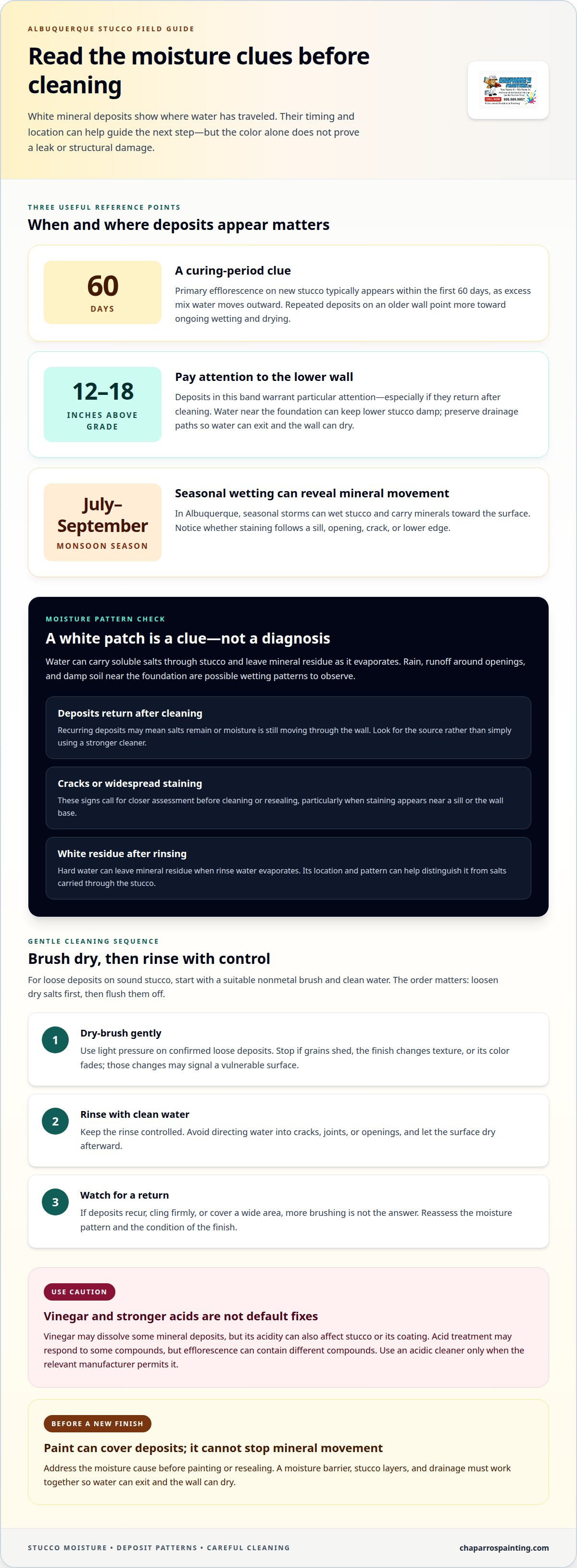
The Stucco Manufacturers Association describes primary efflorescence as occurring during curing and secondary efflorescence after cured material undergoes repeated wetting and drying. Primary deposits on new stucco typically appear within the first 60 days, as excess mix water moves outward. Repeated deposits on an older wall point toward ongoing moisture movement.
Stucco contains water-soluble salts that can become visible at the surface. The layers behind the finish matter, too. Stucco covers a base coat supported by lath and a moisture barrier. These components must work together with drainage, allowing water to exit and the assembly to dry. A barrier can help limit water entry, but proper application and drainage remain important.
Water Sources and Moisture Migration
Water sources and moisture migration explain how recurring wetting carries minerals through stucco. Identifying the pattern can help distinguish a curing deposit from a continuing source.
Rain can wet exposed walls, while runoff may collect around sills or openings. Water near the foundation can keep the lower stucco damp. Deposits in the first 12 to 18 inches above grade warrant particular attention, especially if they return after cleaning.
Moisture may also collect beside a sill or move from soil near the foundation. Notice where staining begins and whether it follows an opening, crack, or lower edge. These patterns can help locate possible water entry. Prevent avoidable wetting while preserving drainage paths. Filling every opening along the bottom can block water from exiting and the wall from drying.
Climate, Hard Water, and Damage Signs
Albuquerque has dry air, daily temperature swings, and seasonal storms. New Mexico stucco efflorescence commonly appears after monsoon rainfall from July through September, when wetting can carry minerals toward the surface.
Hard water can leave mineral residue when rinse water evaporates. That residue differs from salts carried through stucco, so location and pattern matter. A white deposit alone doesn’t establish structural damage. In Albuquerque, stucco efflorescence removal should follow an assessment of the wall, not its color alone.
Efflorescence indicates moisture movement, but not necessarily water intrusion or structural damage. Recurring deposits, cracks, or staining near a sill or wall base warrant closer assessment. They may point to ongoing wetting rather than a one-time surface event.
There isn’t one yes-or-no answer about Albuquerque permits for every stucco repair. Surface cleaning differs from work that changes the wall assembly, so requirements depend on the repair scope and applicable local rules.
Will Vinegar Remove Efflorescence?
Vinegar may dissolve some mineral deposits, but its acidity can also affect stucco or its coating. Start with a gentler cleaning method rather than treating vinegar or stronger acids as the default.
Dry Brushing Away Surface Salts
Dry brushing loosens surface salts without first dissolving them in water. That matters because dissolved salts can move again as the wall dries.
Use a suitable nonmetal brush on confirmed loose deposits over sound stucco. Apply light pressure. Stop if grains shed, the finish changes texture, or its color fades. Those changes suggest the surface may be vulnerable, and continued brushing could damage it rather than improve its appearance.
Dry brushing works best for deposits sitting on the surface. It won’t address the moisture source or remove salts embedded in a coating. If deposits cling firmly, cover a wide area, or return after cleaning, more force isn’t the answer. Let the deposit type and condition of the exterior finish guide the next step.
Rinsing Stucco with Care
Controlled rinsing follows brushing to carry loosened salts off the wall. The order matters: remove dry material first, then flush the surface with clean water.
Omega Products International recommends dry-brushing stucco efflorescence, then flushing the wall with clean water as a simple cleaning method. Keep the rinse controlled and avoid directing water into cracks, joints, or openings. The goal is to clear loosened deposits without adding avoidable moisture behind the stucco.
Let the surface dry, then watch for returning deposits. A fresh white patch may mean salts remain or moisture is still moving through the wall. Rinsing can improve the surface, but it doesn’t replace repairs when water entry continues.
Dilute Acid Washing
Dilute acid washing uses an acidic cleaner to dissolve certain mineral compounds. Choosing carefully matters because the wrong treatment can affect the stucco finish as well as the deposit.
Calcium carbonate may respond to acid, but efflorescence can contain different compounds. Don’t assume acid cleaner is the next step for stubborn deposits. Vinegar is acidic, too, and may affect stucco or its coating. Use it only when the relevant manufacturer permits it.
Choose a cleaning method based on the deposit and finish, not just the white appearance. Acid treatment without correcting ongoing moisture won’t produce a durable result. Persistent deposits call for attention to the cause, not simply a stronger cleaner.
Safe Cleaners and Tools
For loose deposits on sound stucco, a suitable nonmetal brush and clean water are a cautious starting point. These tools matter because aggressive abrasion or an incompatible cleaner can alter the finish.
Safe removal depends on the surface condition and product instructions. Don’t substitute vinegar or another acid without manufacturer approval. If brushing sheds grains, alters texture, or removes color, stop. A professional assessment can help determine whether cleaning, surface repairs, or finish work is the right next step.
Professional removal costs depend on the affected area, deposit condition, access, and any needed repairs; pricing is provided after a quote request. When deposits recur or the finish is damaged, stucco repairs may be part of addressing the surface before it’s repainted.
Stucco inspection, cleaning, and resealing
Inspect the stucco before cleaning, then match the treatment to its condition. Cleaning, repairs, and a new finish work best once the moisture pattern is understood.
Inspecting Stucco Before Cleaning
Inspection means assessing deposits, cracks, drainage, and finish condition before choosing a cleaning method. It helps prevent surface work from hiding a problem that needs repair.
Note whether deposits are isolated or spread across an elevation. Look at nearby openings, sills, and the wall base for signs of recurring wetting. Cracks exceeding 1 mm may signal structural movement. Deposits that return within 30 days of cleaning call for removal plus investigative repair, rather than another quick wash.
When Surface Cleaning Is Appropriate
Surface cleaning suits limited deposits on sound stucco when the finish remains intact. The affected area, age of the deposits, and presence of cracks help determine whether cleaning alone is appropriate.
Cleaning may be suitable when deposits cover less than 10% of the wall face. It can also suit deposits on stucco less than 90 days old when no cracks are detectable. For loose deposits, test light brushing with a suitable nonmetal brush. Stop if the finish sheds grains, changes texture, or loses color.
Deposits extending across more than one full elevation may point to a system-level issue. Repeated staining also suggests that cleaning alone won’t address the underlying moisture source. Preserve drainage paths at the wall base; filling every opening can obstruct water from exiting and the wall from drying.
Risks of Vinegar and Acidic Cleaners
Vinegar and other acidic cleaners can dissolve some mineral deposits, but they may also affect stucco or its coating. That risk makes the finish condition and cleaner instructions important before treatment.
Use vinegar only when the relevant manufacturer permits it. Don’t assume a stronger acid is the next step for stubborn deposits. Chemical treatment without correcting the moisture source won’t provide a durable result. If a white mark returns after cleaning, reassess the wall rather than simply increasing the cleaner’s strength.
After cleaning, let the surface dry and assess the finish before applying a coating. A fog coat or paint may refresh the appearance, but efflorescence can emerge through finishes. A new coating alone doesn’t show that mineral movement has stopped. Address moisture and preserve drainage before resealing or repainting, so you don’t apply the finish over an active problem.
Annual inspections can help catch new cracks before they become moisture pathways. Follow the evidence: assess the wall, clean suitable deposits, investigate recurring moisture, then apply a finish only when the surface is ready.
Acid treatments and neutralization
Acid cleaners can dissolve some mineral deposits, but they aren’t an automatic next step. The right choice depends on the deposit, the stucco’s condition, and whether moisture movement continues.
Efflorescence can contain different soluble salts, so one cleaner won’t suit every crystalline deposit. Diluted muriatic acid is described for certain deposits, including calcium carbonate or calcium sulfate. For those deposits, one stated mixture is five parts hydrochloric acid to one hundred parts water. Heavy deposits are described with a different dilution, one part acid to ten to twenty parts water. These are distinct treatments, not interchangeable instructions.
A typical 10% muriatic acid solution is also described for efflorescence removal, with neutralization protocols. The differing ratios show why acid strength shouldn’t be selected by appearance alone. A white patch may contain different compounds, and the stucco finish can react differently. Acid treatment can damage the surface, alter color, or affect coating adhesion.
Neutralization is part of an acid-treatment plan, not an optional finishing touch. It addresses residual acidity after application. The right neutralizing product and process depend on the cleaner and stucco system. Follow the cleaner manufacturer’s directions and the stucco finish requirements. Without appropriate neutralization, residues may interfere with later repairs or coating application.
New stucco needs particular care during curing. Primary efflorescence can appear within the first 60 days as excess mix water moves outward. Aggressive acid application during this period may affect a still-curing surface. For cured walls, cracks and recurring damp areas matter too. Acid can clear visible deposits, but it won’t stop salts from moving if water keeps entering the assembly.
Before treatment, distinguish loose surface residue from deposits linked to an ongoing moisture source. Check whether the finish is sound and whether cracks or drainage concerns are present. A chemical wash without correcting the source won’t produce a durable result. If deposits return after cleaning, investigate moisture movement instead of increasing acid strength.
For confirmed calcium-based deposits, acid may be appropriate when the stucco and cleaner instructions allow it. For uncertain deposits, fragile finishes, or recurring staining, acid shouldn’t be the default. A suitable nonmetal brush and clean-water rinse are gentler starting points for loose surface salts. Match the treatment to the wall. The goal is clean stucco without compromising its finish or ability to drain and dry.
Distinguishing efflorescence from paint chalking and biological growth
A white or pale coating on stucco can have several causes. Identifying whether it’s mineral, paint residue, or biological growth helps guide the next step.
Compare the Material and Its Pattern
Efflorescence consists of mineral deposits carried to the surface by water. Paint chalking comes from a weathering paint film, while mold is biological growth. Their appearance can overlap, so color alone won’t identify the cause.
Look at the wall’s structure and the pattern of the residue. Deposits tracing a crack, sill, or lower wall may relate to moisture movement. Paint chalking may appear across an exposed painted area as the coating weathers. These patterns offer useful clues, but they don’t confirm the cause on their own.
What Paint Chalking Looks Like
Sherwin-Williams describes paint chalking as fine powder produced when a paint film weathers. That differs from minerals carried outward by water, even when both leave pale residue on an exterior finish.
Consider the original coating and the surrounding surface. Powder across a painted area may indicate chalking. Distinct deposits clustered near a sill or crack may be moisture-related minerals. A wall can have more than one condition, so don’t assume one patch explains every visible mark.
How Biological Growth Differs
Mold is biological growth, not mineral deposits or weathered paint residue. A white appearance alone can’t reliably distinguish mold from efflorescence, particularly when the material is faint or mixed with surface dirt.
Consider the location and nearby conditions, then assess the material’s appearance alongside the stucco finish. An unexplained moldy odor can warrant investigation even when growth isn’t visible, according to the EPA’s guidance on hidden mold. Don’t treat an uncertain patch as mineral residue based only on its color.
A careful assessment compares the suspected material, its location, and the wall’s condition. Note whether the mark sits on paint, crosses onto bare stucco, or follows a visible crack. A gentle, limited inspection can show whether the finish sheds powder or has loose deposits. Stop if the original surface changes, grains come away, or color is lost.
Choose the response based on the cause. Mineral deposits may need cleaning and attention to moisture movement. Chalking points to a weathering paint film, while biological growth calls for a different assessment. Painting over unidentified residue can hide its appearance without correcting the underlying issue.
If the wall is ready for a refreshed finish after the cause is addressed, discuss stucco painting as a next step.
Chaparro's Painting, LLC
Chaparro's Painting, LLC can help when efflorescence has damaged stucco or left it ready for a new finish. If deposits keep returning, address the moisture source before painting; a coating alone won’t stop mineral movement. Stucco repairs can address damaged areas, while stucco painting can refresh the exterior once the surface is ready. The right next step depends on the wall’s condition and whether it needs repair before refinishing.
If your stucco needs repair or repainting after efflorescence, contact Chaparro's Painting, LLC to discuss the work.
Choose the Right Next Step for Your Stucco
The next decision is whether the wall is ready for a new finish or needs repair first. Keeping a clear record of where staining appears, whether it returns, and any visible surface changes can help guide that decision. It also keeps the conversation focused on your home’s condition, rather than a quick cosmetic fix.
For stucco efflorescence removal in Albuquerque, start with the wall itself. Share what you’ve observed and the result you want, whether that means repairing damaged stucco or refreshing the exterior finish. Chaparro's Painting, LLC can discuss the work that fits your home and its current condition.
Contact Chaparro's Painting, LLC to talk through your stucco project. A practical next step can make the path forward feel clear and manageable.
Frequently Asked Questions
Can You Paint Over Efflorescence?
Painting over efflorescence may hide the marks temporarily, but it won’t stop minerals from moving through the wall. Deposits can show through paint or interfere with a lasting finish. Before repainting, determine whether the surface is sound and whether moisture continues to reach it. A fresh coating makes more sense after deposits are removed and the wall is ready for paint.
Is Efflorescence Dangerous?
Efflorescence is a mineral deposit, but its presence alone doesn’t prove the wall is leaking internally or needs replacement. The more useful question is what the pattern may reveal about moisture movement. Check whether deposits recur or appear near cracks and openings. If a musty odor accompanies the staining, the EPA says an unexplained moldy odor can warrant investigation, even without visible growth.
Is Efflorescence Mold?
No. Efflorescence consists of mineral deposits, while mold is biological growth. Their appearance can overlap, so color alone can’t reliably identify a white patch. Consider where it appears and whether it follows a damp area, crack, or painted surface. If the material’s source remains unclear, don’t assume it’s efflorescence; cleaning the wrong condition may leave the actual issue unaddressed.
What About Paint or a Clear Sealer?
Paint or a clear sealer shouldn’t be treated as proof that mineral movement has stopped. Efflorescence can appear through acrylic finishes or paint, and deposits beneath a coating can affect the finish. Consider a coating only after addressing the wall’s condition and moisture pattern. If deposits return beneath a new finish, the surface may need further assessment rather than another coat.
Will Efflorescence Go Away on Its Own?
Some early efflorescence can lessen as new stucco cures and dries, but deposits may recur while moisture moves through the wall. The intensity of efflorescence is generally described as practically eliminated by about the third year. That doesn’t mean every deposit will disappear on its own. If staining persists or returns after cleaning, the location and moisture source matter more than waiting alone.
What causes efflorescence on stucco in Albuquerque?
Water dissolves minerals in stucco, carries them toward the surface, and leaves deposits when it evaporates. In New Mexico, efflorescence commonly appears after monsoon rainfall from July through September. Rain isn’t the only possible source; water near a sill or wall base can also contribute. The location and recurrence of deposits help distinguish a brief wetting event from ongoing moisture movement.
Can vinegar or muriatic acid damage stucco or landscaping?
Yes, acidic cleaners can affect stucco or its coating, and vinegar should be used only if the relevant manufacturer permits it. Don’t assume muriatic acid is a safe upgrade for stubborn deposits. Keep cleaning products and runoff away from landscaping, and follow product directions for use and handling. If the finish changes, sheds grains, or loses color, stop treatment.
How to tell whether white deposits are efflorescence, paint, or mold?
Look at the material and where it appears, but don’t rely on color alone. Efflorescence is mineral residue; Sherwin-Williams describes paint chalking as fine powder from a weathering paint film. Mold is biological growth, and its appearance may not reliably distinguish it from mineral deposits. A patch following a crack or damp area offers a clue, not a diagnosis. An unexplained musty odor warrants investigation.


