

Annual cleaning and inspection are the basics of caring for a wood deck. For a new wood deck in Bernalillo, stain it when the wood is ready and conditions allow it to dry properly; a full refinish every 2-3 years can help double a wood deck’s life.
Choosing the right stain matters, but timing matters just as much. Albuquerque’s strong sun, dry air, and summer moisture can all affect exposed wood, so applying stain in unsuitable conditions may not provide the protection you expect.
This guide covers what to inspect and clean each year, how to prepare boards, and how to choose a suitable time to stain. You’ll also learn how local weather affects staining a new wood deck in Bernalillo, so you can plan around dry conditions and maintain the wood without assuming it needs a full refinish every year.
Key Takeaways
- Make annual deck care a routine: clean the boards and inspect the fasteners and framing for signs of wear.
- Plan staining around dry conditions, since moisture and temperature changes can affect surface preparation and finishing.
- Prepare the wood thoroughly before applying stain; cleaning and careful sanding help create a more even finish.
- Use seasonal checks to spot fading, dryness, or moisture intrusion early and decide when the deck needs refinishing.
Albuquerque high-desert weather considerations
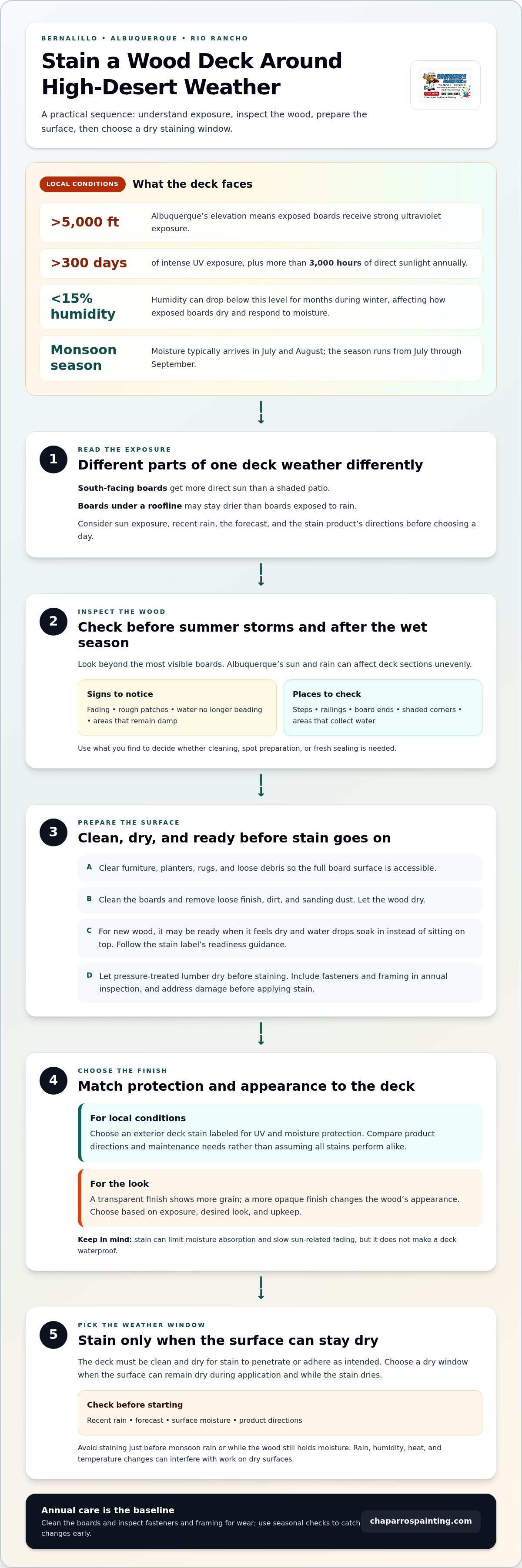
For staining a new wood deck in Bernalillo, plan around intense sun, dry air, and seasonal moisture. Albuquerque sits above 5,000 feet, where strong ultraviolet exposure reaches exposed boards for much of the year. Albuquerque receives more than 300 days of intense UV exposure and over 3,000 hours of direct sunlight annually. That constant exposure can fade wood and wear down its surface protection.
Dry air is another factor. Albuquerque’s humidity can drop below 15% for months during winter, which affects how exposed boards dry and respond to moisture. Then summer brings a sharp change. Monsoon moisture typically arrives in July and August, and rain can soak boards after long dry periods. This cycle of drying and wetting can stress unprotected wood, especially on open decks without shade.
These conditions matter across Bernalillo, Albuquerque, and Rio Rancho. A south-facing deck gets more direct sun than a shaded patio, while boards beneath a roofline may stay drier than those exposed to rain. Before choosing a staining day, consider sun exposure, recent rain, the forecast, and the product’s directions. The surface must be clean and dry for the stain to penetrate or adhere as intended.
Permits and HOA rules relate to different parts of a deck project. Staining alone does not change a deck’s structure, but structural additions or alterations may require permits, particularly for decks attached to a house or elevated above the ground. HOA rules may set appearance standards, so review any requirements for stain color or finish before starting.
For seasonal care, inspect the boards before summer storms and again after the wet season. Look for fading, rough patches, water that no longer beads, or areas that remain damp. These signs help determine whether cleaning, spot preparation, or fresh sealing is needed. Albuquerque’s sun and rain can affect different sections unevenly, so check steps, railings, board ends, and shaded corners rather than judging the whole deck from one spot.
Choose a dry weather window when the surface can stay dry during application and while the stain dries. Rain, humidity, heat, and temperature changes can interfere with work on dry surfaces. Around Albuquerque and Rio Rancho, check the forecast and the deck’s condition to avoid staining just before monsoon rain or while the wood still holds moisture.
Stain protection against water, UV damage, and wear
Deck stain can limit moisture absorption, slow sun-related fading, and protect boards that get heavy use. Results depend on sound preparation, a suitable stain, and an even application.
Water and Wear Protection
Stain can slow water absorption, but it does not make a deck waterproof. Check board ends, stairs, and areas near planters, where moisture and foot traffic can wear the finish sooner. Look for bare patches or rough grain that need attention before applying another coat. Treating these areas helps keep protection more consistent across the deck.
UV Protection for Outdoor Wood
Sunlight breaks down wood fibers and fades the surface over time. An outdoor stain can help limit UV damage while preserving more of the wood’s natural appearance. Choose a finish based on how much grain you want to see, then follow the product directions. Inspect sun-exposed railings and boards separately, since their finish may fade faster than shaded sections.
Preparation and Finishing for Protection
Stain adheres best to a clean, dry surface free of loose finish, dirt, and sanding dust. New wood may be ready when it feels dry and water drops soak in instead of sitting on top, but follow the stain label’s readiness guidance. Let pressure-treated lumber dry before staining. Apply an even coat to board faces and exposed ends according to the product directions.
Choosing Stain for Local Conditions
For New Mexico’s strong UV, dry spells, and monsoon rain, choose an exterior deck stain labeled for UV and moisture protection. Compare finish options and maintenance directions rather than assuming all stains perform alike. A transparent finish shows more grain, while a more opaque one changes the wood’s appearance. Choose based on the deck’s exposure, the look you want, and the upkeep involved.
Before choosing a stain, note whether the deck is pressure-treated, previously coated, or bare. Those conditions affect preparation and the finish that can be applied. If you want help planning a thorough wood-staining project, professional deck finishing can provide a practical next step.
In Albuquerque, delayed protection can leave a deck more exposed to fading, surface dryness, and moisture intrusion. Reviewing the finish during routine upkeep is more useful than waiting for widespread wear, especially after prolonged exposure. When fading or dryness appears, use the product’s maintenance guidance to decide whether cleaning, preparation, or fresh stain is appropriate. Don’t apply a new coat over a surface that is not ready.
New Mexico’s monsoon season, from July through September, can take a deck from dry to soaked and back again, sometimes within the same day. Assess the finish in light of weather exposure, not just its appearance on a dry afternoon. Check areas that collect water or show uneven wear, and make sure the surface is dry and properly prepared before maintenance. Regular inspection and care help preserve the protection stain offers, but they cannot replace sound boards or timely repairs.
Deck preparation and pressure cleaning
Before staining new wood decking, remove dirt, let the boards dry, and prepare a clean, even surface. Include cleaning and inspection of the fasteners and framing in annual deck maintenance, and address damage before applying stain.
A careful process helps prevent coating over residue or loose fibers. Follow these steps:
- Clear the deck. Remove furniture, planters, rugs, and loose debris so the full board surface is accessible. Check between boards for trapped leaves and dirt, especially near railings and stairs.
- Inspect the structure and boards. Look for loose fasteners, lifted edges, splinters, cracks, and soft or discolored areas. Check the framing you can see beneath the deck. Cleaning cannot repair damaged wood, so resolve visible problems before finishing.
- Choose a cleaning method. A deck cleaner and a stiff brush can lift ordinary dirt. Pressure cleaning can remove dirt, mildew, and peeling coatings, but use care. Keep the spray moving and avoid concentrating it on one spot, which can roughen or gouge wood.
- Rinse thoroughly. Work along the boards and clear away cleaner and loosened residue. Pay attention to corners, stair edges, and spaces beside posts, where debris can collect.
- Let the wood dry. Stain should not go onto damp boards. Check the product directions and the wood’s condition before continuing; moisture can interfere with an even finish.
New lumber may have a smooth, mill-glazed surface that resists stain. If water droplets sit on top rather than soaking in, the wood may need more drying or surface preparation. Follow the stain maker’s readiness instructions. Pressure-treated lumber also needs to dry before staining, so don’t rely on its new appearance alone.
After cleaning, inspect the deck again in daylight. Look for cleaner residue, raised grain, missed mildew, and peeling finish. Light sanding can smooth rough fibers, but remove the dust before staining. Avoid sanding away more material than necessary, especially around board edges and fasteners.
Protect nearby doors, siding, and plants from cleaning splashes. Direct rinse water away from the house and clear standing water from low spots. When the surface is clean, dry, and sound, apply stain according to its label. Good preparation helps the finish adhere evenly and prevents dirt or moisture from being trapped underneath.
In Albuquerque, deck staining contractors may use preparation and finishing focused on sealing to protect exposed wood and improve deck durability. That focus can guide a homeowner’s discussion of the work: ask that preparation and finishing remain directed toward sealing exposed wood. A homeowner can also make the desired protective purpose clear before work begins, so the discussion stays tied to wood protection and durability rather than an unrelated preference.
Keep protection of the exposed wood as the objective when planning preparation and finishing. That goal does not replace attention to the surface; it clarifies what the work is meant to achieve. For a deck in Albuquerque, consider the wood’s condition and how sun and moisture exposure affect the preparation and finish.
Deck sanding, staining, and sealing
Sanding, staining, and sealing each serve a different purpose in a deck’s finish. In Bernalillo’s outdoor conditions, match the materials and application method to the wood’s condition, sun exposure, and desired appearance. A consistent process helps the stain settle evenly and leaves fewer rough spots or thin areas to monitor.
Sand only after the deck is clean and dry. Use a suitable method to smooth raised grain, splinters, and rough edges without removing more wood than needed. Pay attention to board ends, stairs, and handrails, where contact and weather can expose fibers. Remove sanding dust before staining, since leftover particles can interfere with an even finish.
Stain can show off natural wood grain while helping protect against UV exposure. Choose a finish based on the look you want and how much grain should remain visible. Test it in an inconspicuous area first, since wood species, surface condition, and existing color affect the result. Apply stain in manageable sections, following the product directions for coverage and drying.
How many coats should you apply? There is no single coat count for every deck. Follow the stain label: the wood’s porosity and the product directions determine whether one coat or another application is appropriate. Don’t add extra stain just to deepen the color, as excess can leave the surface uneven or tacky.
Sealing can protect exposed wood from moisture, but it does not make a deck waterproof. Some deck stains provide color and protection, while other systems call for a separate sealer. Check the label before combining products. An incompatible finish can affect adhesion, appearance, and future maintenance.
- Check coverage: Look across the boards for missed edges, lap marks, or visibly thin areas.
- Follow drying directions: Keep foot traffic and furniture off the deck for the time stated by the product maker.
- Inspect exposed sections: Watch railings, steps, and sun-facing boards for fading or worn finish.
Plan refinishing based on wear, not the calendar alone. A proper deck refinish every 2-3 years can double a wood deck’s life. In practice, direct sun, foot traffic, and water exposure help determine when your deck needs attention. A shaded deck may show different wear than open boards, so inspect the whole surface before deciding.
Keep a simple maintenance record. Note the stain used, application date, and areas that faded early. During your next inspection, this record gives you a useful point of comparison and helps keep future sanding, staining, and sealing consistent.
Seasonal timing for deck painting and staining
For deck staining in Bernalillo, the calendar matters less than dry wood and suitable weather. Plan around spring temperatures, summer monsoon moisture, and the stain label’s application directions.
Seasonal Staining Timing
Spring is a useful planning window across Albuquerque because temperatures for deck painting usually range from 50 to 80 degrees. Check the forecast and the deck surface before starting; rain, humidity, heat, and temperature swings can disrupt work that depends on dry conditions. Unlike interior projects, outdoor staining must account for changing weather throughout application and drying.
Before July and August monsoon moisture arrives, choose a stretch of dry weather that allows the finish to dry as directed. Avoid starting just before forecast rain or during intense heat if the product label advises against it. Repair boards before choosing a staining day.
Curing Time Before Staining
There is no single calendar-based drying time for new decking in Bernalillo. Wood species, pressure treatment, exposure to sun and rain, and airflow beneath the boards all affect drying. Follow the lumber and stain manufacturers’ directions, then assess the boards before applying a finish.
Check that the deck is consistently dry, including shaded edges and board ends. A sunlit surface may feel dry while areas near the house or beneath railings still hold moisture. Check several spots and wait until the wood meets the stain’s stated readiness conditions.
Risks of Staining Too Soon
Staining damp or insufficiently dried wood can interfere with absorption and adhesion. The finish may look blotchy, stay tacky, or wear unevenly. In Bernalillo’s changing conditions, moisture trapped beneath the finish can also undermine the protection the stain is meant to provide.
Staining too early may mean extra sanding or stripping before you can achieve a sound finish. Watch for uneven color, peeling, or areas that remain soft after application. Waiting for suitable wood conditions and following product directions helps avoid preventable repair work.
Use a simple readiness check before opening the stain: review the product label, inspect shaded and exposed boards, and confirm the forecast allows the stated drying conditions. A spring temperature in Albuquerque’s 50-to-80-degree range is useful only when the wood and weather also suit the product.
For a deck that needs professional preparation and staining, request wood staining service as part of your seasonal maintenance plan.
Chaparro's Painting: Interior Painting
Chaparro's Painting, LLC helps homeowners plan interior painting and other residential paint projects after addressing outdoor deck care. If you’re refreshing rooms alongside seasonal maintenance, interior painting can update walls and living spaces. The team also handles exterior painting, cabinet painting, and stucco painting, making it easier to consider related paintwork as part of your home’s upkeep.
For interior painting, start with the rooms and surfaces you want refreshed. For exterior or stucco painting, the surface condition guides preparation. Matching the work to your home’s needs keeps expectations practical and the project focused.
Visit chaparrospainting.com to discuss your home painting project.
Plan the next step for your home
A plan for staining a new wood deck in Bernalillo starts with the boards’ condition and the finish you want. Set a reminder to inspect the deck after seasonal weather changes and note areas that need attention. This simple record helps you make steady decisions instead of waiting for wear to become obvious.
If your outdoor project has you considering other updates, Chaparro's Painting also offers Interior Painting, Exterior Painting, and Cabinet Painting. You can discuss the areas you want to refresh and decide what fits your home and schedule. Clear priorities make it easier to move from a maintenance task to a broader home improvement plan.
For help with a residential painting or wood staining project, contact Chaparro's Painting. A thoughtful plan is a practical place to start, and you can take the next step at your own pace.
Frequently Asked Questions
What maintenance does a wood deck need annually?
Once a year, clean the deck and inspect its boards, fasteners, and framing. Move planters and outdoor furniture to see areas that are usually hidden. Look for loose screws, splintering, soft spots, or places where water collects after rain. For example, a damp patch beneath a planter deserves a closer look once the deck is clear. Address structural damage before focusing on the finish.
What temperature and weather conditions are best for staining a deck in Bernalillo?
Choose a dry period when temperatures suit the stain label and rain isn’t expected during application or drying. Albuquerque’s typical spring deck-painting range is 50 to 80 degrees, a useful reference for planning. A mild, dry day is preferable to applying stain during intense heat or just before a storm. Check the forecast for the full work window, not only the hour you begin.
How often should a stained wood deck be maintained in central New Mexico?
Inspect and clean a stained deck annually, then judge refinishing by its condition. In central New Mexico, exposed boards may show wear differently from shaded areas, so look across the entire deck. A worn path near the door, fading on sun-facing rails, or finish loss on stair treads can signal areas needing attention. A full refinish every 2-3 years is a useful planning interval, adjusted to visible wear.


