
In the High Desert, your home's paint isn't just a color choice. It's a sacrificial shield that's under constant attack from the moment it dries. Many homeowners find themselves asking how long does exterior paint last in New Mexico after noticing once-vibrant colors fade or stucco cracks appearing after a heavy monsoon. It's frustrating to feel like you're constantly guessing whether your house needs a full repaint or just a minor touch-up to stay protected.
We understand that you want a home that looks sharp and stays sealed against the elements. This guide provides a realistic timeline for your exterior finish based on the intense UV exposure and low humidity we face every day. You'll learn how to spot the early signs of wear, how to protect your stucco from water damage, and which durable finishes actually stand up to the heat. We'll give you the clarity needed to plan your future maintenance with confidence and keep your property in top condition.
Key Takeaways
- Learn why how long does exterior paint last in New Mexico typically ranges from 5 to 10 years depending on your home's elevation and sun exposure.
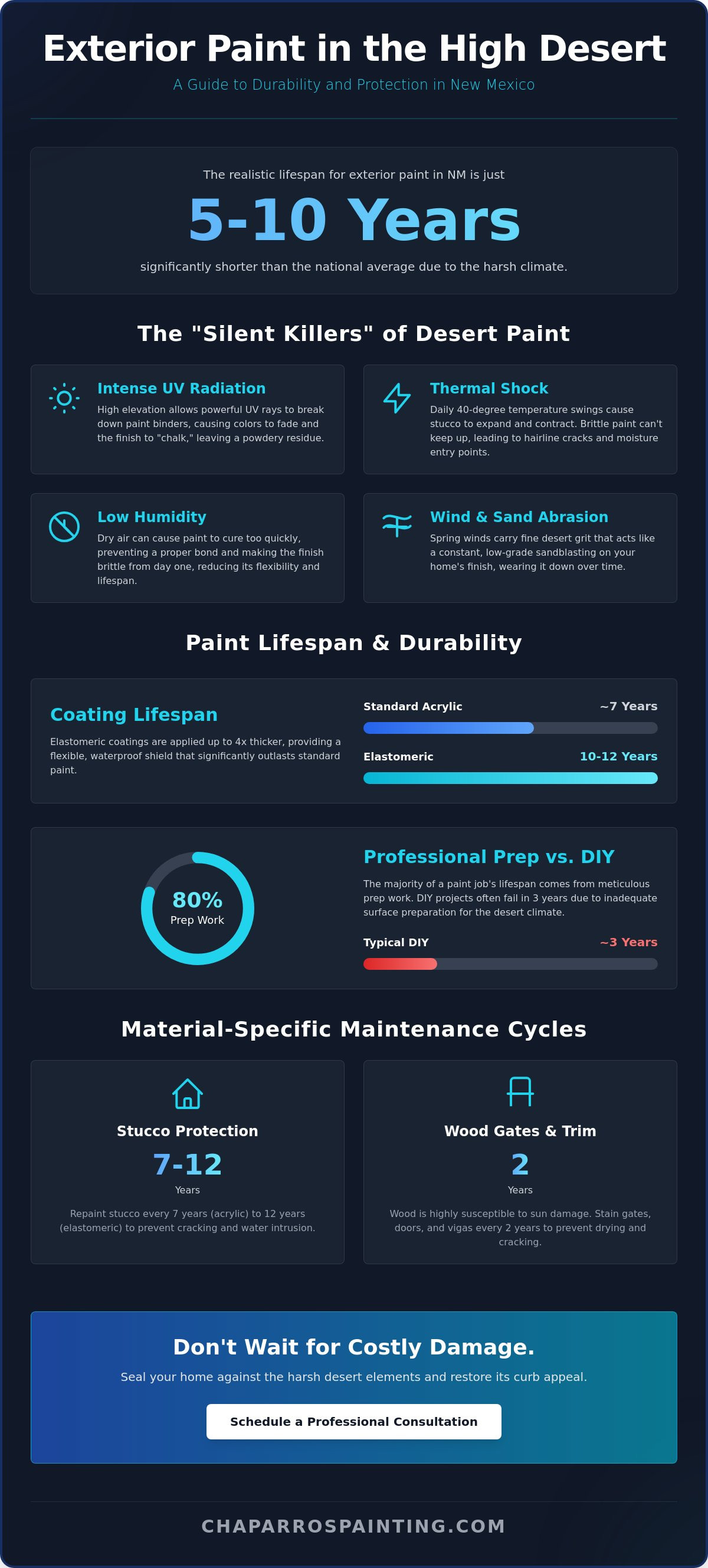
- Identify the "silent killers" of desert paint, including intense UV radiation and the daily 40-degree temperature swings that stress your home’s finish.
- Understand the specific maintenance cycles for different materials, from 7-year stucco protection to the 2-year window for wood gate staining.
- Recognize early warning signs like chalking and hairline cracks to prevent moisture from reaching your stucco and causing structural damage.
- Discover why professional prep work and thorough powerwashing account for the majority of your paint job's actual lifespan.
The Realistic Lifespan of Exterior Paint in New Mexico
The High Desert environment demands a different perspective on home maintenance. When people ask how long does exterior paint last in New Mexico, they are often surprised by the answer. A standard residential finish usually lasts between 5 and 10 years. This is significantly shorter than the national average. Our high elevation and intense UV radiation degrade the chemical bonds in paint much faster than in humid or coastal climates.
You should also monitor the difference between how your home looks and how it performs. A dark color might lose its "pop" in just a few summers, which is an aesthetic issue. However, the protective life of the paint is what actually keeps moisture out of your stucco. By 2026, manufacturers have introduced "smart" coatings with better UV resistance, but the physical environment of the Southwest still dictates the maintenance schedule. Knowing how long does exterior paint last in New Mexico helps you budget for the inevitable moment when the desert sun wins the battle against your home's finish.
Standard Acrylic vs. Elastomeric Lifespans
In areas like Rio Rancho, standard acrylic latex is the most common choice. It performs well for about 7 years before the polymers start to fail. Understanding the composition of paint helps explain this; UV rays break down the binders that hold pigment to the surface. For homeowners who want a longer cycle, elastomeric coatings are a heavy-duty alternative. These coatings are applied much thicker than standard paint. A typical paint job might be 4 to 6 mils thick, whereas elastomeric can reach up to 20 mils. This extra thickness provides a flexible, waterproof shield that can last 10 to 12 years.
Initial Professional Application vs. DIY Durability
A common sight in Albuquerque is the "3-year fail" on DIY paint jobs. This usually happens because the prep work wasn't thorough enough. Desert dust is incredibly fine and coats everything. Without professional powerwashing and specialized primers, new paint cannot form a permanent bond. We focus on meticulous prep because it accounts for the majority of a project's lifespan. Professional-grade primers act as a bridge between the old stucco and the new finish. This ensures the paint stays flexible during the extreme temperature swings common in our high-desert climate.
The "Silent Killers" of Paint in the High Desert
The desert is a harsh environment for any building material. While the general timeline for a finish is 5 to 10 years, the specific factors that determine how long does exterior paint last in New Mexico are often invisible until the damage is done. UV radiation, extreme temperature shifts, and physical abrasion work together to strip away your home's protection. Understanding these "silent killers" helps you recognize when your home is losing its defensive shield.
The Impact of High Elevation and UV
In cities like Santa Fe and Albuquerque, elevation is a major factor. The thinner atmosphere allows more intense UV rays to reach your walls compared to sea-level locations. These rays act like a chemical bleach, breaking down the polymers that hold the pigment together. This process is why darker colors often lose their richness within just a few years. Recent advancements in paint durability have improved resistance, but the sun eventually breaks down even the best binders. When the binder fails, the paint begins to "chalk," leaving a powdery residue on your hand if you swipe the wall.
Thermal Shock and Stucco Movement
New Mexico is famous for 40-degree temperature swings in a single day. This creates a phenomenon known as thermal shock. Your stucco expands under the midday sun and contracts rapidly as soon as the sun sets. If your paint has become brittle due to our low humidity, it cannot stretch with the substrate. This leads to hairline cracks that are barely visible to the naked eye. These cracks become the entry point for moisture during the intense monsoon season. Once water gets behind a compromised paint film, it can lead to expensive stucco repairs or widespread peeling. If you notice these small fissures starting to form, it's a good idea to schedule a professional exterior painting consultation to seal the surface before the next big storm.
Low humidity also plays a role during the initial application. In our dry air, paint can cure too quickly. If it dries before it has a chance to properly bond with the surface, the finish becomes brittle from day one. This lack of flexibility is a primary reason why DIY projects often fail prematurely. Finally, don't overlook the impact of wind and sand. Our spring winds carry fine desert grit that acts like low-grit sandpaper against your siding. Over several years, this natural abrasion thins the paint layers, making the surface even more vulnerable to the sun. Knowing how long does exterior paint last in New Mexico requires looking past the color and checking the physical integrity of the coating itself.
Material-Specific Longevity: Stucco, Wood, and Metal
Not every surface on your home ages at the same rate. When discussing how long does exterior paint last in New Mexico, we have to look at the specific materials involved. Your main stucco walls might look great for a decade, but your wood gates or metal accents could be screaming for help much sooner. Understanding these different lifecycles allows you to plan targeted maintenance rather than waiting for the entire property to fail. It's about protecting the investment you've made in your home's curb appeal.
For the average home in the Albuquerque metro area, stucco is the primary exterior surface. A high-quality stucco painting job usually holds its integrity for 7 to 10 years. Stucco is naturally porous and provides an excellent bond for paint. However, the material is also prone to shifting as the ground settles or temperatures change. This movement can create hairline cracks that eventually compromise the paint film. Even if the color looks fine, the protective seal might be failing. Monitoring these cracks is the best way to gauge the true health of your exterior finish.
Maintaining Wood Gates and Staining
Wood is the most vulnerable material in our high-desert climate. The combination of intense UV rays and near-zero humidity strips the natural oils from wood fibers. This causes gates and fences to warp, crack, and turn grey. While a full house repaint might happen once a decade, professional wood staining usually only lasts 2 to 4 years. The type of product you choose matters significantly for your maintenance schedule.
- Solid Stains: These provide more pigment and act like a physical shield against the sun. They often last up to 4 years.
- Transparent Stains: These show the natural beauty of the wood grain but usually fail by the 2-year mark in direct sun.
If your gate feels brittle to the touch or water no longer beads on the surface, it's time for a fresh application. Regular maintenance here prevents the wood from rotting, which is a much more expensive problem to fix than a simple recoat.
Metal Surfaces and Trim Durability
Metal surfaces like wrought iron gates and window trim face their own unique challenges. In our dry air, oxidation happens quickly once the protective finish wears thin. We recommend checking metal accents every 3 to 5 years for signs of rust or bubbling. If rust starts to take hold, it can eat through the metal and require professional grinding before it can be repainted. Prevention is much easier than restoration.
Wood trim and fascia boards also tend to fail faster than your main stucco walls. These areas are often painted in darker accent colors. Because dark colors absorb more heat, the wood underneath expands more aggressively during the day. This leads to the paint peeling or "alligatoring" long before the rest of the house needs work. Keeping an eye on these high-heat areas is essential for understanding how long does exterior paint last in New Mexico for your specific property. Targeted touch-ups on your trim can often buy you several more years before a full repaint is necessary.
Warning Signs Your Exterior Needs Professional Attention
Determining how long does exterior paint last in New Mexico often comes down to how closely you watch for early failure. Paint doesn't just disappear; it breaks down in stages. The first sign is often fading, where a vibrant desert tan shifts into an uneven, ashy gray. This is followed by chalking. If you swipe your hand across your siding and find a white, powdery residue, the chemical bond is failing. This powder is the actual pigment being released because the resins have been destroyed by UV exposure. When the binder is gone, the paint can no longer protect your stucco.
Efflorescence is another critical warning sign that many homeowners overlook. These are white, salty deposits that appear on the surface of your stucco. They indicate that water is trapped behind the paint and is pulling minerals out of the material as it evaporates. This is a red flag that your home's moisture barrier is compromised. If you ignore these signs, you eventually reach the final stage: peeling and flaking. At this point, the paint is no longer a shield. It's just a cosmetic layer that is actively failing and allowing the elements to reach your substrate.
The Dangers of Ignoring Stucco Cracks
Small hairline cracks might seem cosmetic, but they are the primary entry point for moisture. In Rio Rancho, where soil moisture can fluctuate and cause foundation shifting, these cracks allow water to seep into the substrate. This leads to delamination, where the stucco itself starts to pull away from the home's frame. The cost difference is significant. A standard repaint is a routine maintenance expense, but a full-scale stucco restoration is a major construction project. Your paint is the first line of defense. Keeping it intact prevents the underlying structure from absorbing water during the heavy monsoon season.
Conducting a Yearly Home Exterior Inspection
We recommend a 10-minute walk-around of your property every spring before the heat hits. Focus your attention on the "hot spots," specifically the South and West facing walls that endure the most direct sun. Look for the signs mentioned above, specifically around windows and doors where the structure is most likely to move. A yearly check ensures you aren't guessing about how long does exterior paint last in New Mexico for your specific neighborhood. If you find cracks wider than a credit card or areas where the paint feels hollow, it's time for an expert opinion. Addressing these issues early can extend the life of your finish by years. If you've noticed any of these warning signs on your home, schedule a professional consultation for stucco repairs to protect your investment.
Maximizing Longevity: The Chaparro’s Painting Process
The answer to how long does exterior paint last in New Mexico depends almost entirely on the work done before the first gallon of paint is opened. We believe that meticulous prep work accounts for 70% of a paint job’s actual lifespan. In our high-glare environment, selecting the right sheen is also a functional decision. While glossy finishes might look appealing in other states, they often highlight every minor imperfection in desert stucco. We typically recommend flat or low-luster satins that handle the intense Southwest light without creating distracting reflections.
Local experience in Rio Rancho and Albuquerque matters because we understand the specific chemistry of our soil and air. Using professional-grade sealants to bridge gaps in trim and stucco prevents the cycle of cracking and moisture intrusion discussed earlier. This disciplined approach ensures that your home doesn't just look better today, but stays protected for the full 10-year window that our climate allows.
Powerwashing and Surface Preparation
Every project begins with a professional powerwash. This isn't just about removing visible dirt. New Mexico winds leave an "invisible" layer of fine caliche dust on every surface. If you paint over this dust, the new finish will eventually peel off in large sheets because it never truly bonded to the stucco. While some competitors use aggressive sandblasting that can damage modern residential stucco, we use a controlled powerwash to clean the surface safely. We then allow for specific drying times that take advantage of our low-humidity climate. This ensures the substrate is completely stable before we address any necessary stucco repairs or drywall fixes.
Choosing High-Performance Products for 2026
Product selection has changed significantly with 2026 technology. We prioritize 100% acrylic resins for residential exteriors because they remain flexible long after cheaper vinyl-based paints have become brittle. These modern formulations are designed to handle the 40-degree temperature swings that define our region. We also utilize thermal-reflective coatings, often called cool-roof technology, which can reflect solar heat and help maintain lower interior temperatures during our 100-degree summers. This combination of traditional craftsmanship and modern material science is how we extend the life of your home’s finish. If you are ready to protect your property with a durable, professional finish, you can get a professional estimate for your exterior refresh today.
Protecting Your Home Against the High Desert Elements
Understanding that your paint is a sacrificial shield is the first step toward better home maintenance. By recognizing the early signs of failure like chalking or hairline cracks, you can avoid the high costs of structural stucco damage. Proper preparation and high-performance resins are essential for ensuring your finish survives the intense Southwest sun. You now have the knowledge to judge how long does exterior paint last in New Mexico for your specific property and plan your budget accordingly.
Don't wait for the next monsoon season to find out if your home's protective barrier is compromised. At Chaparro's Painting, we provide over 20 years of local New Mexico experience to help you maintain your investment. Our team consists of specialized stucco repair and painting experts who prioritize the thoroughness our climate requires. Every project we handle includes meticulous prep work and professional powerwashing to ensure a lasting bond. Schedule Your Free Exterior Estimate with Chaparro’s Painting today. You'll gain the confidence that comes from a job done right by a trusted neighbor.
Frequently Asked Questions
Does darker paint fade faster in New Mexico?
Darker paint definitely fades faster in our climate. Dark colors absorb more heat and UV radiation than lighter shades. This heat accelerates the chemical breakdown of the paint's binder. While a light tan might look fresh for 8 years, a dark chocolate brown can start to look ashy or uneven in as little as 3 to 5 years. Selecting a lighter color is one of the easiest ways to extend the aesthetic life of your home.
Can I paint my house during the monsoon season?
You can paint during monsoon season, but it requires professional weather monitoring. We never apply paint when rain is forecast within a few hours. High humidity and sudden downpours can wash away wet paint or cause bubbling. We wait for the stucco to be fully dry before we resume work. It's a slower process, but taking these precautions ensures the finish remains durable and doesn't fail prematurely.
Is it better to paint or stain my wood gate in Rio Rancho?
Staining is the superior choice for wood gates in Rio Rancho. Paint creates a thick film that eventually cracks under the intense sun. Once those cracks appear, moisture gets trapped against the wood and causes it to rot from the inside out. A penetrating wood stain allows the gate to breathe and expand naturally. While you'll need to recoat every 2 to 4 years, it's the best way to prevent the wood from warping.
What is the best time of year to paint a home exterior in Albuquerque?
Spring and fall are the best times for exterior painting in Albuquerque. We look for days when temperatures stay between 50 and 85 degrees. If it's too hot, the paint dries before it can bond. If it's too cold, the chemical curing process stops. April, May, September, and October provide the most consistent conditions for a high-quality finish that stands up to the desert environment.
Does stucco really need to be painted, or is it maintenance-free?
Stucco is not a maintenance-free material. Because it is porous, it can absorb moisture during the winter or monsoon season. This leads to internal damage and mold. Painting your stucco creates a vital waterproof seal. It also helps bridge the small hairline cracks that naturally form as our sandy soil shifts. Regular painting is the only way to keep your stucco from becoming brittle and falling away from the wall.
How much does the elevation in Santa Fe affect paint life?
Higher elevation in Santa Fe makes a noticeable difference. The atmosphere is thinner at 7,000 feet, which allows more intense UV rays to hit your home. This radiation destroys the paint's protective polymers much faster than in lower elevations. When homeowners ask how long does exterior paint last in New Mexico, we tell those in Santa Fe to expect a 5 to 7 year cycle rather than the 10 years common in the valley.
What is the difference between stucco repair and stucco painting?
Stucco repair addresses physical damage like holes, impact marks, or deep structural cracks. Stucco painting is the protective coating applied over the top. You should never paint over damaged stucco without fixing it first. We identify and patch all problem areas during the prep phase. This ensures the new paint has a solid, continuous surface to bond with, which prevents water from getting behind the new finish.
How can I tell if my paint is chalking?
You can identify chalking with a simple "swipe test." Run your hand or a dark piece of cloth across a sun-exposed wall. If a white, powdery residue transfers to your skin, the paint's binder has failed. This powder is the actual pigment being released as the sun destroys the paint's chemical structure. Chalking is a primary indicator that you have reached the limit of how long does exterior paint last in New Mexico and need a repaint.


