

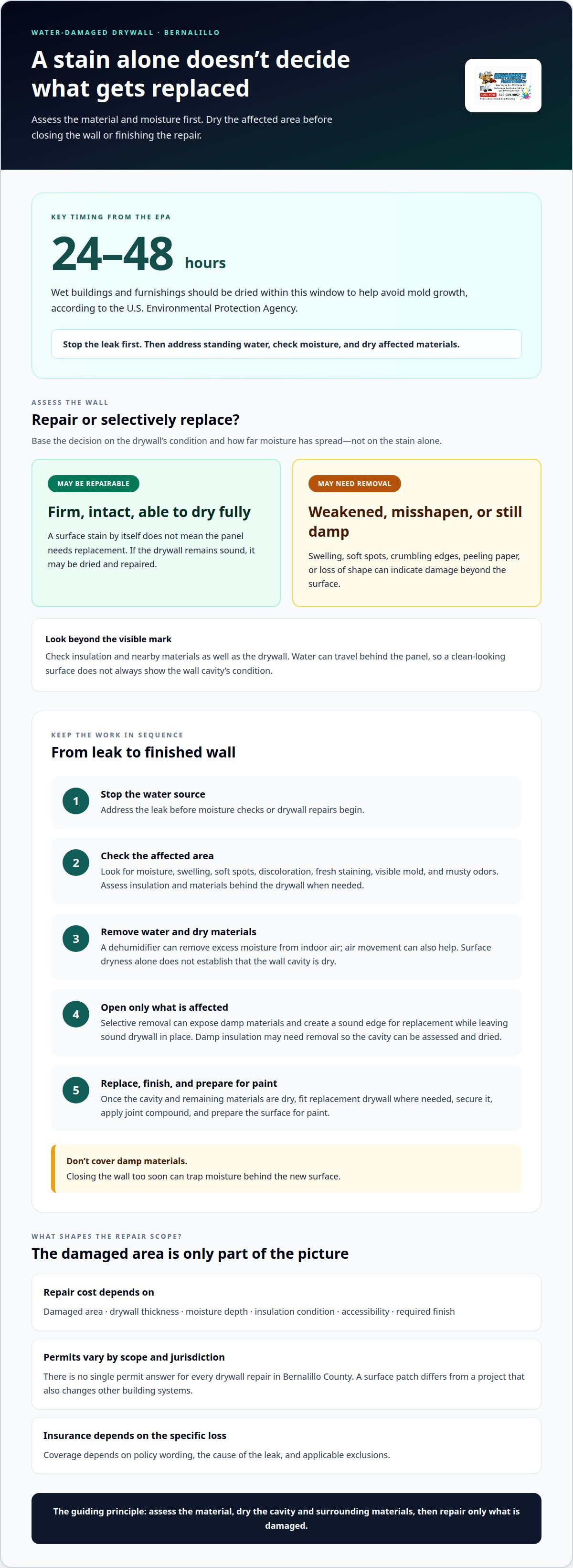
A water stain doesn’t automatically mean the whole wall must be replaced. For drywall repair after a water leak in Bernalillo, stop the leak first, then inspect and dry the affected area. According to the U.S. Environmental Protection Agency, wet buildings and furnishings should be dried within 24-48 hours to help avoid mold growth.
It’s understandable to worry about what’s happening behind the wall, not just what you can see on the surface. Drywall that remains sound may be dried and repaired; badly damaged sections may need selective removal and replacement. The right approach depends on how far moisture has spread and the condition of the drywall and surrounding materials.
This article explains how water-damaged drywall is assessed, when drying may be enough, and when removal, replacement, and finishing are needed. It also covers how the repair process works in homes and commercial properties, so you can understand the decisions involved and what to expect next.
Key Takeaways
- Choose repair or replacement based on the drywall’s condition and how far moisture has spread, not on the stain alone.
- Look for swelling, soft spots, and changes in the wall surface when assessing visible water damage.
- Dry wall cavities and nearby materials before installing and finishing replacement drywall.
- Selective removal can limit the repair to damaged sections when the surrounding drywall remains sound.
- Account for the building’s use and the affected area when planning drywall work in a home or commercial property.
Water-damaged drywall repair and replacement
Whether to repair or replace drywall depends on its condition and how far the water damage extends. Stop the leak before beginning moisture checks or repairs.
Repair or Full Replacement
Water-damaged drywall may be repairable if it remains firm, intact, and able to dry fully. A stain alone doesn’t mean the panel needs replacement. Look for swelling, crumbling edges, soft spots, peeling paper, or a panel that has lost its shape. These signs suggest damage beyond the surface. If the drywall is badly weakened or stays damp, removing the affected section allows the wall cavity to be assessed. Base the decision on the material’s condition, not just the visible mark.
For drywall repair after a water leak in Bernalillo, assess insulation and nearby materials as well as the drywall. Damage behind the panel may require more than patching and paint.
Drying and Dehumidifier Use
Drying starts after the leak source is stopped and standing water is addressed. The U.S. Environmental Protection Agency says wet buildings and furnishings should be dried within 24-48 hours to avoid mold growth. A dehumidifier removes excess moisture from indoor air, helping the affected area dry. Air movement can also help, but surface dryness alone doesn’t establish that the wall cavity is dry.
If water has reached the wall cavity, opening the affected area may be necessary to expose damp materials. Drying can then address the cavity and surrounding materials before new drywall is installed. The order matters: dry first, then repair and finish. Covering damp materials can trap moisture behind the new surface.
Mold Checks and Prevention
After a leak, check for visible mold, musty odors, discoloration, and fresh staining near the affected wall. Water can travel behind drywall, so a clean-looking surface doesn’t always reveal the cavity’s condition. Soft or swollen areas and recurring spots can also indicate lingering moisture. When drywall is removed, the exposed cavity makes it easier to assess the materials behind the panel.
Preventing mold growth starts with stopping the water source and drying wet materials promptly. Dehumidification can reduce excess indoor moisture. Don’t close the wall until the cavity and surrounding materials are dry. If mold is visible or the wall remains damp, address the affected materials rather than covering them with compound or paint.
Repair Costs, Permits, and Coverage
Repair cost depends on the damaged area, drywall thickness, moisture depth, insulation condition, accessibility, and required finish. A small surface repair differs from work that involves opening a wall, drying its cavity, and replacing damaged material. The affected area and finish help determine the work involved.
There isn’t one permit answer for every drywall repair in Bernalillo County. Requirements depend on the repair’s scope and jurisdiction; a surface patch differs from a project that also changes other building systems. Homeowners insurance coverage depends on the policy wording, the cause of the leak, and applicable exclusions. Review the terms for the specific loss. Once the area is dry, the repair may involve removing unsound drywall, fitting replacement material where needed, applying joint compound, and finishing the surface.
Selective drywall removal and replacement
Selective removal means opening only the damaged portion of a wall instead of removing every panel in the room. The cutout should expose affected materials and create a sound edge for replacement. For example, a localized leak beneath a sink may damage one section while nearby drywall remains intact.
Water removal and wall repair are separate parts of the response. After the leak source is stopped, address water still inside the room or wall cavity before installing new drywall. Don’t assume a drywall repair appointment includes water extraction. First establish what work is needed, then define removal and replacement around the affected area.
Delaying water removal can let moisture spread into framing, insulation, and nearby finishes, turning a limited cutout into a wider repair. For example, water running down a wall may collect near the baseboard or reach the next wall section. Removing only the visible stain without examining affected materials can leave damage behind.
Wet insulation needs particular attention when opening a wall. If insulation is damp, it may need to be removed so the cavity can be assessed and dried. The amount removed depends on how far the moisture has reached, not just the size of the drywall stain. Wait to replace drywall until the cavity and remaining materials are ready to be closed.
Wet drywall that has lost its shape or strength should be removed rather than covered. A clean, controlled cut helps limit disturbance to sound material. After removal, the exposed edges provide a clear boundary for fitting new drywall. The replacement is secured, its joints are finished with compound, and the surface is prepared for paint.
A water damage restoration company is appropriate when water remains in the property, the leak is ongoing, or wet materials extend beyond the drywall. Drywall repair comes later, once water removal and cavity drying are addressed. Keeping these steps distinct helps prevent water response and finish repair from being mistaken for the same task.
To compare licensed drywall and water damage contractors near Bernalillo, compare the work scopes: water removal, wet insulation handling, drywall cutout, replacement, and finishing. A clear scope identifies which tasks are included and where one phase ends before the next begins. For the wall repair phase, drywall repair work can address damaged sections after the affected area is ready for repair.
Keep the steps in order: stop the water source, check for moisture, and remove damaged sections before preparing for replacement. For water-damaged drywall, stop the source before checking moisture or removing damaged sections. Delaying water removal can lead to structural damage, mold growth, and increased repair costs.
Let moisture checks guide the opening, rather than relying on the visible stain alone. Where sound material remains, limiting the cutout keeps the repair focused; if damage extends farther, the scope may need to follow it. Wait until the exposed area and remaining materials are ready before installing replacement drywall. Keeping removal, drying, and finishing in sequence clarifies what must be done before repairing the wall.
Drying wall cavities and surrounding materials
A wall can look dry while moisture remains inside its cavity. Drying needs to address the drywall, framing, insulation, and nearby surfaces affected by the leak. Air movers circulate air across exposed materials, while dehumidifiers remove excess moisture from the room. Set up drying to address the affected area, not just the visible water stain.
How long should drywall dry before repairs or repainting? There’s no single drying time for every leak. The area is ready for repair when the drywall and surrounding materials are dry, as confirmed by moisture checks. A damp cavity behind an apparently dry surface needs attention before the wall is closed or painted.
When a wall cavity is open, drying equipment can reach materials that airflow across the room alone may miss. Air movers direct circulation into the exposed space, while dehumidifiers help remove moisture from the air. For example, a leak that wet the lower part of a wall may also affect insulation near the floor. Drying only the room’s surface won’t address that concealed area.
Dry each affected material appropriately. Drywall, wood framing, insulation, and nearby flooring may retain moisture differently. If insulation is wet, it may need removal so the cavity can be assessed and dried. Check the framing and cavity before covering them with new drywall. This helps prevent damp materials from being sealed behind a finished surface.
Effective drying depends on positioning air movers and dehumidifiers to address the affected materials. Keep the cavity accessible while it dries, and don’t reinstall drywall over damp framing or insulation. If a stain remains after drying, the mark alone doesn’t show whether the material is still wet. Moisture checks provide a better basis for deciding whether repairs can proceed.
Once the cavity and surrounding surfaces are dry, repairs can proceed. Confirm the leak has stopped, expose materials that need drying, use air movement and dehumidification, then check moisture again before closing the wall. If the opening reveals wet insulation or damage beyond the original stain, include those materials in the drying plan.
Drying and finishing are separate steps. Apply joint compound and paint only after the affected area is dry and replacement drywall is in place. Painting too early can conceal lingering moisture instead of resolving it. A careful check before finishing keeps the repair sequence sound, from the open cavity to the final surface coat.
Check carefully before closing the cavity. Water damage or a leak in a home can cause mold growth and further problems with drywall and other building materials. Don’t assume a dry-looking surface means every affected material is ready; assess the cavity and surrounding materials, too. If moisture remains, continue drying and reassess before installing replacement drywall or applying finishes. Basing each step on the materials’ condition helps avoid covering an unresolved problem.
Inspection for moisture, staining, swelling, and soft spots
A useful inspection goes beyond the visible stain. Water from a roof leak, plumbing connection, or upstairs fixture can travel before appearing on a wall. Trace the stain’s edges and check nearby drywall, ceiling corners, baseboards, and flooring. A mark beneath a bathroom may follow a different moisture path than one beside a window.
Changes to the surface can show where to look more closely. Bubbling paint, swollen drywall, loose tape, and softened paper may indicate water damage. A soft spot under gentle pressure deserves attention, especially if it feels different from nearby dry drywall. Avoid pressing hard or scraping the surface, as weakened material can break apart.
Look for patterns, not just an isolated mark. A ceiling stain that continues down a wall may indicate water moving through connected materials. Discoloration near a baseboard can mean water collected lower in the wall. Photographing the visible boundary can help document changes during inspection, but a photo can’t establish whether the cavity has dried.
Check more than the stained spot. Compare the affected area with nearby surfaces that appear dry, then inspect adjoining sections and the wall’s lower edge. A moisture meter can help assess readings at different points, while an inspection opening can reveal the cavity if surface checks don’t answer the question. Interpret the results alongside the drywall’s condition.
Pay attention to changes over time. If a stain grows, paint blisters, or a soft area expands after the leak stops, moisture may remain or the source may still be active. A musty odor near a wall can also prompt closer examination. These signs don’t identify the source on their own, but they help show where further inspection is needed.
Check the materials around the drywall, too. A damp baseboard, flooring edge, or nearby cabinet may show that water reached beyond the first visible mark. For example, a leak behind a kitchen wall may affect the cabinet side as well as the drywall. Mapping affected surfaces helps distinguish a small finish repair from damage extending into the wall assembly.
Inspection findings guide the next step. Firm, dry drywall may need only surface repair, while swollen, soft, or deteriorating sections may need removal for closer assessment. If moisture remains behind an intact surface, opening a limited area can expose the cavity. Before repairs begin, document visible symptoms, moisture checks, and affected materials.
Residential and commercial drywall services
Water damage can affect homes and commercial spaces differently because each building serves a different purpose. In a home, a leak beneath a bathroom may affect a bedroom wall, nearby flooring, and household routines. In an office, a leak above a shared work area may affect several rooms and require coordination around occupants. The repair scope should reflect the building’s layout and use.
For residential drywall work, inspection often follows the leak path through connected rooms. For example, a ceiling stain below an upstairs bathroom can prompt checks of the ceiling, wall corners, and nearby trim. The repair plan identifies which surfaces need attention and whether visible damage extends into the wall cavity. This helps focus work on affected materials.
Commercial properties can involve different access and scheduling considerations. Damage in a corridor, office, or customer-facing room may affect how people move through the space during repairs. The scope should identify the affected area, repair sequence, and practical access limits. A small patch and a repair spanning several rooms call for different plans.
Both settings benefit from a clear distinction between water response and finish work. Stop the leak, address affected materials, and prepare the repair area before drywall finishing begins. For example, a shop ceiling with active water intrusion needs water removal before finish repairs can proceed. Drywall work restores damaged surfaces, but it doesn’t stop the leak.
Useful planning details include the damage location, visible symptoms, affected rooms, and whether the space remains in use. A home repair may need to account for furniture and household access. A commercial repair may need to account for workstations or public routes. In either case, a defined scope clarifies which surfaces will be repaired and what finishing will follow.
For homeowners in Bernalillo, match the repair plan to the property’s use and the damage found. Residential and commercial projects aren’t identical just because both involve drywall. A sound plan identifies affected areas, coordinates the repair sequence, and leaves unrelated surfaces undisturbed. The next step is to arrange drywall repair suited to the damage.
For a home with damaged drywall, request residential drywall repair to address affected interior surfaces.
Chaparro's Painting: drywall repairs
Chaparro's Painting, LLC provides drywall repairs for damaged interior surfaces after a leak has stopped and affected materials are ready for finishing. Turn to this service when inspection and drying are complete and a wall or ceiling needs patching, joint compound, and a finished surface. The repair scope depends on the condition and size of the damaged area.
For example, a sound section around a small opening may need a focused repair, while badly damaged drywall may need replacement before finishing. Drywall repair addresses the wall surface; it doesn’t stop an active leak or dry a wet wall cavity. Interior painting can address the finish after repair work is complete.
For help with damaged drywall, contact Chaparro's Painting, LLC.
Plan the next step for your walls
The next decision is how the repaired surface should fit the room, not simply how to cover a mark. For drywall repair after a water leak in Bernalillo, consider the wall finish, adjoining surfaces, and how the room is used. A clear repair boundary keeps the discussion focused on visible priorities and the work needed to restore the area.
Consider the final appearance before finishing begins. A patch on a lightly textured wall may need a different finish approach from a smooth surface beside a doorway. Color and sheen can also affect how a repaired area looks beside existing paint. These details help define the desired finish without losing sight of the repair itself.
For other home updates, Chaparro's Painting also offers interior painting, exterior painting, and cabinet painting. Each project can be considered on its own and planned around the surfaces that need attention.
Contact Chaparro's Painting to discuss the drywall repair needed for your property. A clear starting point can make the next step easier.
Frequently Asked Questions
What health and safety risks come with wet drywall and mold?
Wet drywall can support mold growth, and water may also affect materials hidden inside the wall. Standing water can pose electrical hazards or contamination risks, so don’t enter an affected area until it has been assessed. Keep people away from visibly wet areas, especially where water is near outlets, wiring, or appliances. A musty smell or visible growth calls for careful assessment before disturbing damaged materials.
What permits or building code requirements apply to drywall repair in Bernalillo County?
Requirements depend on the repair’s scope and jurisdiction. A surface patch differs from a project that also changes other building systems.


