

The cost to paint interior doors and trim depends on the project scope, surface condition, preparation required, and whether you do the work yourself or hire a painter. National estimates vary because they may cover different tasks. A lower DIY materials bill does not necessarily mean less effort or an easier path to a consistent finish.
It makes sense to want a clear budget before deciding how to proceed. Compare like with like: count the doors, specify whether one or both sides and the frames are included, measure the trim, and note any worn or damaged surfaces that need preparation. This guide explains how those details shape an estimate and how DIY work compares with hiring a painter, so you can assess what the project involves before choosing your next step.
Key Takeaways
- Compare estimates only after aligning what each includes, from the number of doors to frames and trim.
- Look closely at peeling paint, dents, and other surface issues because extra repairs and preparation affect the work involved.
- Weigh the time and care required for the job against the labor involved when deciding between DIY and hiring a painter.
- Specify whether you want one or both door faces painted, and include frames and trim as separate scope items.
- Use published national estimates as a general reference, not a direct comparison, since their included work can differ.
How Should I Estimate the Scope?
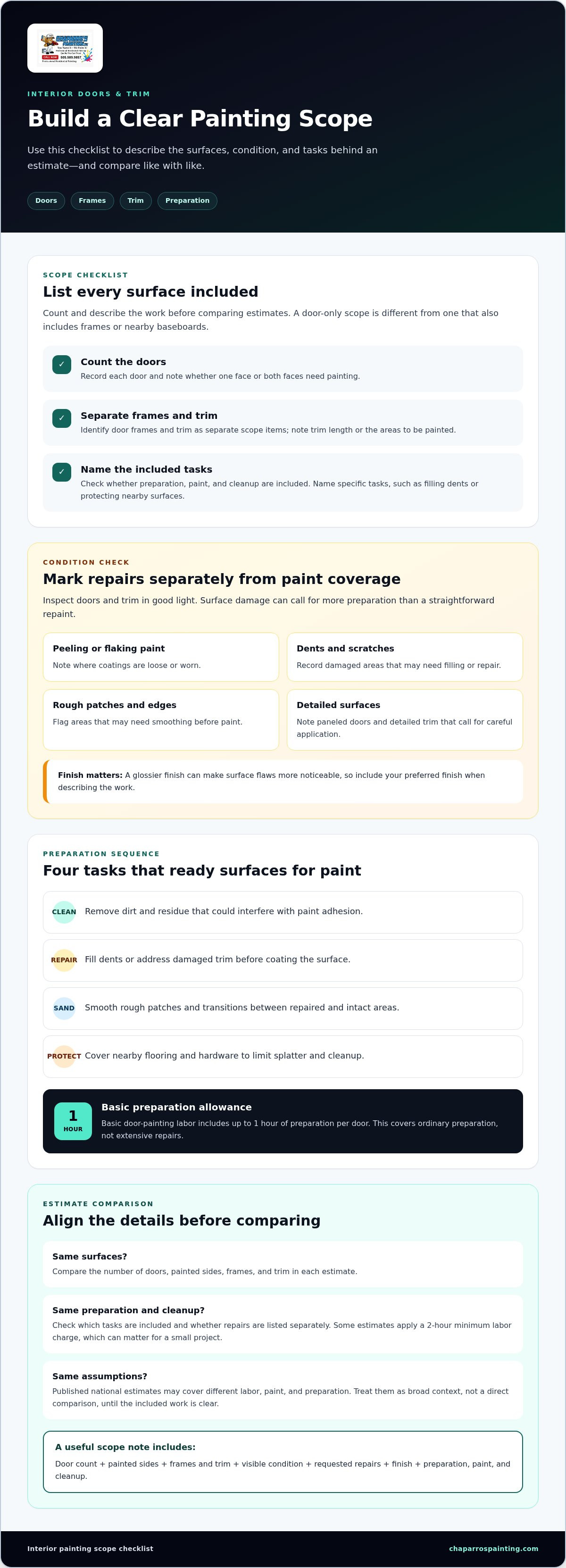
To estimate the cost to paint interior doors and trim, first list the surfaces and tasks involved. The scope depends on the number of doors, their condition, the preparation required, and whether frames and trim are included.
Comparing Estimates by Included Work
An estimate should identify the surfaces and tasks included. Compare doors, sides, frames, and trim separately. One estimate might cover door panels only, while another includes frames and nearby baseboards. Those are different scopes, even if both describe painting interior doors.
Check whether preparation, paint, and cleanup are included. Some estimates apply a 2-hour minimum labor charge, which can matter for a small project. Ask for each task to be named, such as filling dents or protecting nearby surfaces. A clear scope makes it easier to see why estimates differ.
Project Scope and Timing
Project scope means the full list of surfaces and tasks planned for the job. Count each door, note which sides need painting, and identify the frames and trim. Record visible wear, peeling paint, dents, and areas that need repair. This inventory gives the estimate a more useful starting point than a general request to paint the doors.
Timing depends on the amount of work and the order of tasks. Surfaces need preparation before paint, and the work sequence must preserve access to rooms. Basic door-painting labor includes up to 1 hour of preparation per door. More extensive repairs or added trim change the workload, so list those separately.
Local and National Cost Estimates
A local estimate reflects the work involved in your area and home. For a Rio Rancho home, describe the number of doors, the trim to be painted, and each surface's condition. These details help distinguish a straightforward repaint from a project that needs more preparation.
National estimates offer broad context, but they may rely on different assumptions about labor, paint, and preparation. Use a per-door estimate only as a reference after checking its scope. If one includes both sides of the door and another does not, they describe different work and cannot be compared directly.
Factors Affecting Painting Costs
Cost factors are the project details that affect the labor, materials, and preparation required. Door count, trim length, painted sides, surface condition, and included tasks all matter. Adding frames to a door-only scope increases the painted area. Damaged surfaces also need more preparation than clean, sound ones.
The cost to paint interior doors and trim depends on more than the number of doors. Make a room-by-room list: note each door, the sides and edges to paint, its frame, and any visible damage. Then specify the finish you want. A detailed scope helps shape a quote around your home and gives you a fair basis for comparing estimates.
Surface condition, repairs, and preparation
Labor and materials affect the estimate in different ways. Labor covers inspection, preparation, repairs, and careful application; materials include paint and supplies used for the specified surfaces.
Door style, trim condition, and paint finish all shape the work involved. A paneled door has recessed details to coat, while worn trim may need repair before painting. The finish also affects material selection and how clearly surface flaws show.
Surface condition means the state of a door or trim before painting begins. Peeling paint, dents, scratches, and loose edges may need extra preparation beyond a straightforward repaint. A smooth, sound door, for example, needs less repair work than one with chipped edges and uneven patches.
Inspect each door and its trim in good light. Note damaged areas, flaking coatings, and joints or edges that need attention. List repairs separately from paint coverage. This makes the work clearer and helps ensure damaged sections are not treated like ordinary clean surfaces.
Basic preparation is the work needed to ready a surface for paint. Basic door-painting labor includes up to one hour of preparation per door. That allowance covers ordinary preparation, not extensive repairs. A door with deep dents or widespread peeling may need additional work before a smooth finish is possible.
- Clean: Remove dirt and residue that could interfere with paint adhesion.
- Repair: Fill dents or address damaged trim before coating the surface.
- Sand: Smooth rough patches and transitions between repaired and intact areas.
- Protect: Cover nearby flooring and hardware to limit splatter and cleanup.
Preparation matters on trim as much as on doors. A narrow, chipped edge can remain visible after painting if it is not smoothed first. Paint applied over dust or residue can also leave an uneven surface. Preparation takes time, but skipping necessary steps can undermine the finished appearance.
Paint finish also affects the final look. A glossier finish can make surface flaws more noticeable, so dents and rough patches may need careful correction. Recessed panels and detailed trim call for controlled application around edges and corners. Discuss the desired finish alongside the surface condition, rather than treating paint choice as separate from preparation.
For a useful estimate, document each door's type and condition, then list repairs by location. Note trim damage separately and identify your preferred finish. This gives the scope practical detail: a smooth, flush door differs from a paneled door with worn trim. Clear notes help distinguish routine preparation from repair work.
Labor costs reflect the time needed for inspection, preparation, repairs, and careful application. Damaged surfaces or detailed doors and trim can take more work. Materials costs cover paint and supplies, with the chosen finish influencing material selection.
DIY versus hiring a painter
With DIY painting, you handle preparation, painting, and cleanup; hiring a painter means paying for professional labor. Compare the time, skill, and materials each option requires, not just the paint receipt. Painting one smooth door may feel manageable. A group of paneled doors, frames, and trim calls for more careful, repeated work.
What DIY Requires
A DIY estimate includes the materials, tools, and time needed to complete the job. Make a task list before buying supplies: protect the floor, clean each surface, prepare damaged areas, apply paint, and restore hardware. Include setup and cleanup in your time plan. A door with several recessed panels, for example, takes more careful brushing than a flat door.
Materials include more than paint. You may need brushes, rollers, masking materials, cleaning supplies, and tools for minor surface preparation. Check what you already own, then list what the project still needs. Track your hours as you work. That record can help you assess the effort involved before tackling another room or group of doors.
What Professional Labor Covers
Professional labor is the time and skill used to prepare and paint the surfaces in the agreed scope. Estimates may include a 2-hour minimum labor charge, which can affect small projects with only a few doors. For a fair comparison, write down the doors, faces, frames, trim, repairs, and cleanup included in each estimate.
A painter's workflow may involve coordinating the order of work around access to rooms and doorways. Ask for the estimate to describe the tasks clearly, including surface preparation and painting the specified areas. Professional contractors like My Paint Job Singapore emphasize transparent, itemized quotes so homeowners know exactly what preparation and finish work is covered. This gives you a basis for comparing professional labor with the time you would spend doing the same work yourself.
Choosing the Practical Option
The practical choice depends on your available time, comfort with detailed work, and the surfaces' condition. DIY may suit a small, straightforward task if you can prepare and paint without rushing. For minor door adjustments, hardware removal, or surface repairs before painting, homeowners often turn to a trusted service like American Handyman, whereas full-scale professional painting help is more suitable when the scope includes several doors, detailed trim, or repairs where a consistent finish across connected areas matters.
Use a simple comparison before deciding:
- Count the work: List each door, painted face, frame, and trim section.
- Assess the effort: Note detailed panels, damaged surfaces, and areas needing careful protection.
- Compare the commitment: Set your DIY time and materials beside the tasks included in a professional estimate.
Neither option eliminates the need for preparation. Rushed DIY work can leave visible marks, while an estimate with an unclear scope is difficult to compare. Decide based on the complete task list, not just one part of the job. If you choose DIY, plan each step before opening the paint. If you hire a painter, make sure the written scope describes the work you expect.
One face versus both faces, frames, and trim
A door's painted sides, frame, and nearby trim are separate parts of the project scope. Listing them individually helps clarify what the estimate covers.
Painting One Face or Both Faces
Painting one side means coating only one face of a door; painting both sides includes its front and back. The basic door-painting process includes rolling or brushing two coats on both sides.
Painting one side can make sense when only that face needs a fresh appearance. The other side, edges, and areas visible when the door opens may remain unchanged. Specify which face you mean, such as the hallway side, and whether the edges are included. This prevents different interpretations of “one side.”
For a consistent result, identify each door by room and note which sides need painting. A bedroom door might need both sides painted, while a closet door may need only its room-facing side. Include the edge if it will be visible during normal use. This gives the painter a clear scope without assuming every door needs the same treatment.
Frames, Trim, and Linear-Foot Costs
Frames are the fixed borders around door openings. Trim includes the narrow molding along walls and around openings. A per-linear-foot estimate for interior trim is based on measured length and the work required, not on a universal average that applies to every home.
For an estimate, measure each trim run and list door frames separately from baseboards or other molding. Note corners, joints, detailed profiles, and visible damage. A smooth, simple run differs from ornate molding with grooves that require careful coverage. Trim condition can also affect preparation needs and the work involved.
Clarify whether the estimate includes both sides of a frame, its top edge, and adjoining trim. For example, “paint the door frame” might mean only the room-facing casing to one homeowner, but the full frame to another. Name the specific sections and surfaces. That precision makes the measured length meaningful and helps align the listed scope with the work you expect.
Before comparing estimates, use this short checklist:
- Door faces: Identify the side or sides to paint, plus visible edges.
- Frames: State which frame surfaces are included.
- Trim: Measure separate runs and note detailed profiles or damage.
- Finish boundaries: Mark where painted trim ends beside walls or flooring.
This breakdown also explains why two estimates may differ even when they cover the same room. One may include frames and measured trim; another may cover door faces alone. Compare the actual surfaces and tasks, then decide whether the listed work matches your intended result.
Published national price ranges for painting interior doors
A national price range is a broad published estimate for painting a door in the United States. It offers context, but cannot price a specific home without matching its assumptions to the actual work.
Why Published Estimates Differ
Published estimates may describe different scopes under the same label. One might cover painting a door, while another lists labor, paint, preparation, or supplies separately. Compare the included tasks before treating two figures as equivalent. A door-only estimate and one that includes its frame, for example, describe different projects.
Some guides give a per-door amount, while others list labor and paint separately. Those formats are not directly interchangeable. A labor amount does not necessarily represent the complete project total, and a paint line does not describe preparation. Read the labels and inclusions first, then compare estimates with the same scope.
Using National Figures Carefully
A national estimate is a reference point, not a local quote for your doors and trim. The project scope depends on what you want painted, the condition of the surfaces, and the preparation involved. A smooth door needing a straightforward repaint, for example, differs from a damaged door with nearby trim included.
Use published figures to understand how guides structure estimates, rather than assuming one national amount applies everywhere. Check whether each guide covers one or both sides of the door, whether the frame is included, and how labor and materials are presented. If those details differ, the figures are not an apples-to-apples comparison.
Turn a Reference Into a Useful Comparison
Start with a written scope for your project. List each door, the sides to be painted, the frames, the trim, and any visible damage. Then compare that list with the work described in each estimate. A national figure is more useful when you can see which parts of your project it does, or does not, resemble.
If a published estimate describes a door alone, do not assume it also includes a frame or adjoining baseboard. Treat those surfaces as separate items unless the scope explicitly combines them. Note whether preparation is included, too. This keeps a broad published estimate from being mistaken for a total for the full project.
Use the same scope when comparing local estimates, including the desired finish and any repairs. That gives you a clearer basis for understanding differences in labor and materials. If you’re planning a home painting project, discuss your interior painting project with Chaparro’s Painting.
Chaparro's Painting: Interior Painting
Chaparro's Painting provides interior painting for homeowners planning to refresh doors, trim, and other interior surfaces. If your project includes several rooms or needs coordinated preparation, interior painting can address the work as a defined home project.
The estimate depends on the surfaces included, their condition, and the preparation and labor required. Describe which doors, sides, frames, and trim you want painted, along with any visible damage. A clear scope helps shape a quote around your home rather than a broad national estimate.
For help planning interior painting, contact Chaparro's Painting or visit chaparrospainting.com.
Make Your Next Painting Decision with Confidence
Use the project scope as a practical starting point for deciding what to do next. Consider which surfaces matter most, the finish you want, and how much preparation you are comfortable handling. The cost to paint interior doors and trim is easier to assess when your priorities are clear and the work is described for your home.
Chaparro's Painting offers interior painting, as well as exterior painting and cabinet painting. If your plans extend beyond doors and trim, considering related painting work together can help define the full project. Share the surfaces you want painted and the result you have in mind to discuss the right next step.
For a straightforward conversation about your home painting project, contact Chaparro's Painting. A clear plan can help you move forward with confidence.
Frequently Asked Questions
DIY or Bring In a Painter?
Choose DIY if you can set aside time for careful preparation, painting, and cleanup; hire a painter if you want the work handled professionally. Consider the number of doors, their details, and how much repair they need. Painting one smooth door differs from completing several paneled doors and adjoining trim. Compare the full task list, including tools and materials, before deciding what fits your schedule and comfort level.
How Long Will the Project Take?
The project timeline depends on the number of surfaces, their condition, and the order of work. Preparation, repairs, painting, and cleanup each take time, and doors may need to remain accessible as the work progresses. One door with little surface damage is a different workload from multiple doors and frames. Before planning room access, identify which doors will be worked on and whether occupants need to use those rooms during the project.
What is the average cost to paint an interior door in the U.S.?
Published U.S. estimates vary because guides may include different tasks, so no single average fits every door and project. Check whether an estimate includes labor, paint, preparation, and the frame before using it for comparison. A door-only figure does not represent the same scope as a quote that includes frames or repairs. For a useful comparison, match the listed work to the surfaces you want painted.
How much do DIY supplies cost to paint interior doors and trim?
DIY supply costs depend on what you already own, the surfaces involved, and the products needed for preparation and painting. Make a shopping list that covers paint, application tools, masking materials, cleaning supplies, and materials for repairing damaged areas. A homeowner who already has brushes and floor protection needs a different list from someone starting from scratch. Include door sides and trim in your materials plan.
What preparation and painting steps are included in a professional quote?
A professional quote should describe the included work, rather than rely on a general promise to paint the doors. Look for clear details on surface cleaning, preparation, repairs, protected areas, paint application, and cleanup. Check whether the scope covers door edges and hardware areas. A quote might name the sides being painted while listing the frame separately, so compare the estimate with your room-by-room project list.
Do painters charge extra for sanding, repairs, or removing doors and hardware?
Sanding, repairs, and removing doors or hardware are distinct tasks that can add labor to the scope. Look for each task in the estimate instead of assuming it is included in basic painting. Filling damaged trim, for example, requires different work from smoothing an intact door. Note which surfaces need sanding or repair, and whether hardware should be removed or protected, so the written scope reflects the preparation you expect.
How can I get an accurate local estimate for painting interior doors and trim?
Provide a room-by-room list of doors, the sides to be painted, frames, trim, and visible damage. Include your preferred finish and note any access needs, such as a frequently used hallway. For homeowners in Rio Rancho, Albuquerque, Bernalillo, and Santa Fe, these details help make a local estimate specific to the home. Keep the scope consistent when comparing estimates, so differences reflect the work rather than missing details.


