
Your home's exterior is under constant attack from some of the highest UV radiation levels in the country. It's a common frustration for local homeowners to see a fresh coat of paint turn into a chalky, faded mess in just a few seasons. You want a property that mirrors the natural beauty of the high desert, but you also need materials that won't bake your interiors or trigger a letter from your HOA. Selecting the best stucco paint colors for New Mexico homes requires a calculated approach that balances local aesthetics with high-performance durability.
This 2026 guide provides the professional insight you need to choose a palette that lasts. We'll explore current trends like warm, low-contrast earth tones and creamy bone whites that offer a modern alternative to stark ivory. You will discover how to navigate specific regional requirements, such as Albuquerque's Light Reflectance Value (LRV) restrictions and Santa Fe's historic district mandates. We also break down the importance of UV-reflective pigments and ASTM testing standards for long-term protection. By following these expert recommendations, you can ensure your home stays cool, stays compliant, and maintains its curb appeal for years to come.
Key Takeaways
- Learn how to select the best stucco paint colors for New Mexico homes by balancing traditional desert tones with modern palettes like "greige" and sage green.
- Understand how Light Reflectance Value (LRV) affects your energy bills and helps you stay compliant with local Albuquerque zoning ordinances.
- Identify the specific pigments that withstand high-altitude UV exposure to prevent the chalky, faded look common in desert climates.
- Follow a clear process for securing HOA approval and choosing a color that complements the natural landscape and neighboring homes.
- Discover how New Mexico's specific light conditions and low humidity can drastically alter how a paint color looks on your home compared to a small swatch.
The New Mexico Aesthetic: Why Stucco Color Choice Matters
New Mexico’s light is unlike anywhere else in the country. Our high altitude and low humidity create a sharp, intense clarity that fundamentally changes how we perceive color. A shade that looks like a soft tan in a catalog can appear as a bright, glowing yellow under the harsh afternoon sun. This is why choosing stucco paint colors for New Mexico homes requires more than a quick look at a swatch. It takes a seasoned understanding of how our local environment interacts with different pigments.
Achieving "High-Desert Harmony" is the goal for most homeowners. This design philosophy focuses on blending the built environment with the natural landscape. Your home should feel like an organic extension of the mesas and the Sandia Mountain backdrop. Instead of fighting the desert, we embrace it. This means looking at the specific mineral tones found in our local soil and rock formations to find a match that feels grounded and authentic.
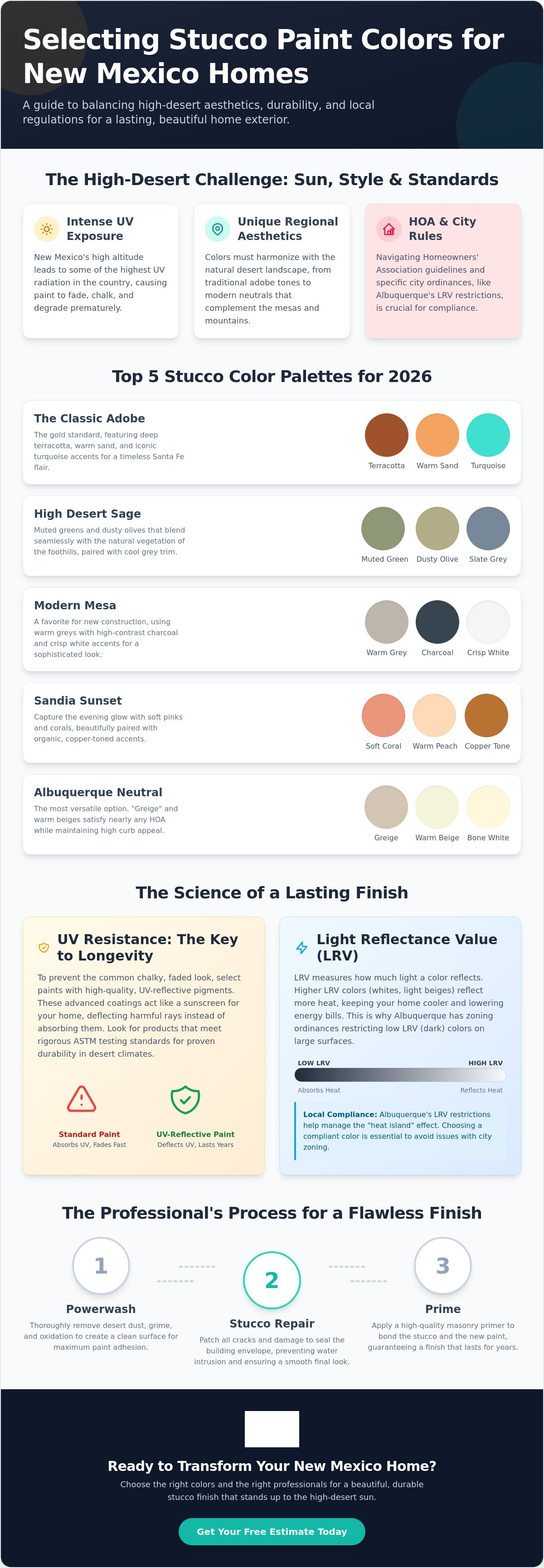
While we respect the history of traditional adobe mud-tones, modern technology has improved how we protect our properties. We've moved from simple lime and sand mixtures to advanced elastomeric coatings. These modern versions of Stucco provide superior flexibility and UV resistance, which is vital in our climate. Before we even talk about the best stucco paint colors for New Mexico homes, we emphasize the importance of prep work. Proper preparation ensures the finish lasts for years:
- Professional powerwashing to remove desert dust and oxidation.
- Thorough stucco repairs to patch cracks and seal the envelope.
- Application of high-quality masonry primer for maximum adhesion.
The Role of Architecture in Color Selection
Santa Fe Style homes rely on deep, earthy tones. You'll see rich reds, heavy ochres, and traditional browns that mimic the look of aged adobe. These colors provide a sense of weight and history. They work best when paired with dark wood accents and wrought iron fixtures to create a classic, grounded appearance.
Pueblo Revival
Pueblo Revival architecture calls for a softer, more rounded approach. We often recommend muted terracottas, soft tans, and warm peaches. These shades highlight the rounded corners and stepped massing typical of this style. The goal is to create a look that feels hand-sculpted and soft against the horizon.
Modern Southwestern
Modern Southwestern designs are shifting toward a cleaner aesthetic. We are seeing a rise in cool greys, "greige," and warm off-whites. These neutral bases allow for bold accents on gates or trim. This style provides a fresh, updated look while still respecting the natural light of the high desert.
Top 5 Stucco Color Palettes for NM Homes in 2026
Selecting the right stucco paint colors for New Mexico homes is about more than picking a single shade from a fan deck. It's about creating a cohesive look that respects our unique landscape. Our team at Chaparro's Painting, LLC has identified five specific palettes that are dominating the local market this year. These combinations are designed to handle the intense high-desert sun while providing a look that feels both fresh and rooted in tradition.
- The Classic Adobe: This remains the gold standard for many neighborhoods. It features deep terracotta bodies paired with warm sand trim. Turquoise accents on the front door provide that iconic Santa Fe flair.
- High Desert Sage: This palette utilizes muted greens and dusty olives. These colors disappear into the natural vegetation of the foothills. We recommend slate grey for the trim to provide a modern, cool contrast.
- Modern Mesa: This is a favorite for new construction. It uses warm greys as the primary color. Charcoal accents and crisp white pops around windows create a high-contrast, sophisticated appearance.
- Sandia Sunset: If you want to capture the evening glow, this is your palette. It relies on soft pinks and corals. We often suggest pairing these with copper-toned wood staining for gates to add an organic, metallic touch.
- Albuquerque Neutral: This is the most versatile option. It focuses on "Greige" and warm beiges. These colors are popular because they satisfy almost any HOA requirement while maintaining high curb appeal.
Accent Colors: Bringing Life to Gates and Trim
Details matter. A well-chosen accent color can transform a standard paint job into a custom design. Turquoise, often called "Santa Fe Blue," is a traditional choice for gates and doors because it symbolizes protection and water. However, we are seeing a significant shift toward dark bronze or black window frames in modern builds. These darker frames act as a picture frame for the desert scenery outside. When you pair these with earthy stucco tones, the result is both timeless and contemporary. It creates a visual anchor that prevents the lighter stucco colors from looking washed out.
Visualizing Your Palette in the NM Sun
You cannot trust a paint swatch inside a store. New Mexico’s sun is too intense. We always tell our clients to paint large test samples on several sides of the house. The morning light in Albuquerque is different from the afternoon glow in Rio Rancho. During the "golden hour," the light has a way of shifting neutral tans into bright oranges. Seeing how your stucco paint colors for New Mexico homes react to these shifts is the only way to avoid a costly mistake. Following technical standards for application, like those found in Historic Stucco Preservation guides, ensures the color you choose actually stays on the wall and retains its intended hue through every season.
Beyond the Beige: Exploring Modern Desert Neutrals
New Mexico neighborhoods have been dominated by a sea of tan and brown for decades. While these colors are practical for hiding desert dust, many homeowners now suffer from "Beige Fatigue." It's a reaction to the monochromatic look of older subdivisions. Modern stucco paint colors for New Mexico homes have evolved beyond these standard shades. We are seeing a shift toward sophisticated neutrals that offer variety without clashing with the local landscape.
Greige is the most effective bridge between traditional adobe and modern minimalism. It's a hybrid of grey and beige that adapts beautifully to our intense sunlight. In the morning, it may lean toward a cool stone look; by sunset, the warm beige undertones emerge. This versatility makes it a safe but updated choice for those who want to move away from traditional tans. It provides a clean, professional backdrop that makes landscaping and architectural details pop.
Another rising trend is the Mediterranean-Southwest hybrid look. This style uses off-whites, creams, and bone colors instead of dark browns. These lighter shades reflect more heat, which can help lower cooling costs during our blistering summers. To prevent these large surfaces from looking flat or blinding, we recommend incorporating natural stone or wood accents. A stone veneer along the foundation or a cedar-clad entry area breaks up the stucco and adds a premium feel to the exterior.
The Shift to Cooler Tones
Cool grey is becoming a staple in modern Albuquerque builds, especially in the North Valley and West Mesa areas. It provides a sharp, industrial aesthetic that looks striking against a blue New Mexico sky. However, cool walls can sometimes feel cold. We often suggest balancing these tones with warm wood staining on gates or pergolas. This contrast creates a balanced look that feels both contemporary and inviting.
Using Texture to Enhance Color
The texture of your stucco significantly impacts how the color appears to the eye. A heavy "dash" or "pebble" finish creates thousands of tiny shadows, making the paint color look slightly darker and more muted. Conversely, a smooth finish reflects light more directly. Smooth finishes are popular for modern designs but require precise color selection. Every imperfection and shade variation is visible on a smooth surface, so we take extra care during the prep work and application phases to ensure a flawless result.
The Science of Stucco Paint: UV Resistance and LRV
New Mexico’s climate is a testing ground for exterior finishes. The combination of high elevation and 300 days of sunshine creates a relentless environment for any coating. Choosing stucco paint colors for New Mexico homes isn't just an aesthetic choice; it’s a technical one. We have to consider Light Reflectance Value (LRV) to ensure your home remains energy-efficient and durable. LRV measures the percentage of light a color reflects. A white paint might have an LRV of 85, while a dark chocolate brown might sit at 10. In our climate, every point matters.
Darker colors absorb solar radiation, which transfers heat directly into your living space. This forces your air conditioning to work harder and drives up monthly costs. We guide our clients toward colors that balance local beauty with thermal performance. Then there is the "Fading Factor." High-altitude UV rays are significantly more intense than at sea level. Organic pigments, particularly reds, blues, and deep purples, are the most susceptible to photodegradation. This is why a vibrant terracotta can quickly fade into a dusty pink. We recommend inorganic, mineral-based pigments for long-term stability. These colors hold their hue much better against the high-desert sun.
Beyond color, a professional paint job acts as a protective envelope. Stucco is naturally porous. Without a high-quality seal, moisture can seep in and cause the material to degrade from the inside out. We prefer elastomeric coatings for stucco paint colors for New Mexico homes. These products are designed to expand and contract. Our state experiences extreme temperature shifts between day and night. A coating that moves with the house prevents the hairline cracks that lead to major structural issues.
Heat Absorption and Energy Efficiency
Albuquerque’s North Valley often stays warmer at night due to the heat island effect. Conversely, homes in Rio Rancho or the East Mountains face higher wind speeds and direct exposure. We adjust our color recommendations based on your specific microclimate. A slightly lighter shade in a high-exposure area can save you hundreds in energy costs over the life of the paint. It keeps the surface temperature of your walls significantly lower during July peaks.
Preventing the "Chalky" Look
Chalking occurs when the paint’s binder breaks down, leaving a white, powdery residue. It’s a clear sign that your home’s protection is failing. Preventing this starts long before the first coat. Thorough stucco repairs and prep work are essential. We remove existing oxidation through powerwashing and ensure the surface is chemically ready to bond with the new coating. This meticulous approach is what keeps a home looking fresh for a decade instead of just a few years.
Choosing Your Color: From HOA Approval to Professional Application
Selecting stucco paint colors for New Mexico homes is a major decision, but the process of getting that color onto your walls requires careful planning. You have seen the palettes and understood the science of UV resistance. Now, you need to navigate the local logistics that stand between a color swatch and a finished home. Following a methodical path ensures your project satisfies both your personal taste and community standards. This structured approach prevents the common frustration of having to repaint because a color didn't meet neighborhood guidelines or looked different in the desert light.
- Review the HOA Approved List: Most developments in Rio Rancho and Santa Fe maintain a binder of pre-approved shades. Start here to avoid a costly violation notice.
- Consider Neighboring Homes: You want your property to stand out, but not for the wrong reasons. Avoid picking a color that clashes or matches the house next door too closely. A difference of two or three shades on the same color strip usually provides the right amount of contrast.
- Test Large-Scale Samples: Never rely on a small paper swatch. We apply large test patches on different sides of the home. This allows you to see how the color shifts from the bright morning sun to the deep shadows of the afternoon.
- Coordinate with Fixed Elements: Your stucco must complement your roof tiles and stone accents. If you have traditional orange clay tiles, your color choice needs warm undertones to avoid a visual disconnect.
- Hire a Local Specialist: A professional application ensures the coating is even and the edges are sharp. A seasoned contractor understands the specific demands of our high-altitude environment.
Navigating New Mexico HOAs
Neighborhood associations in New Mexico are particularly strict about maintaining a cohesive "High Desert" aesthetic. In many Santa Fe developments, you are restricted to a narrow range of earth tones to preserve the historic character of the area. Rio Rancho HOAs often have specific rules regarding the Light Reflectance Value (LRV) to prevent glare for neighbors. When you are ready to submit a color change request, we provide the specific color codes and technical data your board needs for a smooth approval process. This transparency helps alleviate the anxiety of dealing with architectural committees.
The Chaparro's Painting, LLC Difference: 20 Years of NM Expertise
Jaime Chaparro has spent two decades refining his approach to the local climate. Our team at Chaparro's Painting, LLC understands that the best stucco paint colors for New Mexico homes only look as good as the preparation underneath them. We prioritize a disciplined prep process that includes professional powerwashing and detailed stucco repairs to seal every hairline crack. We don't cut corners because we take quiet pride in our craftsmanship. This commitment to thoroughness is why local homeowners trust us to protect their properties from the elements. We focus on doing the job right the first time, giving you the peace of mind that comes from dependable, high-quality service.
Protect Your Property with a Professional Palette
Choosing the right stucco paint colors for New Mexico homes is a decision that balances personal style with the technical demands of the high desert. You now have the tools to navigate HOA restrictions, understand the energy-saving benefits of Light Reflectance Value, and select a palette that won't fade under our intense sun. A successful project is not just about the final color; it's about the discipline of the preparation and the quality of the protective seal. This ensures your home remains a source of pride and a sanctuary against the elements for years to come.
Jaime Chaparro and the team at Chaparro's Painting, LLC bring over 20 years of local experience to every property. We understand the nuances of New Mexico's climate and the specific craftsmanship required to keep stucco looking vibrant. Our approach is straightforward and focused on quality, from the initial powerwashing to the final coat of elastomeric paint. We prioritize clear expectations and dependable results so you can enjoy the peace of mind that comes with a job done right. We are ready to help you finalize your vision and protect your investment.
Get a Free Exterior Painting Estimate from Chaparro's Painting, LLC and start your home's transformation today. We look forward to working with you.
Frequently Asked Questions
Is it better to paint or re-stucco my New Mexico home?
Painting is generally the more cost-effective choice for aesthetic updates and surface protection. Re-stuccoing is a major structural project reserved for cases where the existing material is failing or falling off the lath. For most homeowners looking to refresh their curb appeal, high-quality elastomeric paint provides the necessary UV protection and moisture seal without the massive expense and mess of a full re-stucco application.
What are the most popular stucco colors in Albuquerque right now?
Warm neutrals like "greige" and bone white are the top choices in Albuquerque for 2026. These shades offer a modern alternative to traditional dark tans while maintaining the required Light Reflectance Value for local zoning. Many residents also favor muted sage greens and dusty olives. These colors blend seamlessly with the natural vegetation found in the North Valley and the Sandia foothills.
Does painting stucco cause it to crack or trap moisture?
No, provided you use the correct breathable coatings. Modern elastomeric paints are specifically engineered to allow moisture vapor to escape while preventing liquid water from entering. This breathability is essential in our climate. When applied correctly by professionals, these coatings actually help prevent future hairline cracks. They provide a flexible layer that moves with your home's natural expansion and contraction during temperature swings.
How long does a professional stucco paint job last in the New Mexico sun?
A professional application typically lasts between 7 to 10 years in our intense high-altitude environment. The longevity depends heavily on the quality of the pigments and the thoroughness of the initial prep work. Using stucco paint colors for New Mexico homes that feature inorganic, UV-resistant pigments will help prevent premature fading and chalking. This ensures your home looks fresh for a decade or more.
What color stucco stays the coolest in the summer?
Lighter colors with a high Light Reflectance Value (LRV) stay significantly cooler. Off-whites, creams, and light sands reflect the majority of solar radiation rather than absorbing it into your walls. This thermal performance is a key reason why many modern Southwestern designs are moving away from dark chocolate browns. Lighter, sun-friendly palettes help reduce indoor cooling costs during the peak heat of July and August.
Can I change my stucco color if I live in an HOA-controlled neighborhood?
Yes, but you must follow your specific association's approval process first. Most HOAs in Rio Rancho and Santa Fe have a pre-approved palette of earth tones designed to maintain community harmony. You will typically need to submit a formal request along with paint samples for board review. We often help our clients by providing the exact color codes and technical specs required for these professional submissions.
How much does it cost to paint a stucco house in Rio Rancho?
Costs vary based on the square footage, the height of the home, and the amount of prep work required. Factors like the number of stories and the current condition of the stucco play a major role in the final estimate. While DIY materials might seem cheaper, a professional service includes the specialized equipment and high-altitude-rated coatings necessary for a long-lasting finish in the Rio Rancho climate.
Do I need to repair cracks in my stucco before painting?
Yes, repairing all cracks is a mandatory step in the professional painting process. If you paint over open cracks, moisture will eventually get behind the new coating and cause it to bubble or peel. We perform detailed stucco repairs as part of our standard prep work. This ensures a smooth, sealed surface that allows the stucco paint colors for New Mexico homes to bond properly and provide maximum protection.


